
Ebauches SA / Longines / Texas Instruments Dallas, Project ‘Clepsydre’ – Swissonic 2000, P1-Prototype #37, 1971
Category: proof of principle / functional prototype
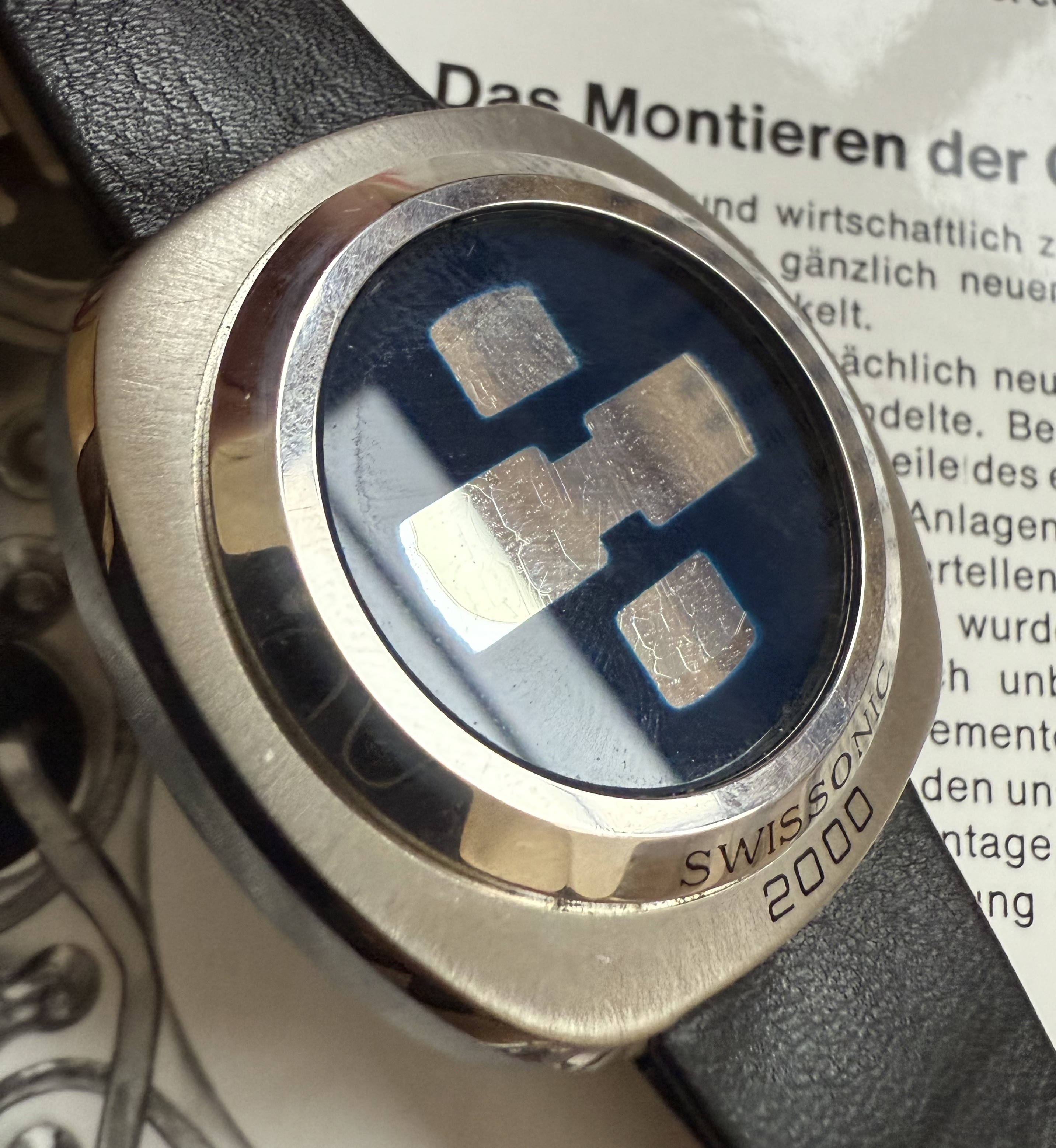
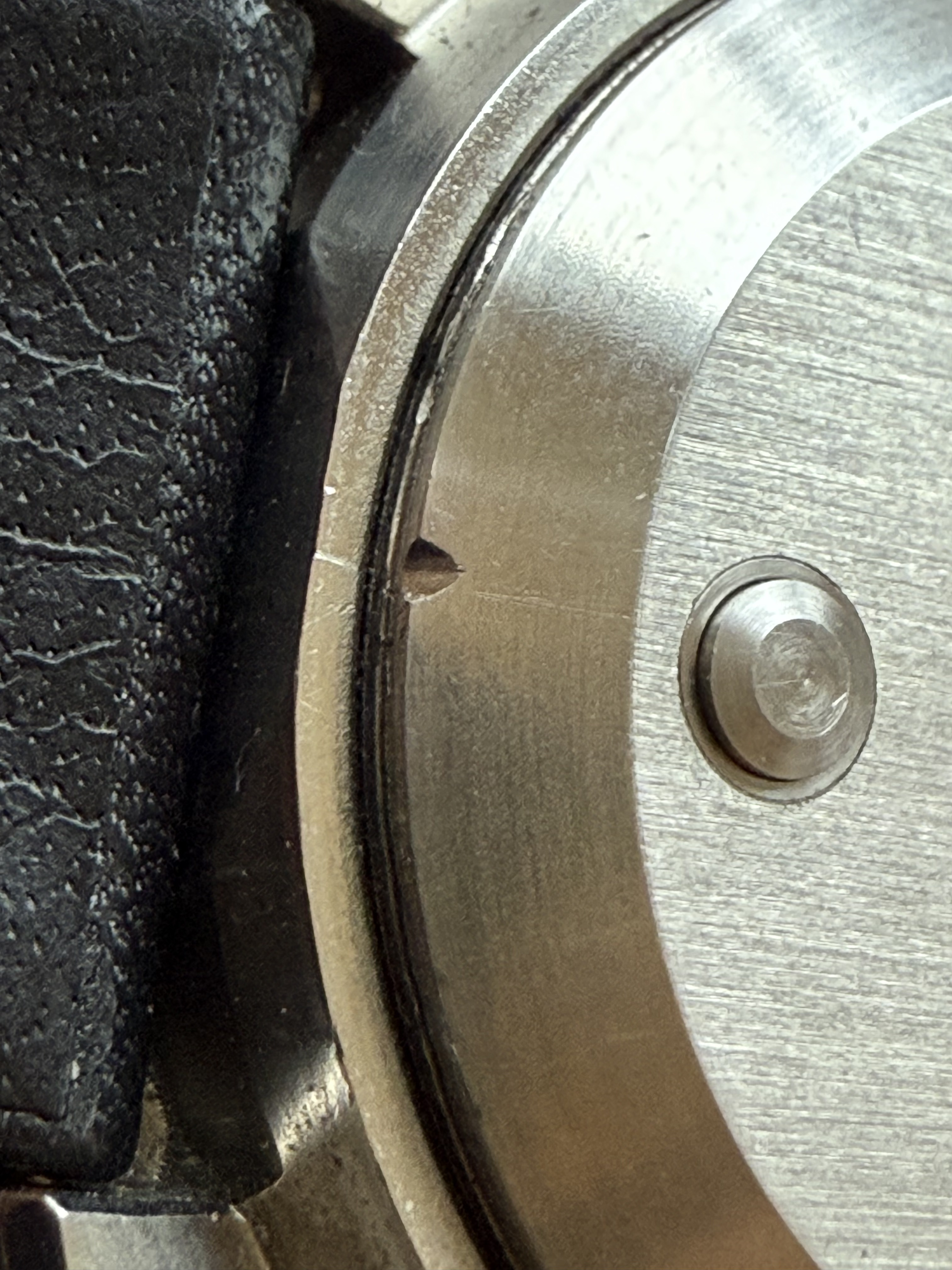
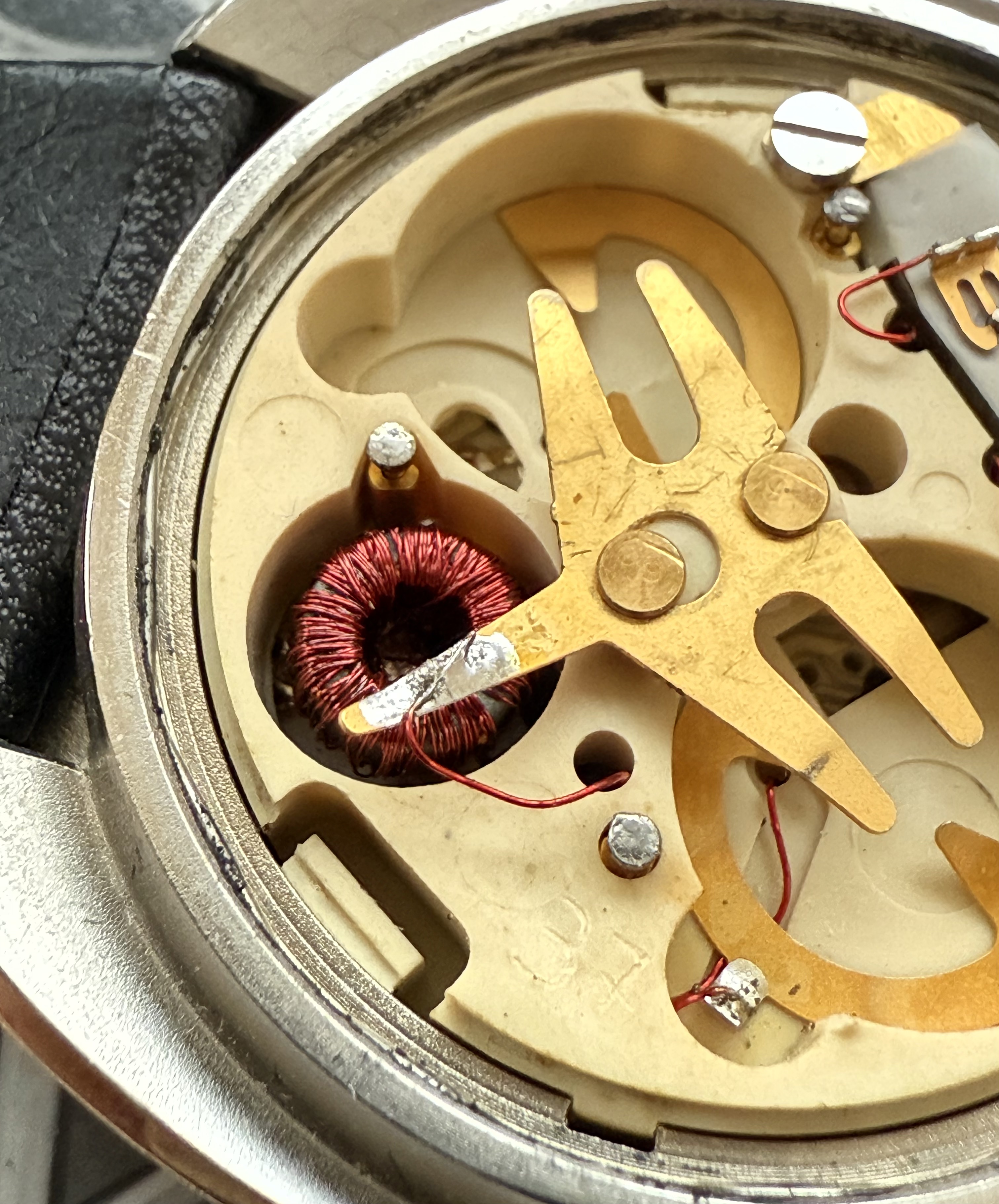
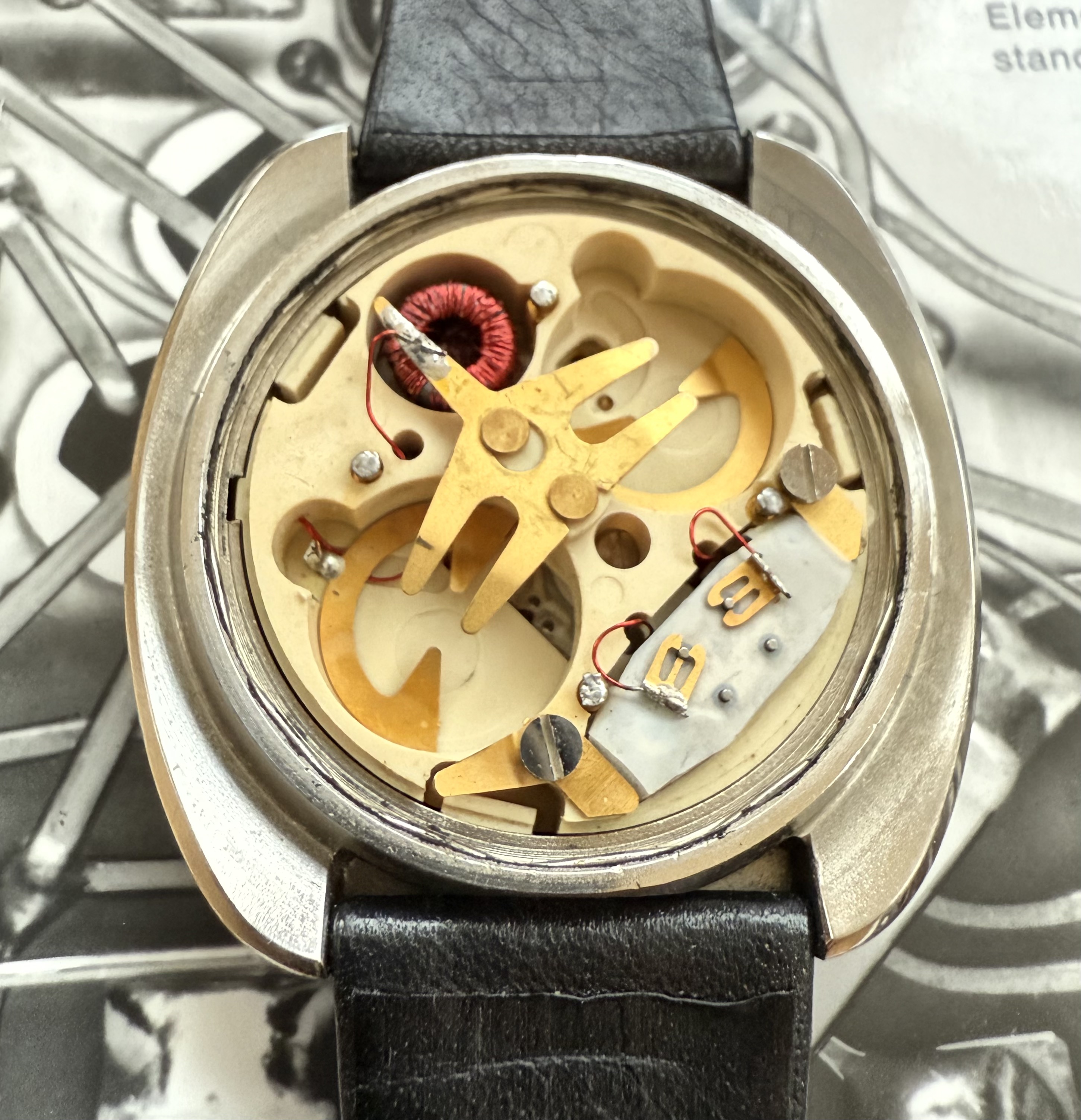
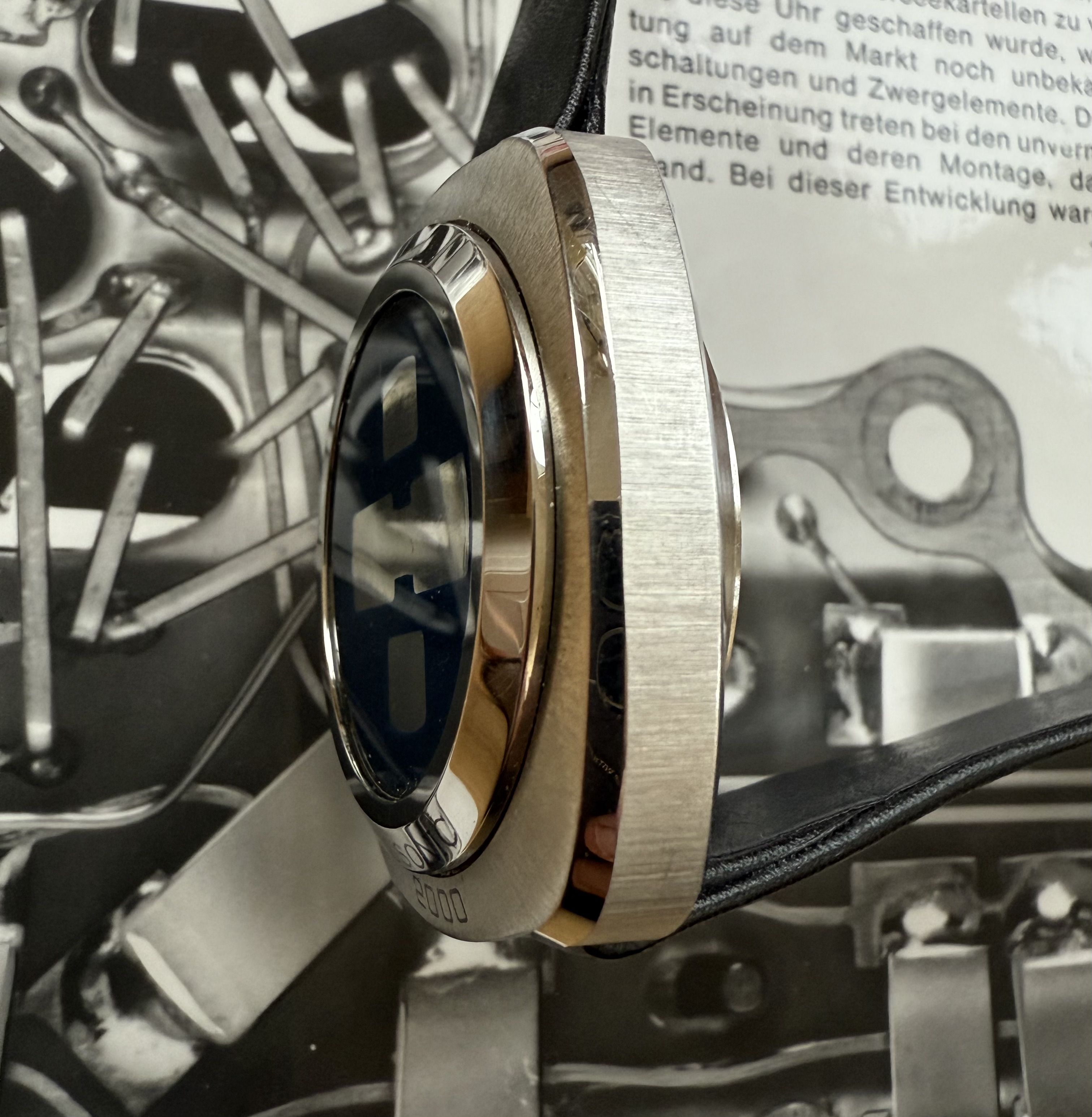
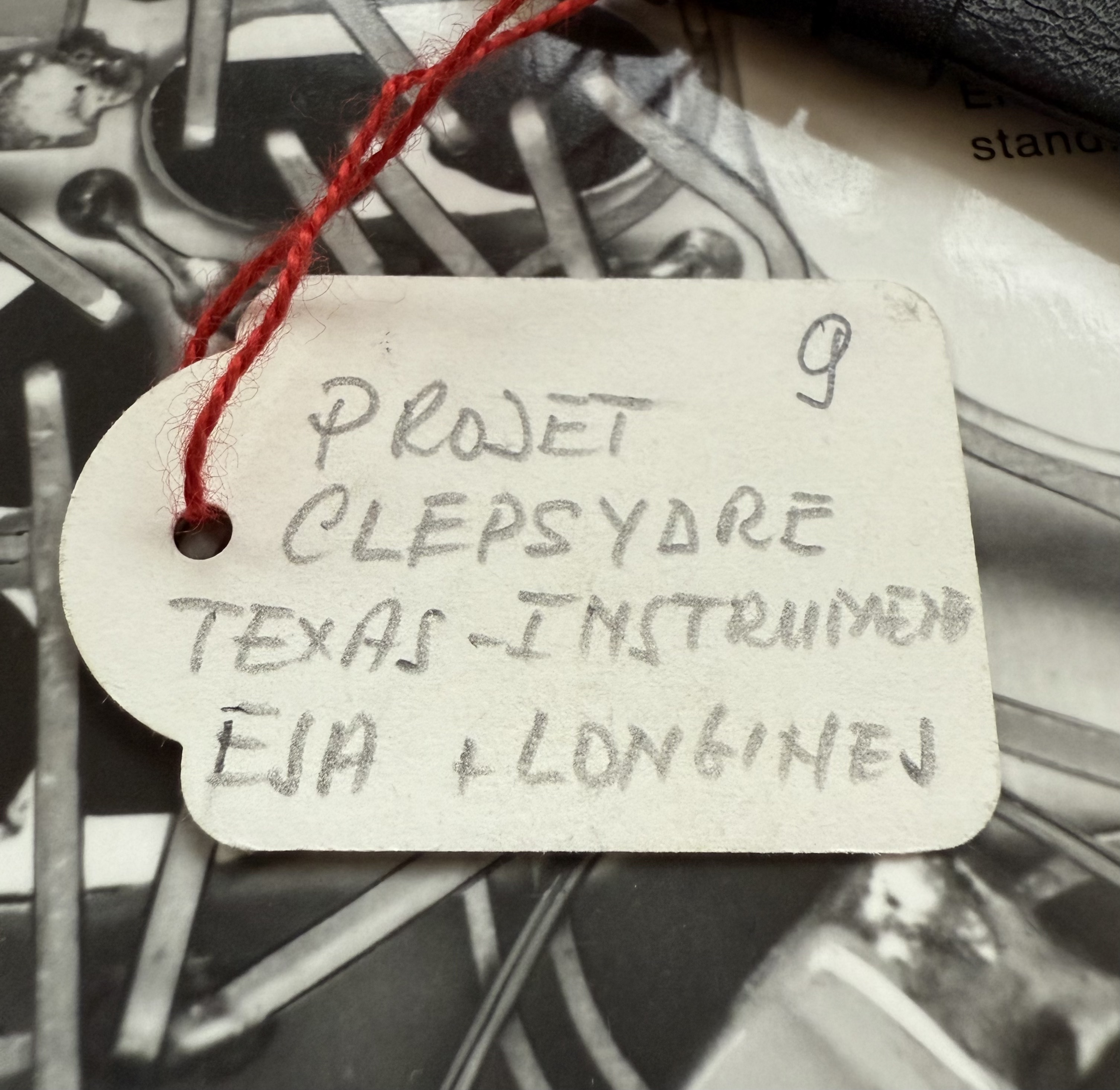
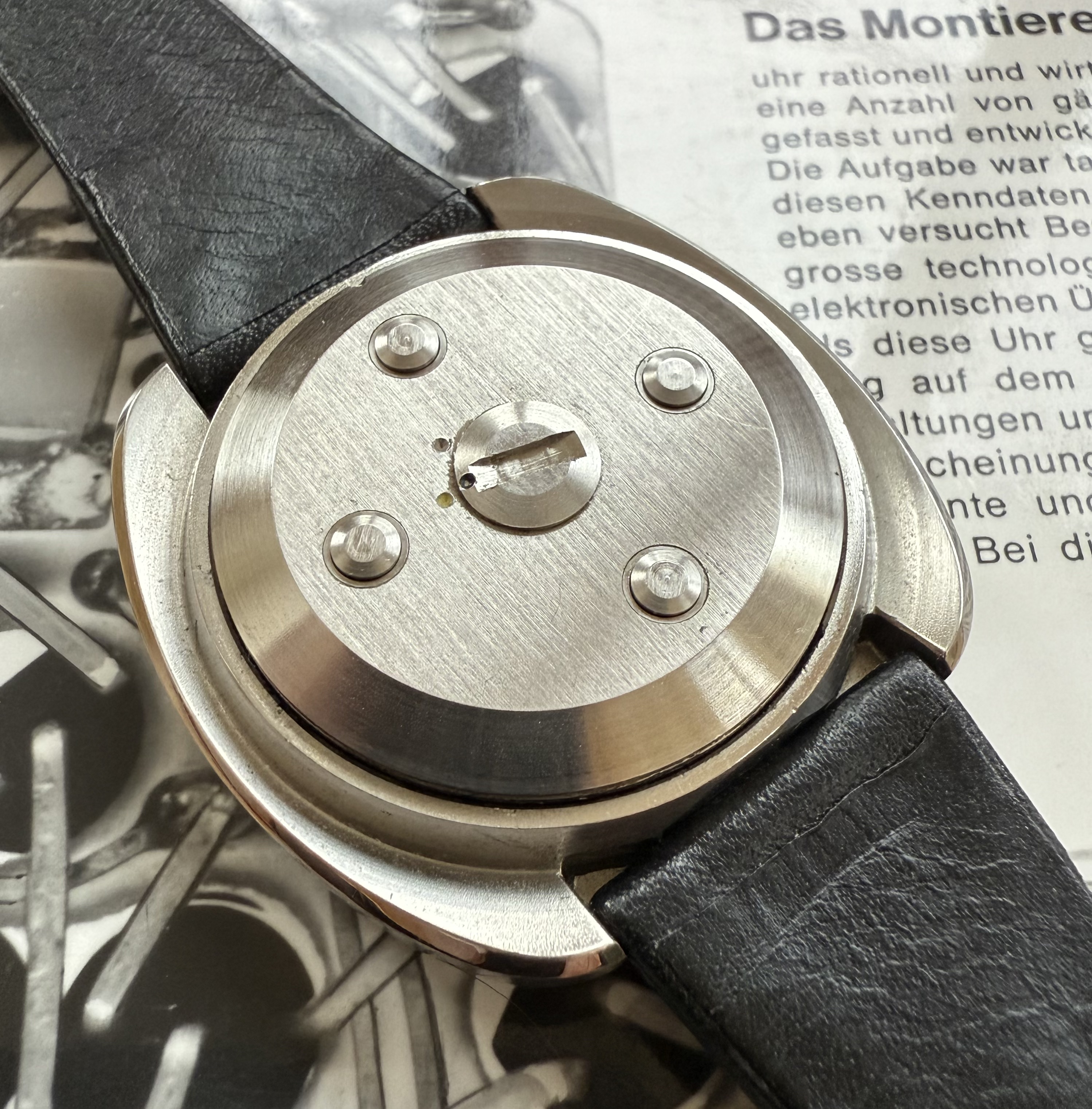
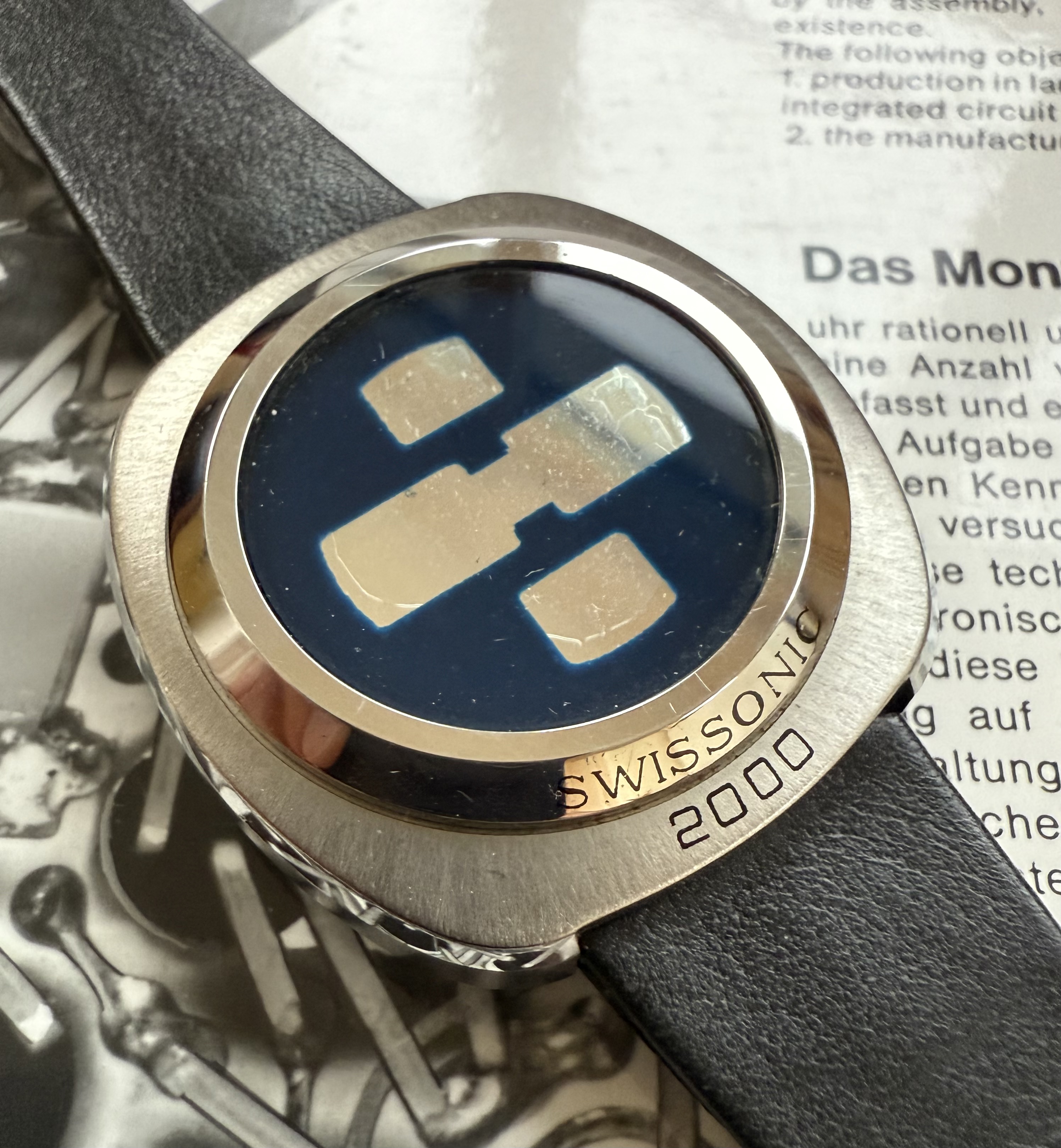
Description: Symmetric, cushion-shaped, stainless steel cased prototype. Case back with 4 peripheral protruding buttons for time and date setting. Small central screw to enable/disable setting. At ‘6’ bezel and case are engraved ‘Swissonic’ and ‘2000’ respectively. Cross shaped DSM LCD display with mirror-like appearance, surrounded by dark blue ‘back ground’. Original black, calf leather strap and steel buckle. Hang tag with description annotated with crayon by André Beyner.
Dimensions: 39.5mm, lug – lug: 40mm, lug width: 20mm
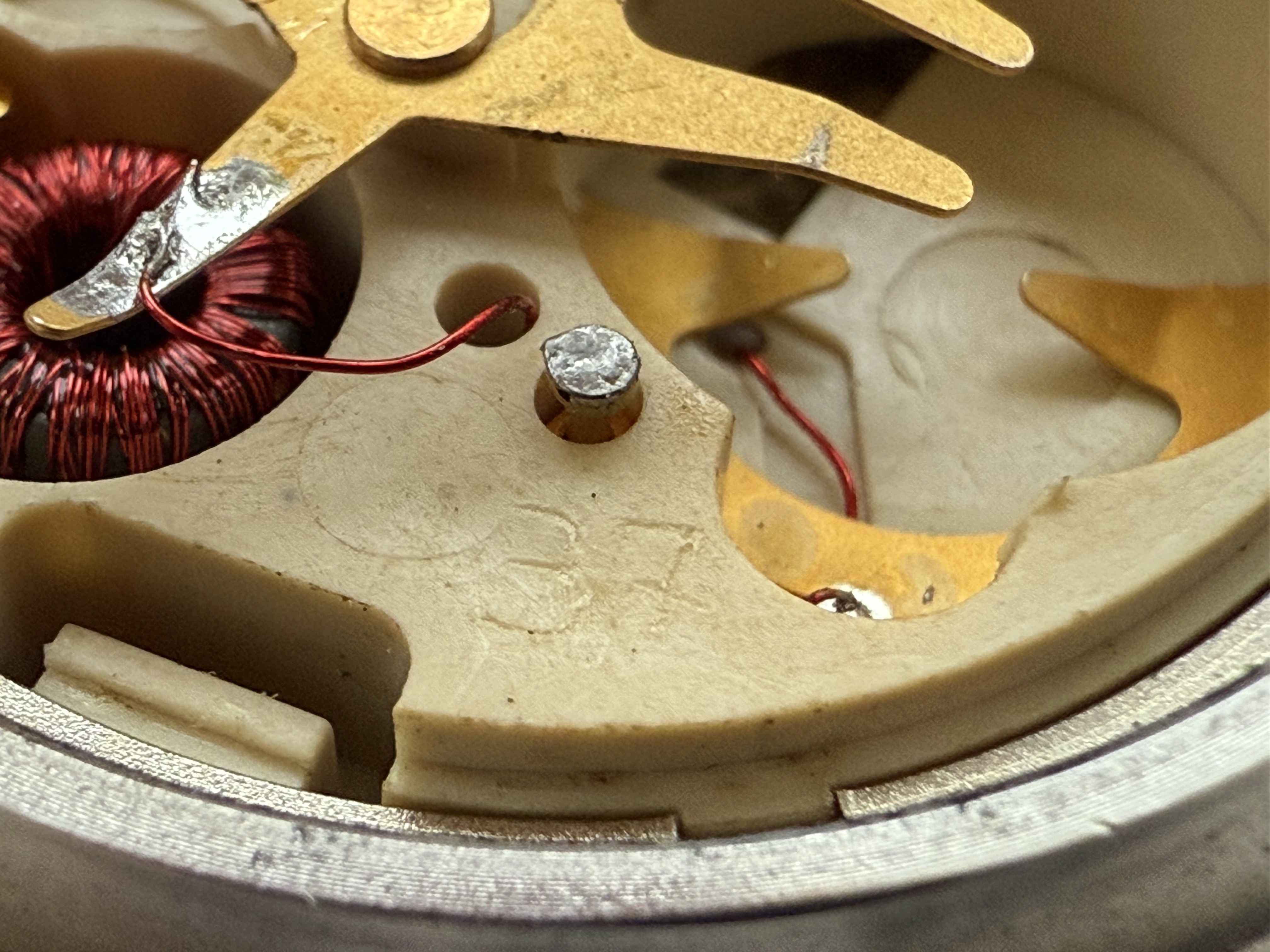
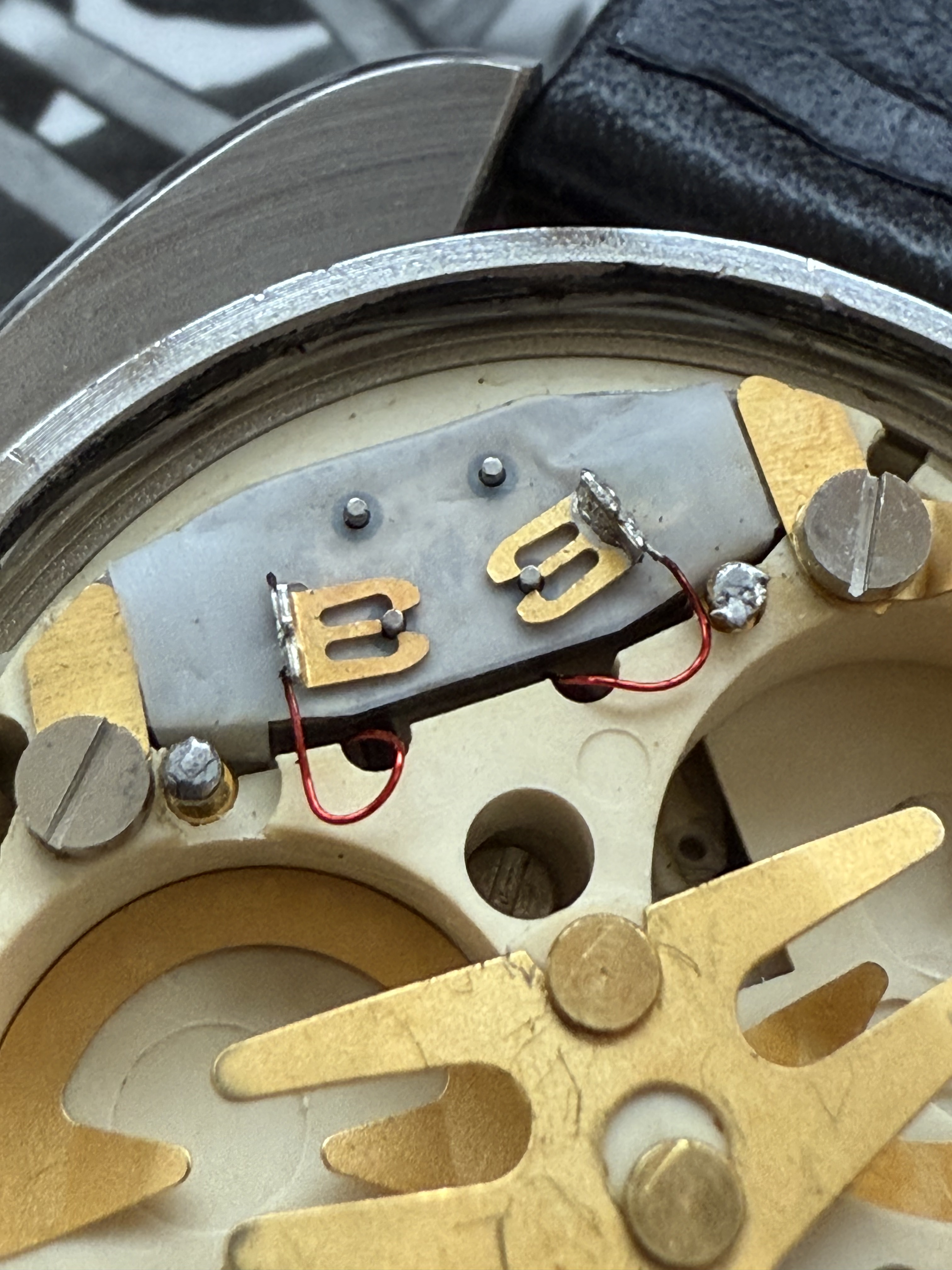
Movement: ESA 9260 Prototype, hand scratched ’37’
Additional info: This prototype was developed during the phase of technological transfer for the industrial production of the ‘Ultra-Quartz’ model. All efforts by Longines were directed towards latter task, leaving the organisation of the development of the ‘solid state’ technology to Ebauches SA’s and thus to André Beyner’s team.
Despite this development remaining in the shadows of horological history, the ‘Clepsydre’ prototypes were the world’s first digital watches with integrated calendar function in a simultaneous multi-display fashion. A feature which will be further developed and integrated into the Casio ‘Casiotron’ model in 1974 as the first marketed wrist watch featuring this function (1).
The watch presented above is the earliest (P1) version of the ‘Clepsydre’ prototypes. Later prototypes, which were presented at the Basle Fair 1972 have another case shape and a more elaborated case back with a different time/date setting configuration (P2) (1).
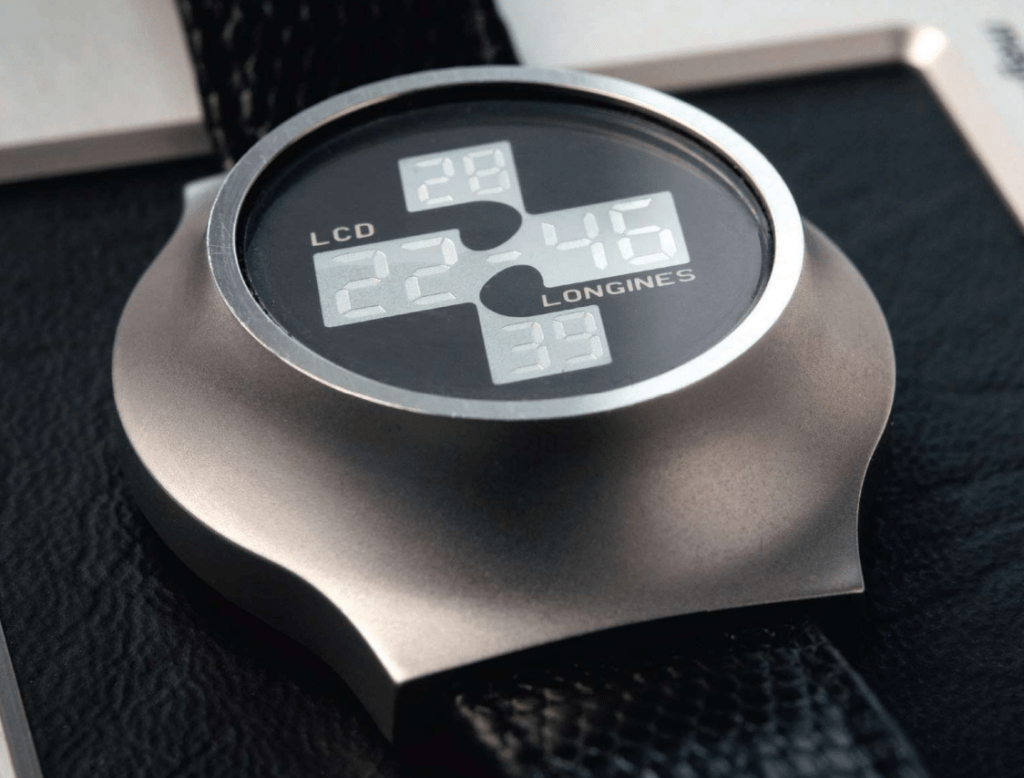
P2 Prototypes also have printed inscriptions on the dial and they lack the ‘Swissonic 2000’ engraving. For these P2 versions quite a lot of paperwork exist, including a user manual and promotion material which most probably was presented and distributed at the Basle Fair 1972. In the P2 version the two bipolar IC integrate 700 transistors and the quartz oscillates at 32KHz. The movement used in this P2 version should be precise within 1 minute per year, according to the surviving paperwork. This P2 version presented at the Basel Fair 1972 won the IR-100 price of the ‘Annual Industrial Research Conference and Awards ‘ which awards the 100 most important products of science and industry of the respective year (1, 2).
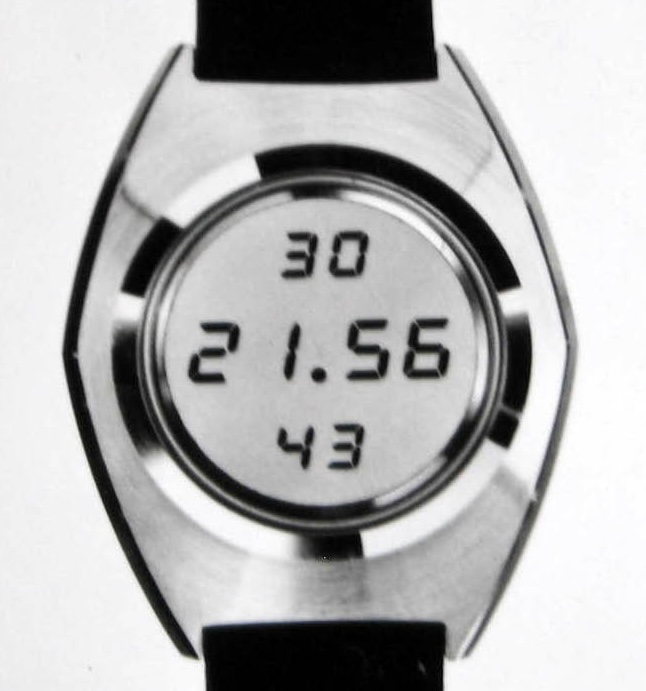
There is even a later version (P3) featuring Roche’s TN-LCD system instead of the more problematic DSM system. This P3 version was presented at the Basle Fair 1973. To the contrary to the previous versions, the display is homogenous and silver with well visible black numbering. The case style has been changed making the watch seem smaller and less bulky (1).
Despite the extensive collaborations and multiple presentations at the Basle Fairs, this model was never produced and remained in prototype status (1).
The P1 version of this revolutionary project presented here is the earliest known LCD wristwatch made in Europe and it might also be one of the earliest known world wide (1).
Provenance: Ex Estate of André Beyner, former technical director of Ebauches SA
Ref.:
- Personal communication with a former Executive Vice-President of Ebauches SA, in charge of Research & Engineering.
- Longines – Argumentaire de vente LCD solid state, February 1975
- Lachat S.: Longines through Time, Editions Simonin, 2017
- Engineering and Technology History Wiki
 Electric Watch Prototypes