
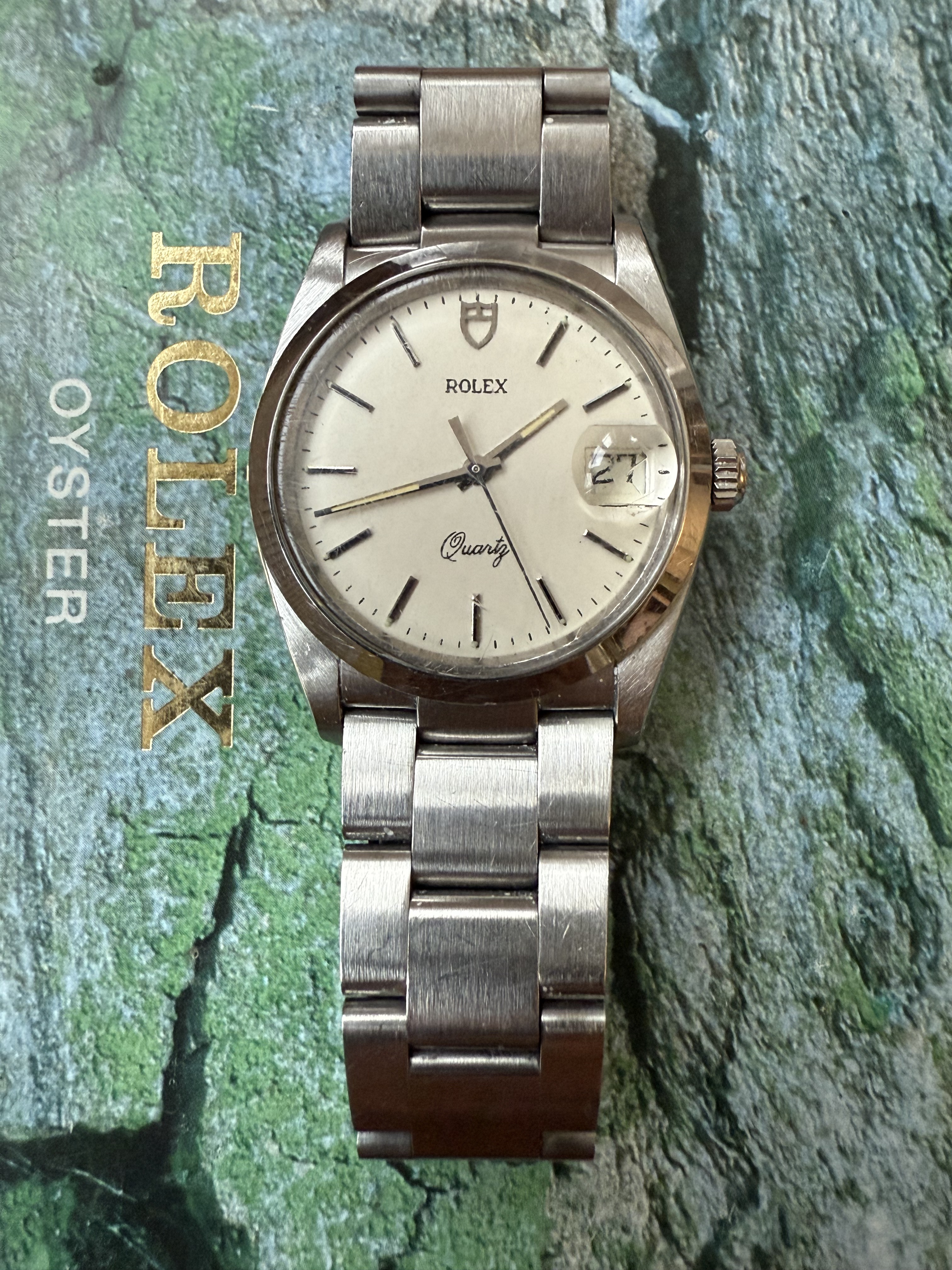
Rolex/Tudor Prince Oysterdate Quartz Prototype, 1978
Category: functional / aesthetic prototype
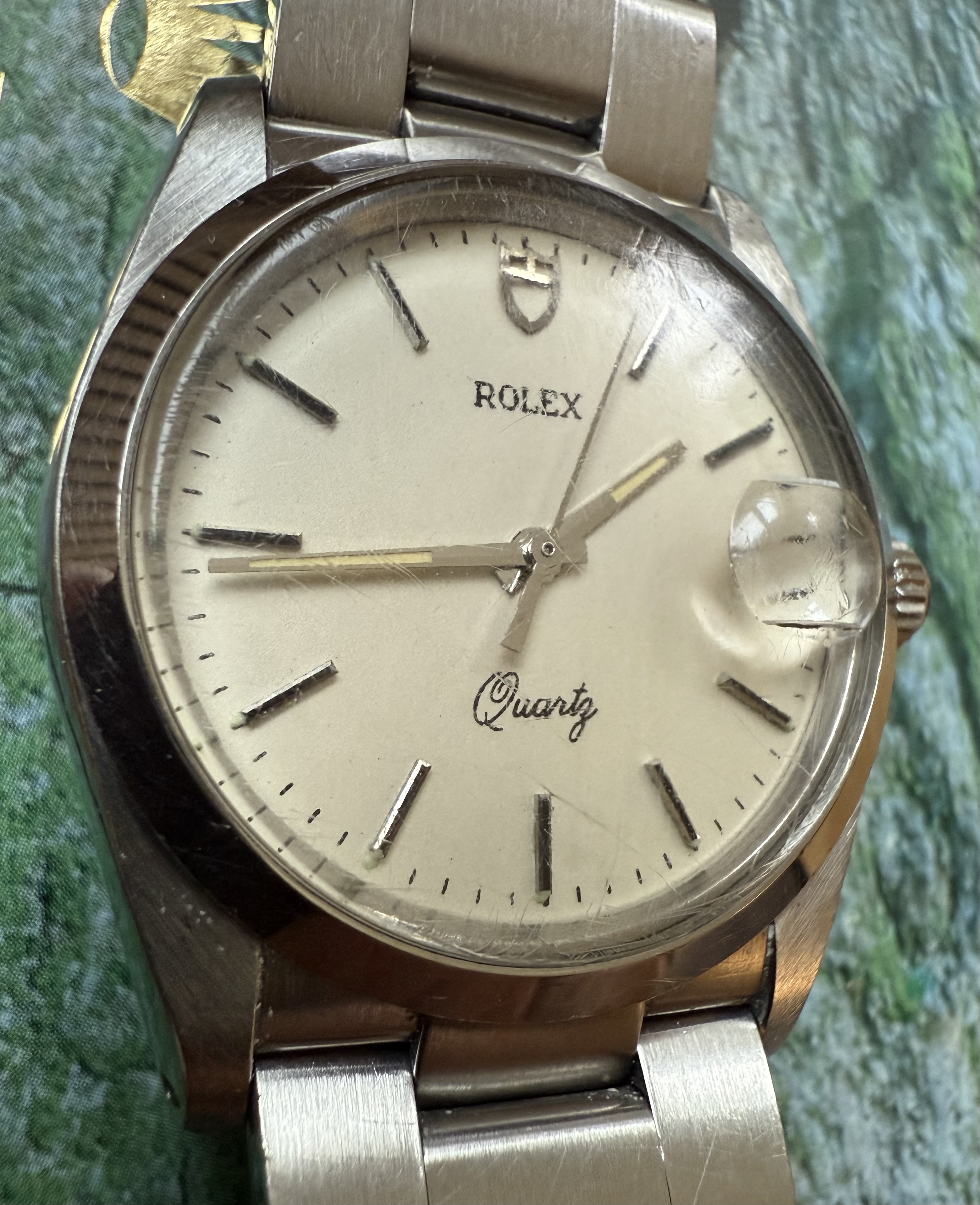
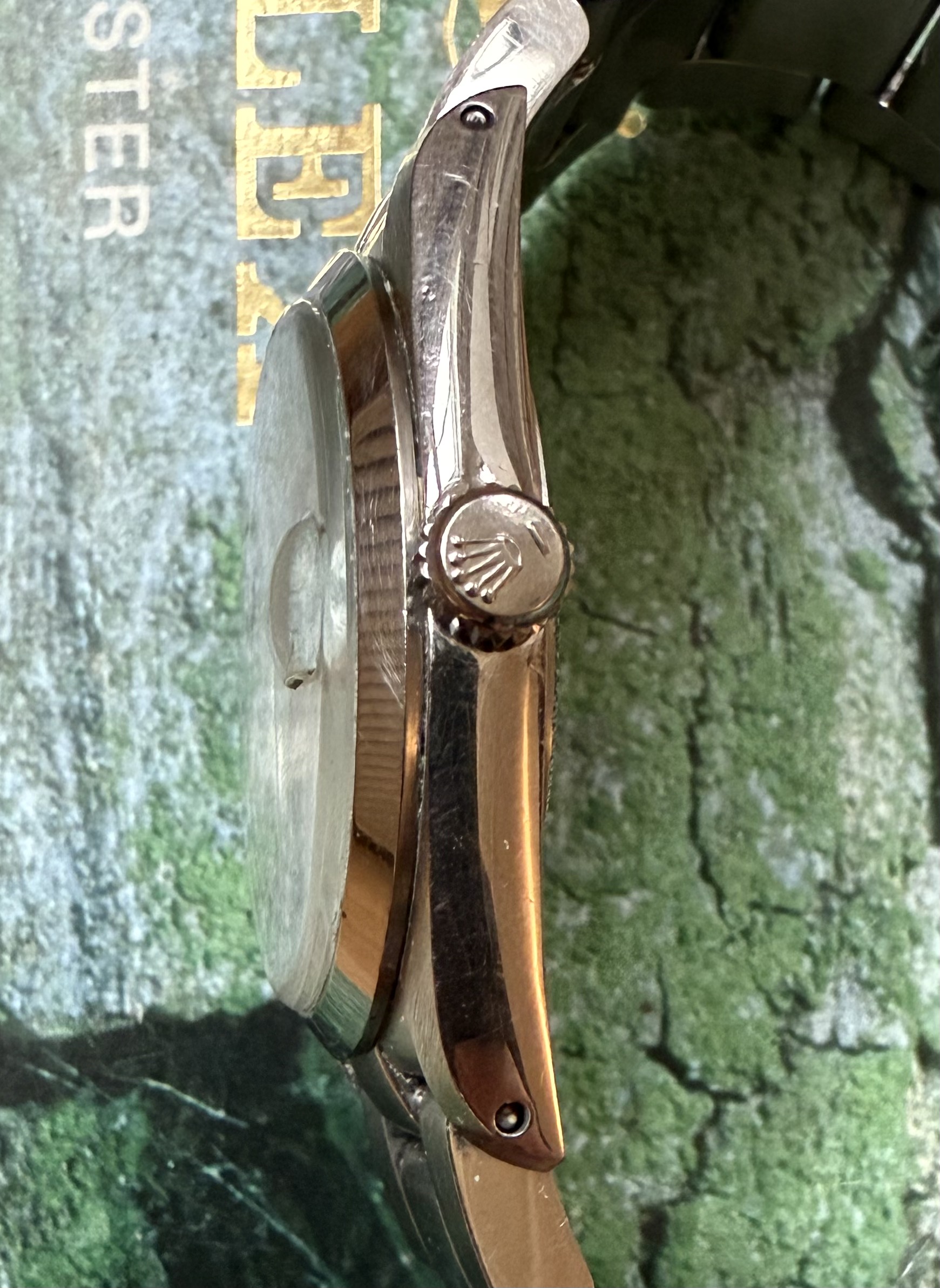
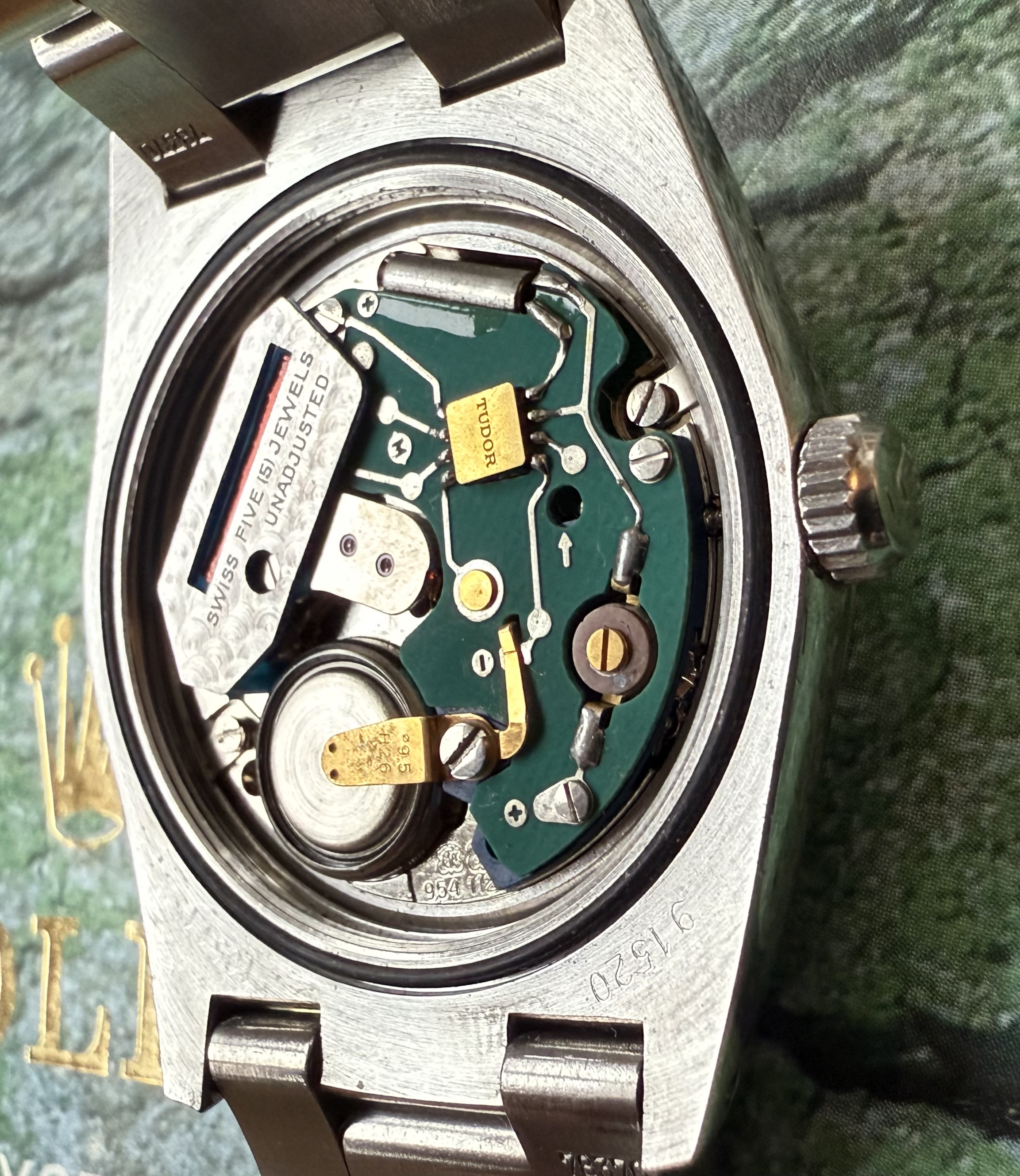
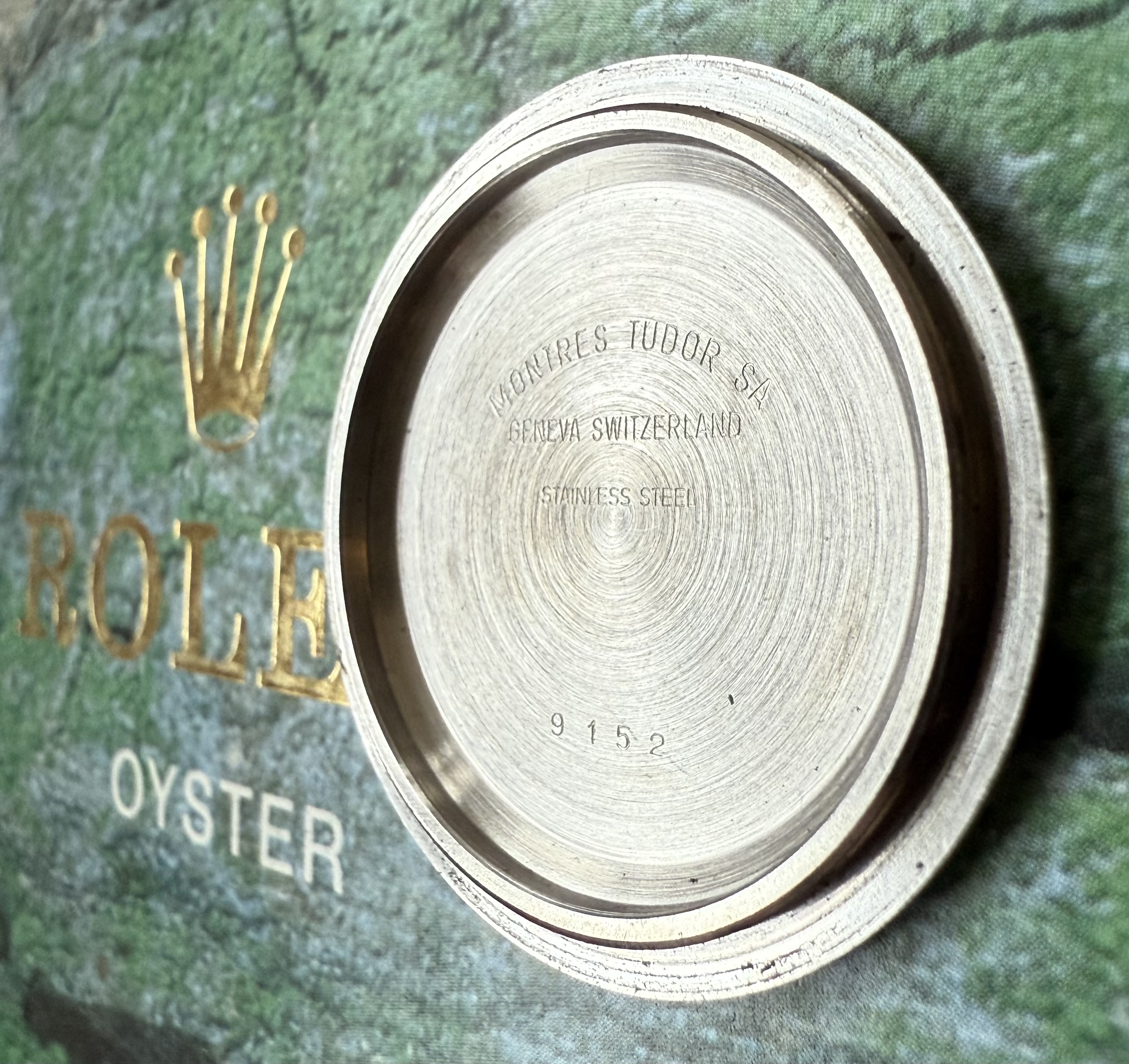
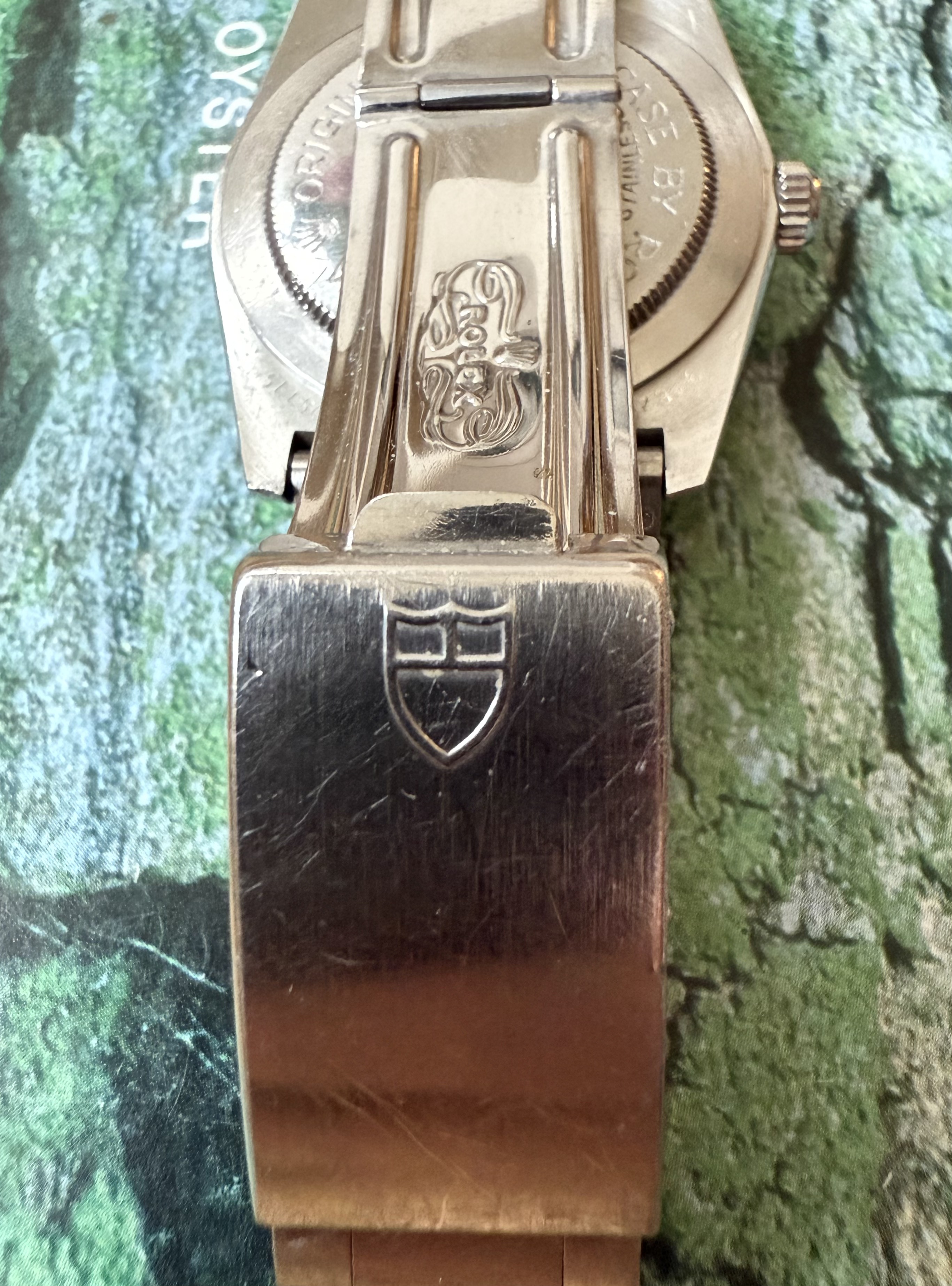
Description: Symmetric, stainless steel cased prototype with stainless steel screw back with Rolex/Tudor production info. White dial with raised hour indexes, black printed minute indexes. Raised ‘Tudor’ logo at ’12’. ‘Rolex’ printed in black below the Tudor logo, quartz printed in black above ‘6’. Date window at ‘3’. Silver hour and minute hands with tritium lume, lume dots also present at hour markers. Silver seconds hand. Steel crown with ‘Rolex’ Twinlock logo. Acrylic crystal. Integrated stainless steel bracelet.
Dimensions: 34.5mm (without crown), lug – lug: 41mm, Overall thickness (without cyclops lens): 9.4mm, lug width (integrated bracelet): 20mm
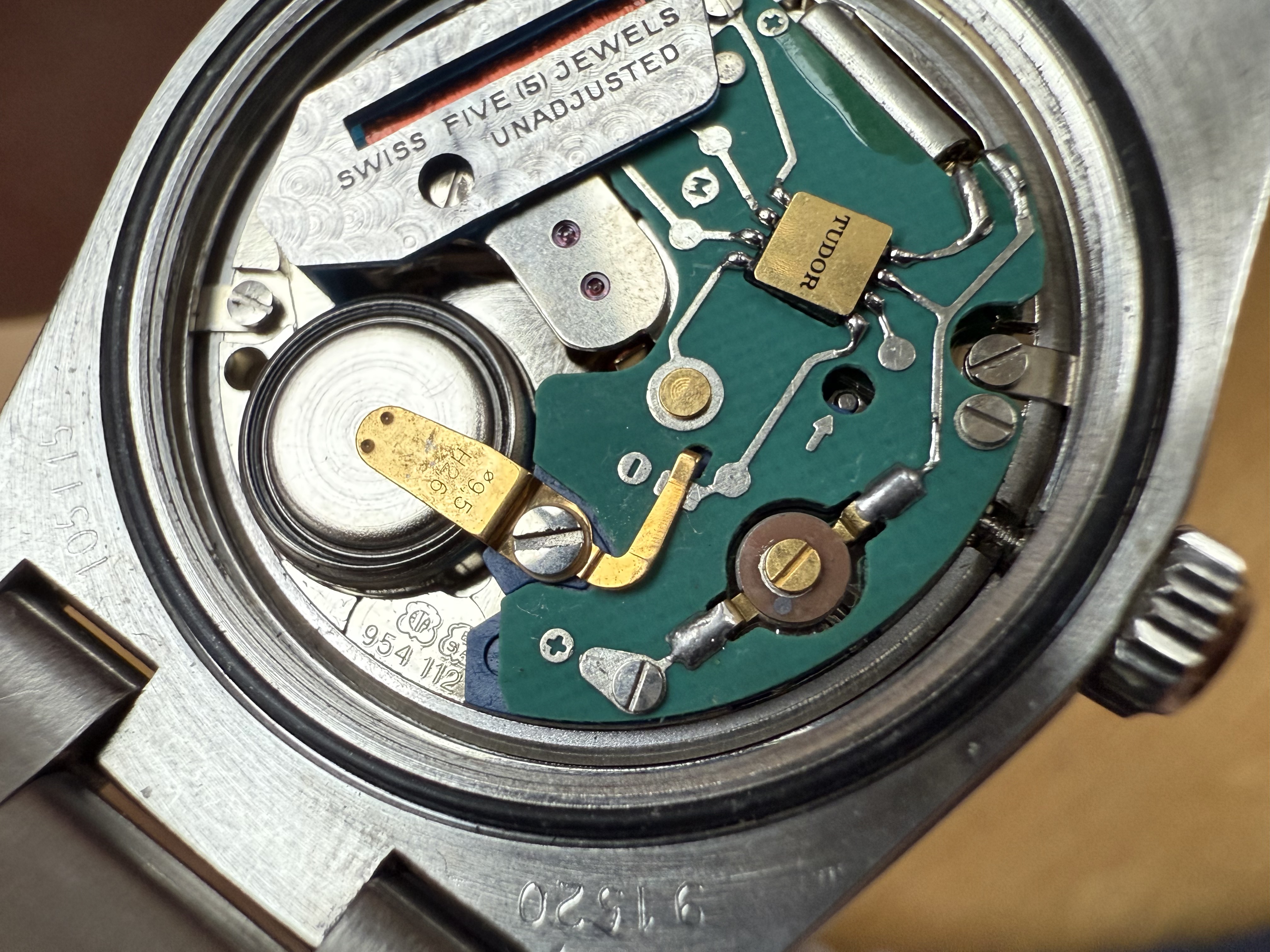
Movement: ESA/ETA 954.112 prototype with test finishing for Tudor
Additional info: This is a unique representative of a Tudor Oysterdate Quartz prototype in its functional (reliability of the caliber to Rolex standards) and aesthetic (caliber decoration and overall model aesthetics) testing phase. During the mid-to-late 1970s one part of the R&D facility at Rolex was used for the evaluation, development and eventual integration of quartz calibers into the Rolex portfolio. This same lab at Rolex Bienne, lead by René LeCoultre, would also look into the integration of quartz calibers for the Tudor brand.
René LeCoultre was representing the FH (Fédération Horlogère) within the CEH and did thus contribute to the Beta 21 development. Rolex integrated this new development in their Ref.: 5100 ‘Texano’, showcasing the Beta 21 movement and they also took new developments at the CEH as basis for their FAN project, featuring an electronic display with light diodes. LeCoultre was appointed technical director at Rolex in 1971 and retained his role at the CEH, this time for Rolex. He was very much convinced of the importance of the integration of this technology into the Rolex lineup and 1972 he underwent study voyages to the USA to learn more about the fast evolving electronics industry. Rolex gradually took on the complete in-house development of quartz calibers towards 1973, after a re-organisation of Rolexes R&D department by LeCoultre, peaking in the creation of calibers 5035 (date) and its further iterations (5055; day-date), which were mounted into their model ‘Oysterquartz’ starting in 1977. The FAN project was definitively shelved in 1980 (1, 2, 3).
The quartz development leading to calibers 5035 and 5055 at Rolex advanced well under the supervision of René LeCoultre and the envisioned quartz calibers had to fulfil enormous list of requirements in terms of reliability (thermo-compensation), precision (32kHz, COSC specifications), aesthetics and long term functionality (long battery life). The problem was, that by the time these calibers were available, the market was not only looking for precision and reliability any longer. The new challenge the manufacturers were facing, was to match quartz technology to the development of super-slim mechanical movements and thus to reduce the thickness of the quartz watches as much as possible. Rolex calibers 5035 and 5055, while technologically and aesthetically irreproachable, are 6.1mm respectively 7.1mm thick (1).
By 1977, upon launching of Rolexes ‘Oysterquartz’ models, Ebauches SA, in collaboration with ETA, had already developed, tested and just introduced their caliber ESA/ETA 940.111, the then slimmest quartz caliber available with 3.1mm thickness. René LeCoultre, in personal contact with the executive Vice-President of Ebauches SA, in charge of Research & Engineering, was convinced of the potential of the new, slim ESA 940 caliber and tested its integration into the Rolex lineup (3).
André Heiniger, managing director of Rolex since 1963, who was never convinced of the compatibility of the quartz technology with the Rolex philosophy, while reluctantly accepting the development of high quality ‘in-house’ quartz calibers (Beta 21, 5035 / 5055), very rapidly blocked the integration of Ebauches SA calibers into Rolex models, despite the highest grade finishing of the ESA caliber. It was thus decided to use the advantages of the new, super-slim (3.0mm) successor of the ESA/ETA 940.111 caliber, the ESA/ETA 954.112 version, by integrating it into a Tudor model (3).
This improved version of of the ETA ‘Flatline’ family had a updated IC design which allowed longer battery life and more standardised electronic components for better serviceability, along with being 0.1mm thinner as its forerunner.
The prototype presented here shows the attribution to the Rolex R&D facility through the ‘Rolex’ signature on the dial, while being clearly identifiable as Tudor’s future ‘Prince Oysterdate Quartz’ model, and it might well be the only existing watch with Rolex signature on the dial, bearing an Ebauches SA / ETA movement.
Provenance: Ex. Hans Baumann collection
Published: Bramaz H.-R., Baumann H.; Die Elektrische Armbanduhr, Band 1, Verlag Stutz Druck AG, Wädenswil, 2013, page 227, picture 2
Ref.:
- Oysterquartz.net
- Personal communication with a former Executive Vice-President of Ebauches SA, in charge of Research & Engineering and personal friend of René LeCoultre.
- Forrer M., LeCoultre R., Beyner A., Oguey H.; L’aventure de la montre à quartz, Centredoc, 2002
- Transcription of a recorded interview of Lucien Trueb with René LeCoultre, published in: Trueb L., Zeitzeugen der Quarzrevolution, Editions Institut l’homme et le Temps, La Chaux-de-Fonds, 2006
 Electric Watch Prototypes