
The main contribution the Swiss made concerning the development of the electronic wrist watch was to produce the most precise watch possible. It was thought that this strategy to offer high quality and high precision watches would counter what was hoped to be a less precise Japanese production. During the mid 1970s it was clear, that the Swiss strategy would not work, as the Japanese watches were not only getting much cheaper than the Swiss versions, they were also comparably precise.
Instead of aligning their strategy to the mainstream of quartz development, Omega insisted in counteracting the launch of the Citizen 4MHz quartz watch in 1975, by developing their last high frequency wrist watch. With the onset of the ‘quartz crisis’ the Swiss watch industry was forced to recognise, that the mass production of cheaper electronic watches would be more rentable. This strategy u-turn would finally be adopted starting 1981, when Swatch came to be.
The watch presented here represents the last attempt to reconcile highest precision with favourable production costs.
Megaquartz 4.19MHz, Prototype, 1977


Prototype category: functional
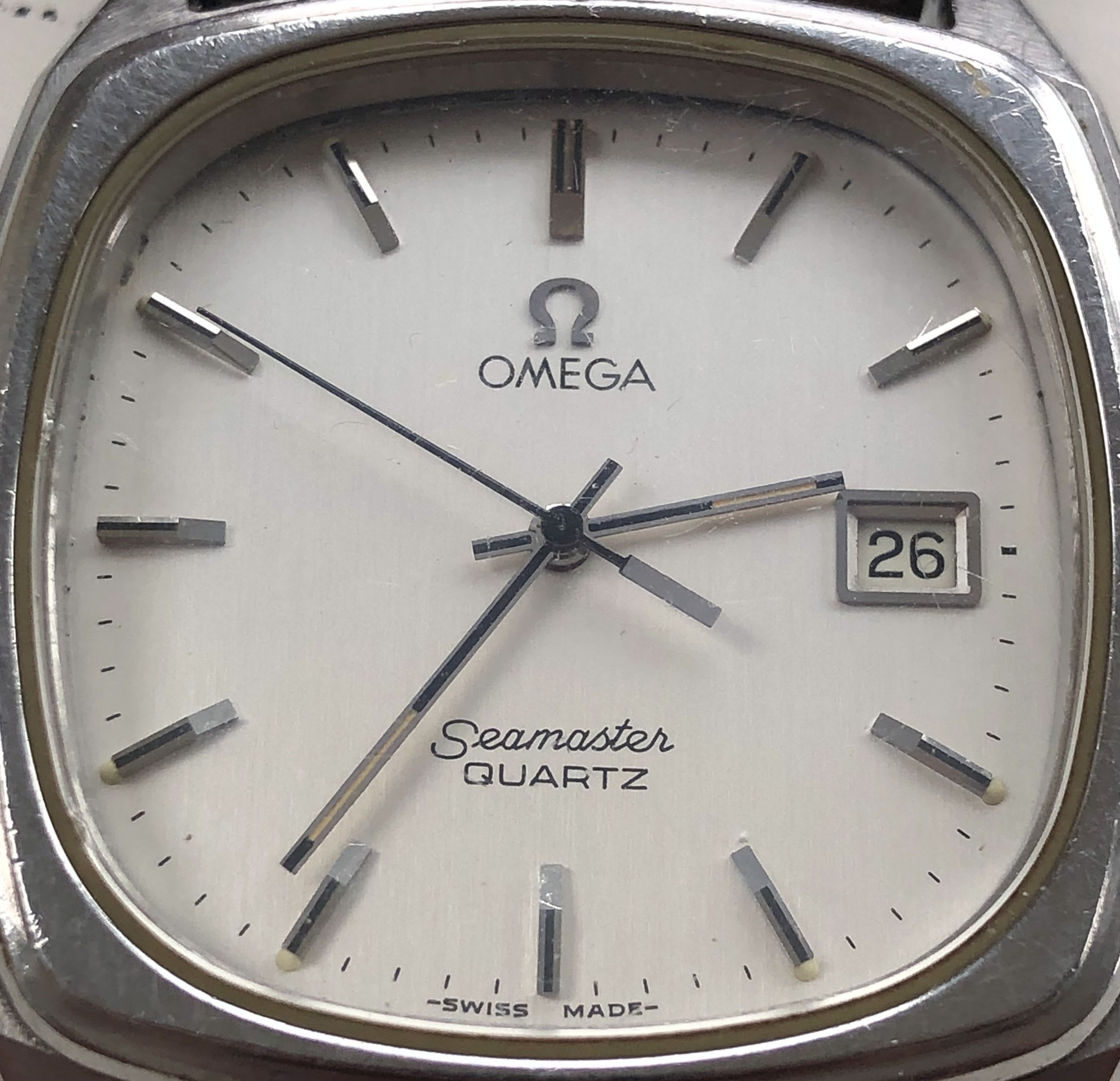
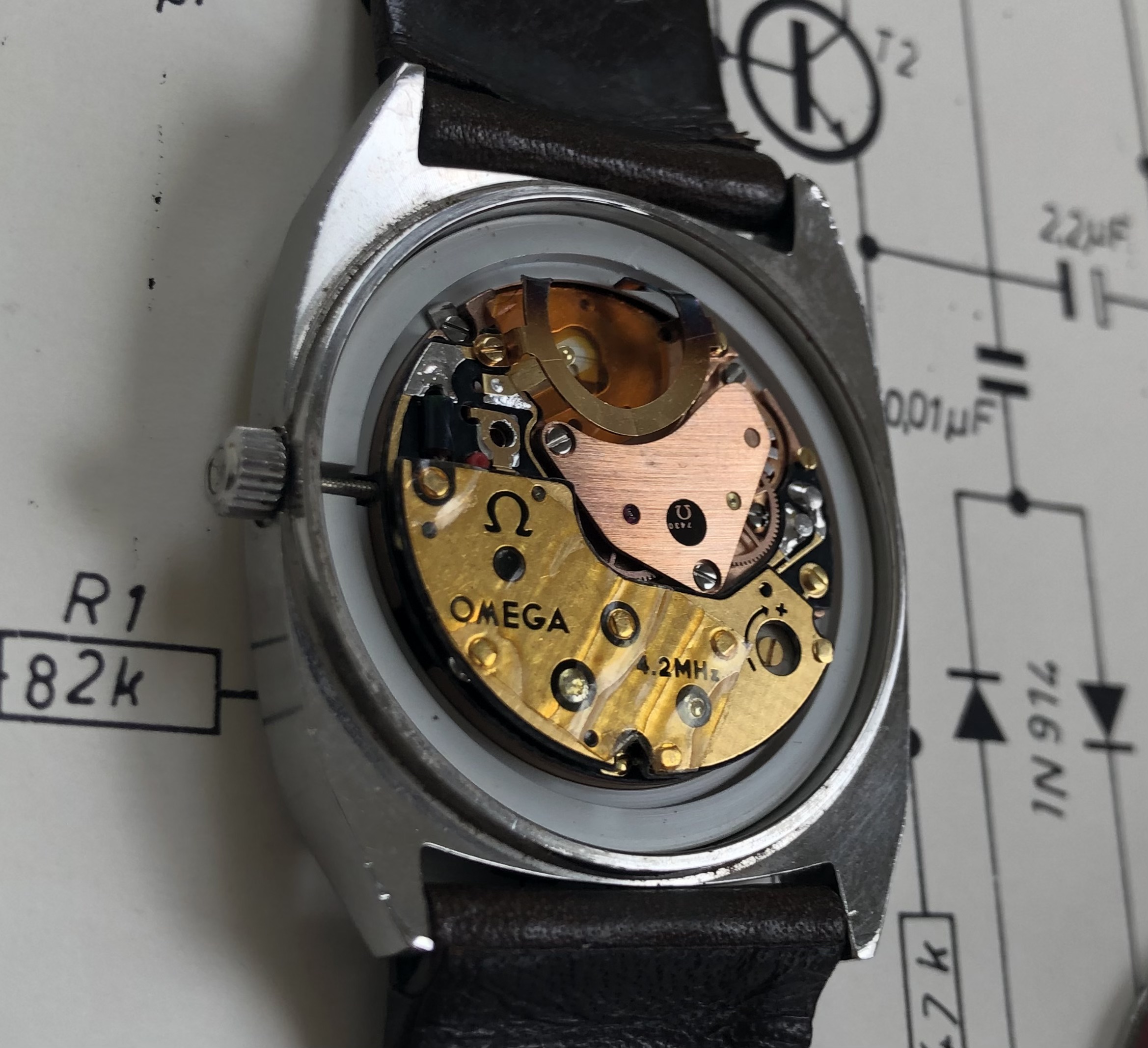
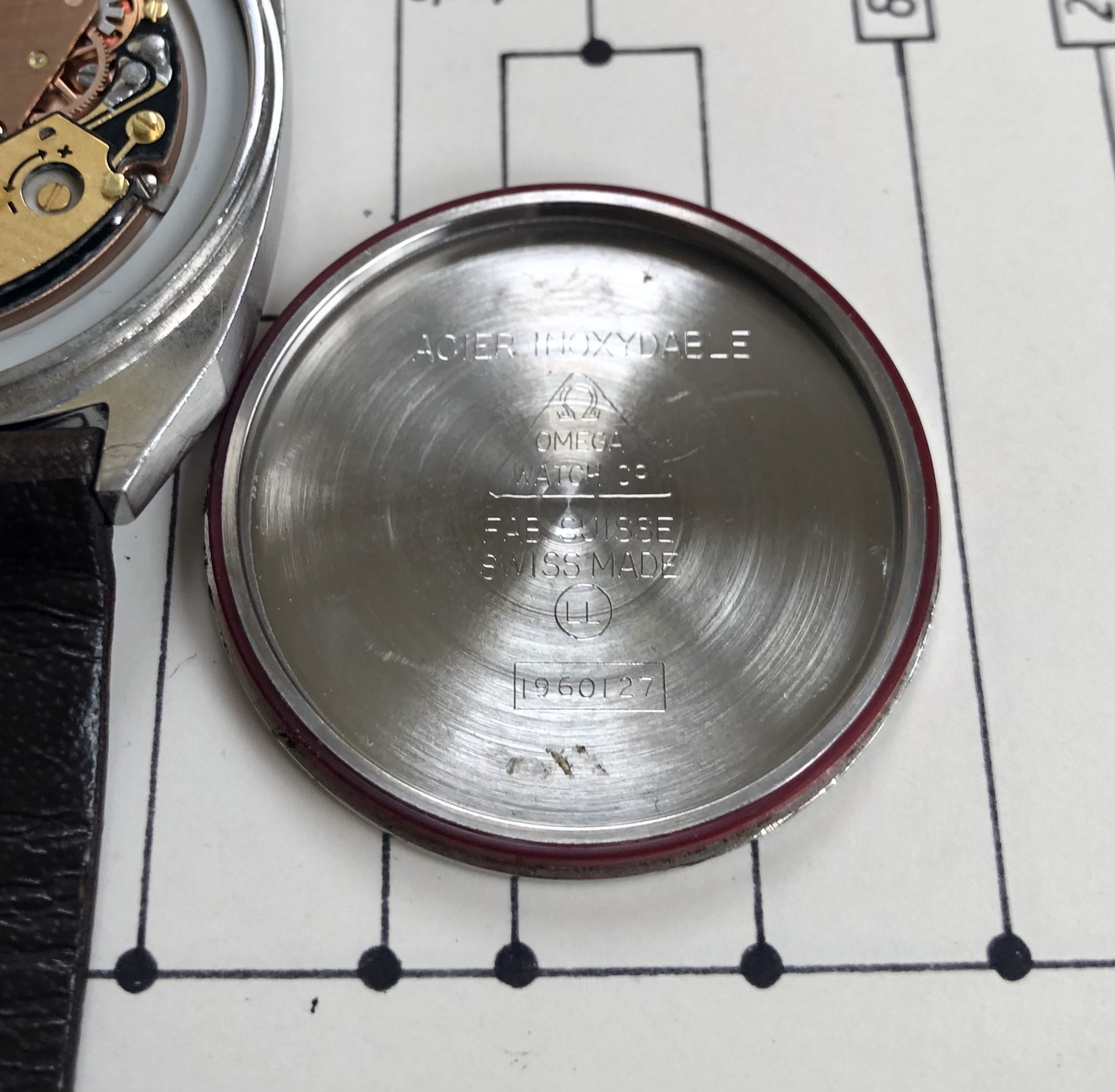
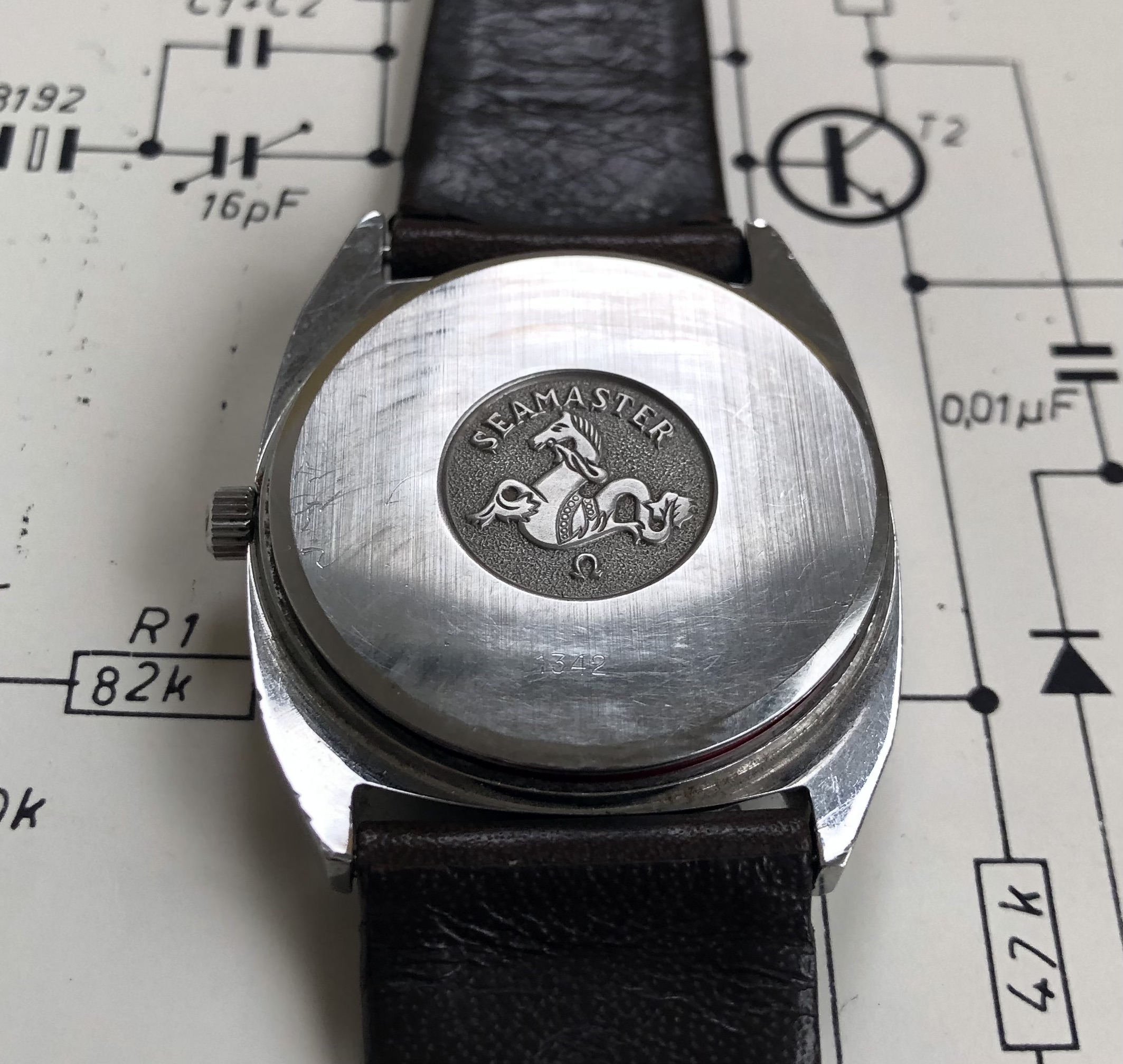
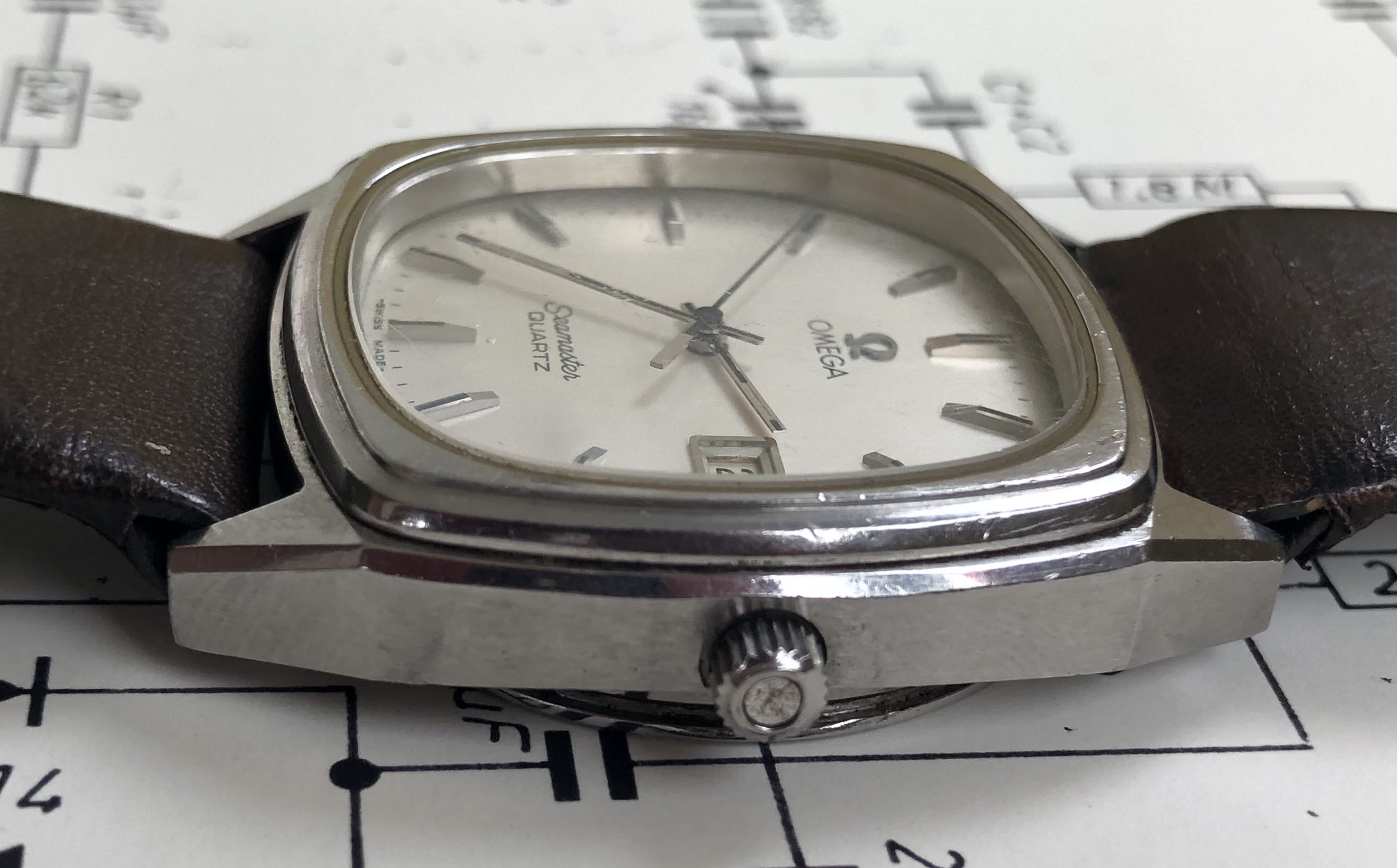
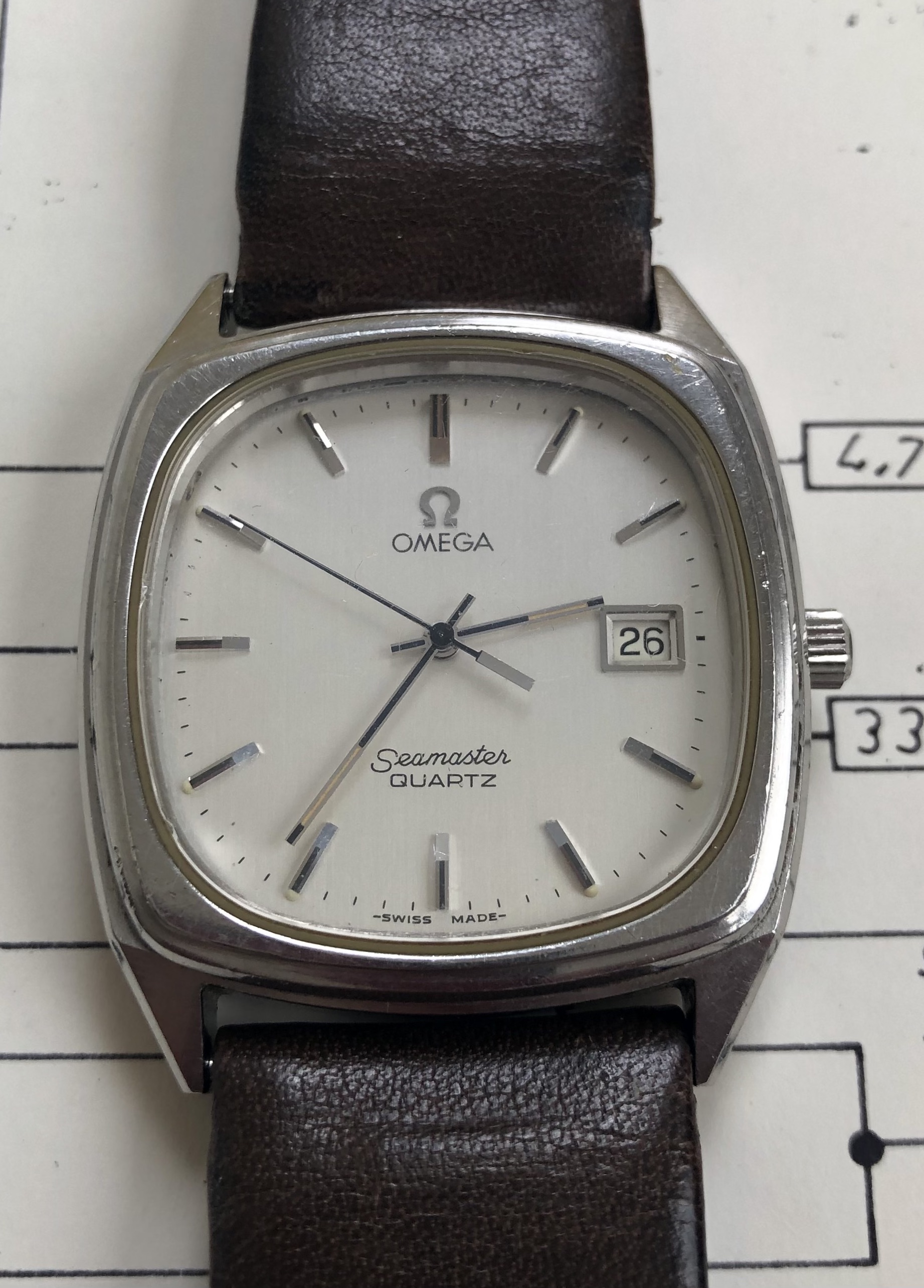
Description: Symmetric, stainless steel cased prototype. Stainless steel snap case back. Outside decorated with the Seamaster hippocampus and engraved ‘1342’. Inside with watch specifics, including reference number 196.0127. Custom machined delrin movement holder. Silver coloured, brushed dial with black printed ‘Omega’ at ’12’ and ‘Seamaster Quartz’ above ‘6’. Raised, silver Omega logo at ’12’. Metal, baton hour markers, black printed minute marks. Date window at ‘3’. Metal hands, hour and minute hands highlighted in white, all white second hand. Crown with central pusher.
Dimensions: 35mm (without crown), lug – lug: 40mm, lug width: 18mm
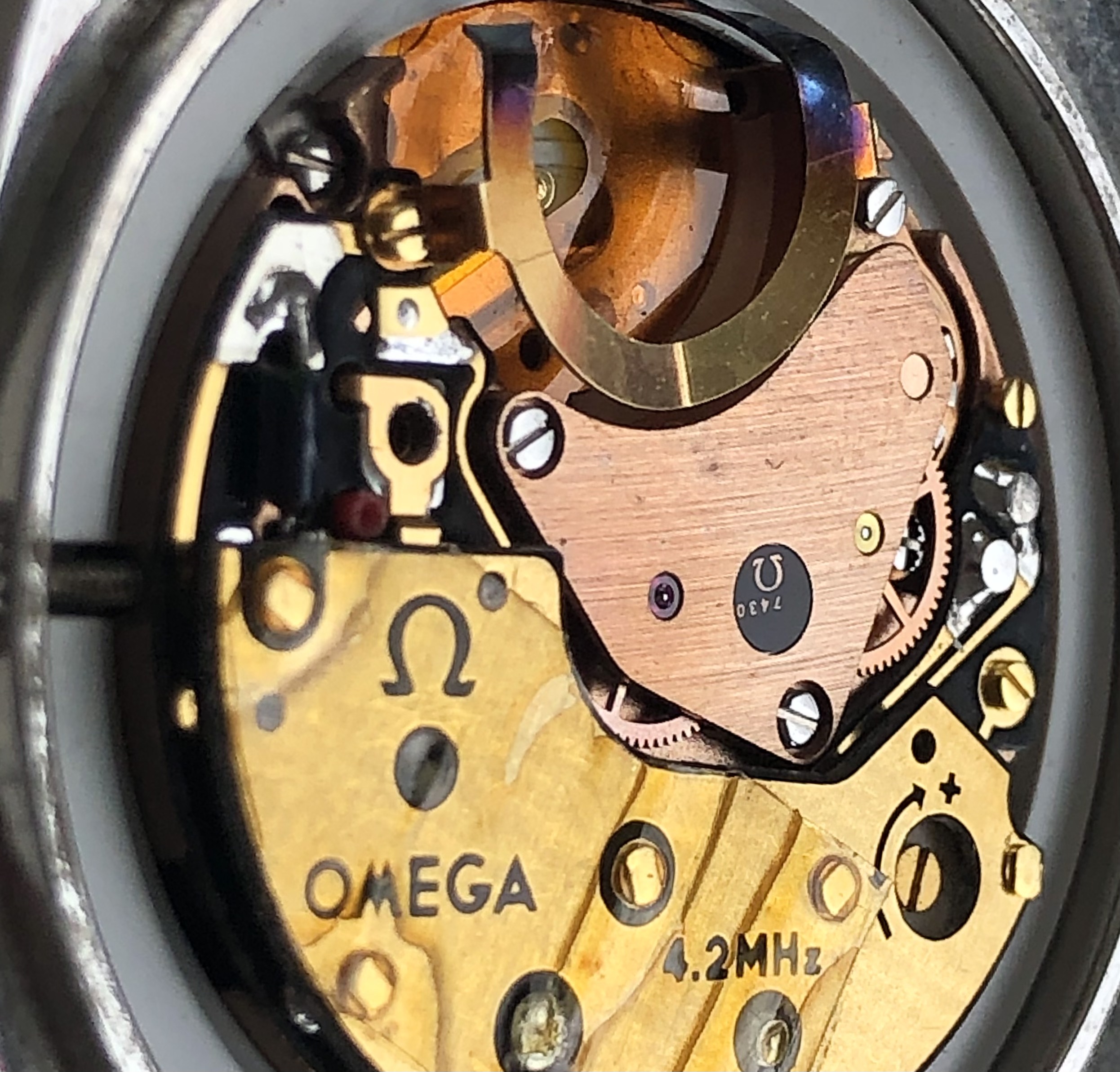
Movement: Cal.: 1522 prototype, #7430 (Calibre number was later reattributed)
Additional info: This prototype represents the earliest version of the 4 known Omega 4.19MHz high frequency wrist watch prototypes. The construction of the movement is based on cal.: 1342 which has been introduced 1976/77 and which is a derivate of cal.: 1310, which integrated circuit had been developed by the CEH. The adaptation of the movement consists in introducing a 4.19MHz bar shaped quartz and the corresponding CHO-4 IC developed by the CEH, to stimulate and control the quartz and to provide the needed frequency division.
The case has been taken from a reference 196.0127, which would house a cal.: 1342, as stated on the back lid. The movement holder was custom made for this movement and is made of delrin, a cheap, self lubricating plastic, also used for movement components since 1974. The movement holder is not prepared to be fixed to the case, indicating that this movement would need to be removed with no further manipulations in oder to make changes. This watch retains its original strap and buckle worn during functional tests on the wrist.
The targeted low production costs for producing a 4.19MHz watch would be attained by modifying cal.: 1342 instead of developing a new caliber from scratch. What case would have been used in a potential marketed version is unknown, as when it was clear, that the industrial manufacture of the CHO-4 IC is not reliable enough, due to its complexity, the project was shelved.
Research shows, that these wrist watch prototypes were made around 1977 and when 1978 the French ‘Marine Nationale’ issued a request for submissions for a high precision quartz Marine Chronometer, Omega reused the 4.2MHz technology and responded in using the 4.2MHz Vega Quartz – modules to develop the said Marine Chronometer. Omega won the contract from the ‘Marine Nationale’ and provided several pieces for them until the early 1980s. The whole history of the development of Omega’s high frequency quartz system can be seen in the parent section.
 Electric Watch Prototypes