
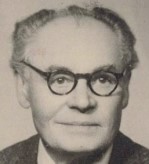
Nationality: French
Early training: Watchmaking school in Besançon, ‘École des Beaux-Arts’ in Besançon
Watch industry: watchmaker, inventor
Main achievements: Hatot distinguished himself with the invention of an automatic winding system for wristwatches in 1929 for which he was granted several patents (No. 704.910; 11.1.1930, No. 38.984, No. 39.523, No. 39.581; 30.11.1931). The 23.9.1930, Hatot grants the permission to Blancpain to market the system under the ‘Rolls’ name (1).
Around 1923 Hatot and his friend Marius Lavet start to dedicate much of their efforts to develop clocks which run on electricity. Their first electric clocks were shown at the ‘Exposition internationale des Arts Décoratifs et industriels’ in Paris in 1925. Then at the ‘Colonial exhibition’ of 1931, Hatot and Lavet can present several further miniaturised, electric clocks which will have much success. In 1938, Marius Lavet filed a patent for Hatot for the Lavet stepping motor, which in principle is still used today in quartz watches (1).
The ‘Societé Hatot’ was amongst the first to use transistors in horology, the first patents being attributed the 16.9.1953, just five days after Hatot’s death. The firm did not have enough capital to exploit their patents and thus they were forced to grant licenses to other manufacturers such as L. Leroy & Cie., Ebauches SA., Junghans, Westclox, Smith & Son, Bulova, Jaz et General Time. The systems using Hatot patents are marked ‘Lic. ATO’ (1, 2).
Picture credit: Watch Wiki
 Electric Watch Prototypes
