
Ebauches SA, Pre-475B, P1-V2 Prototype #9, 1954
Category: proof of principle, functional prototype
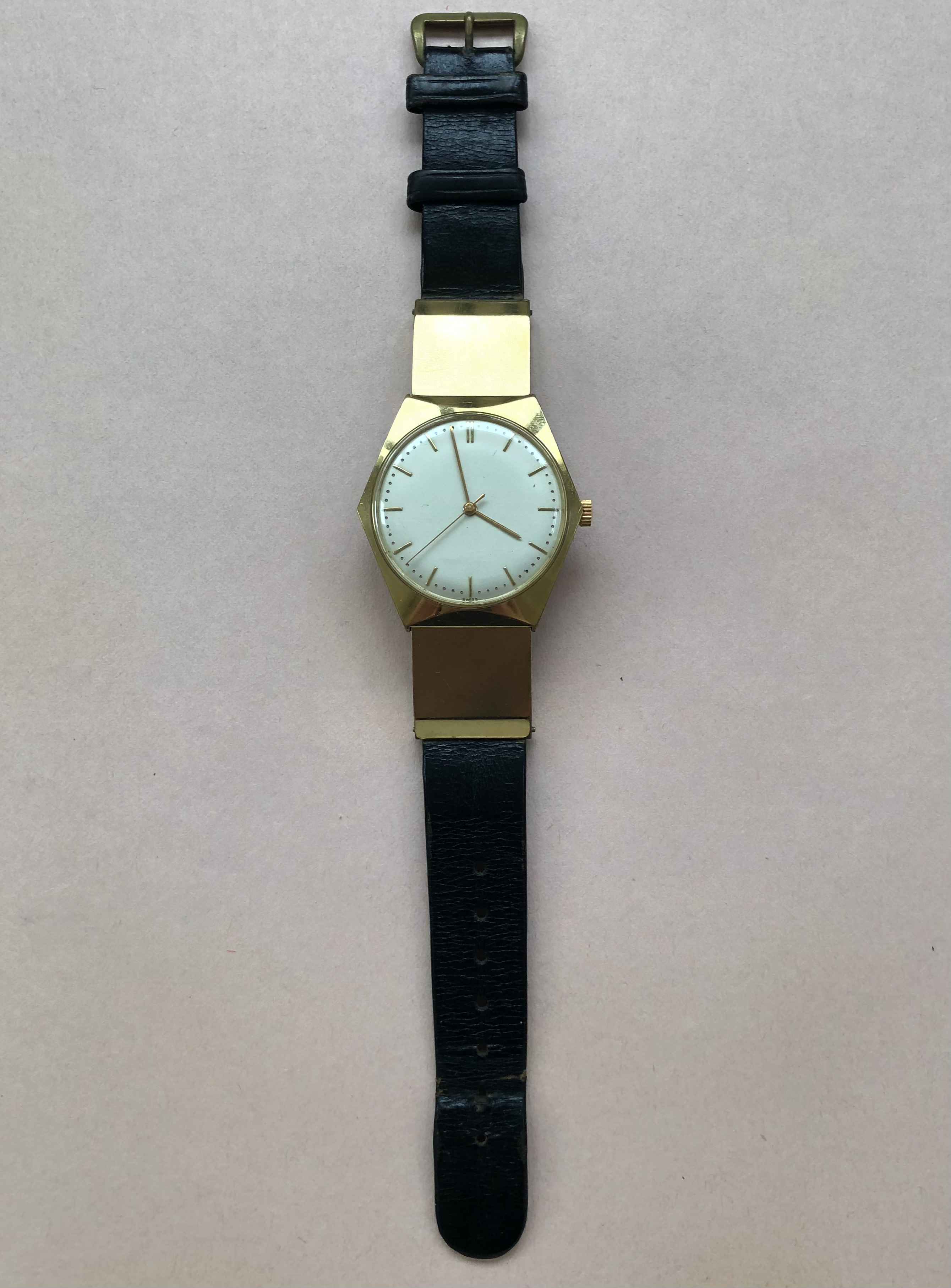
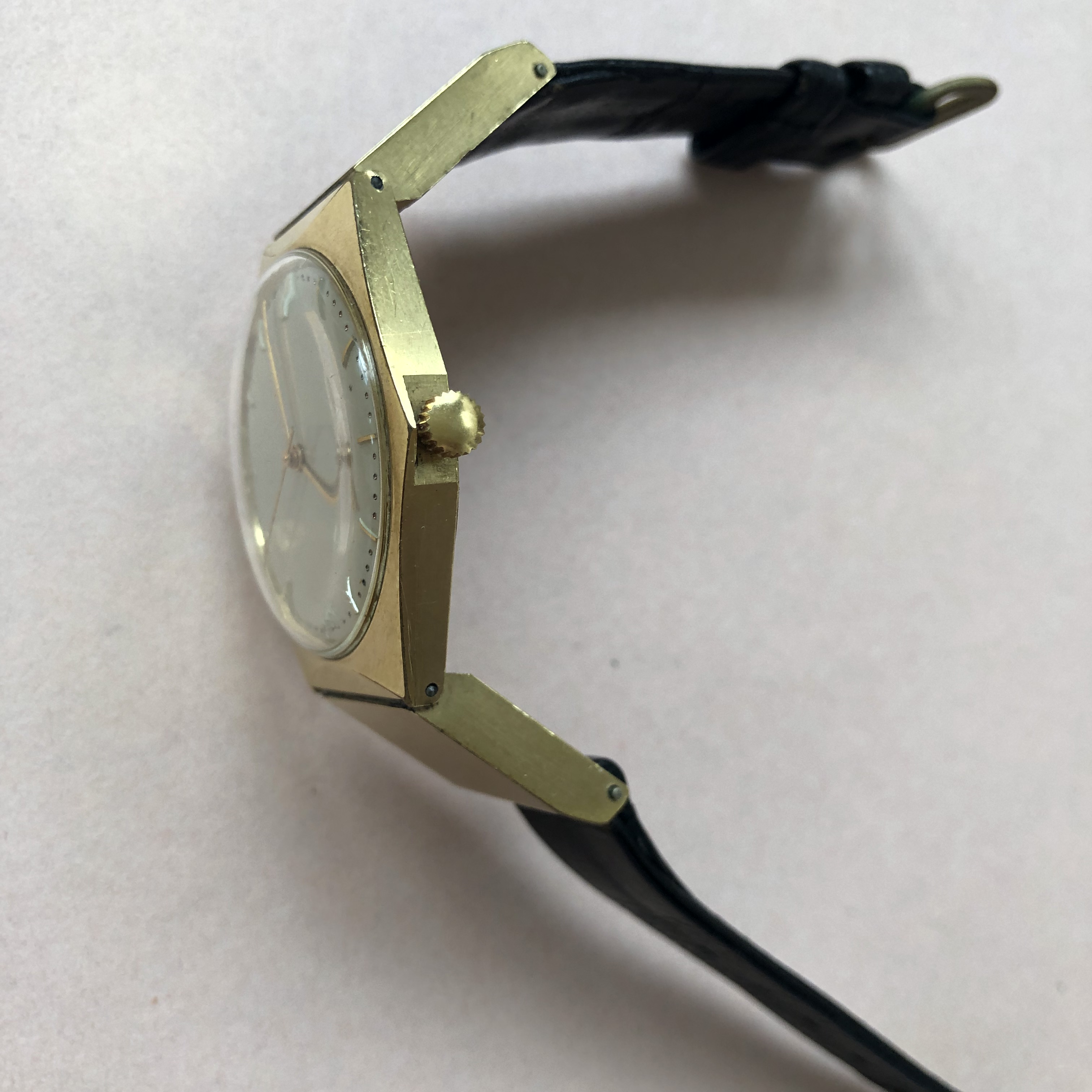
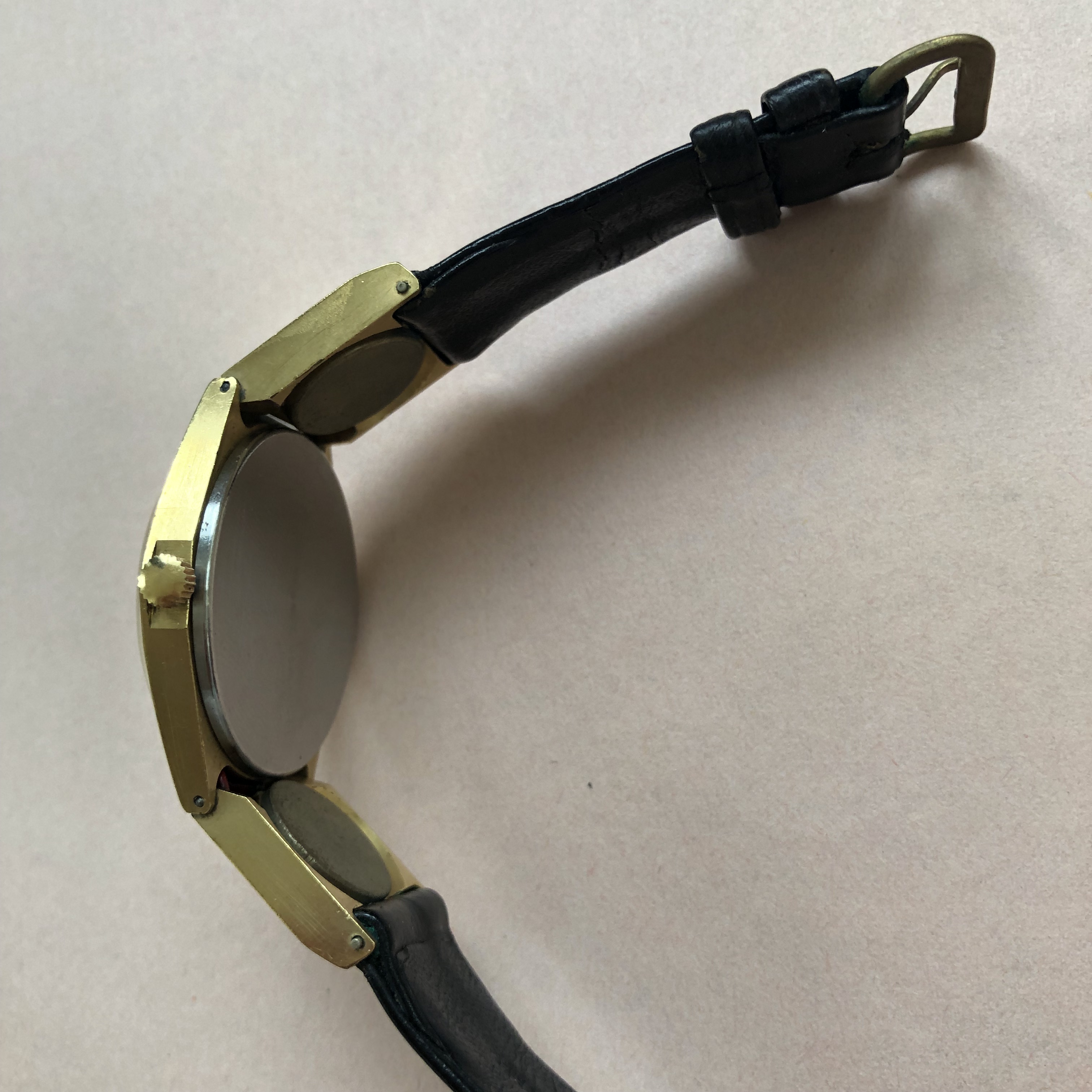
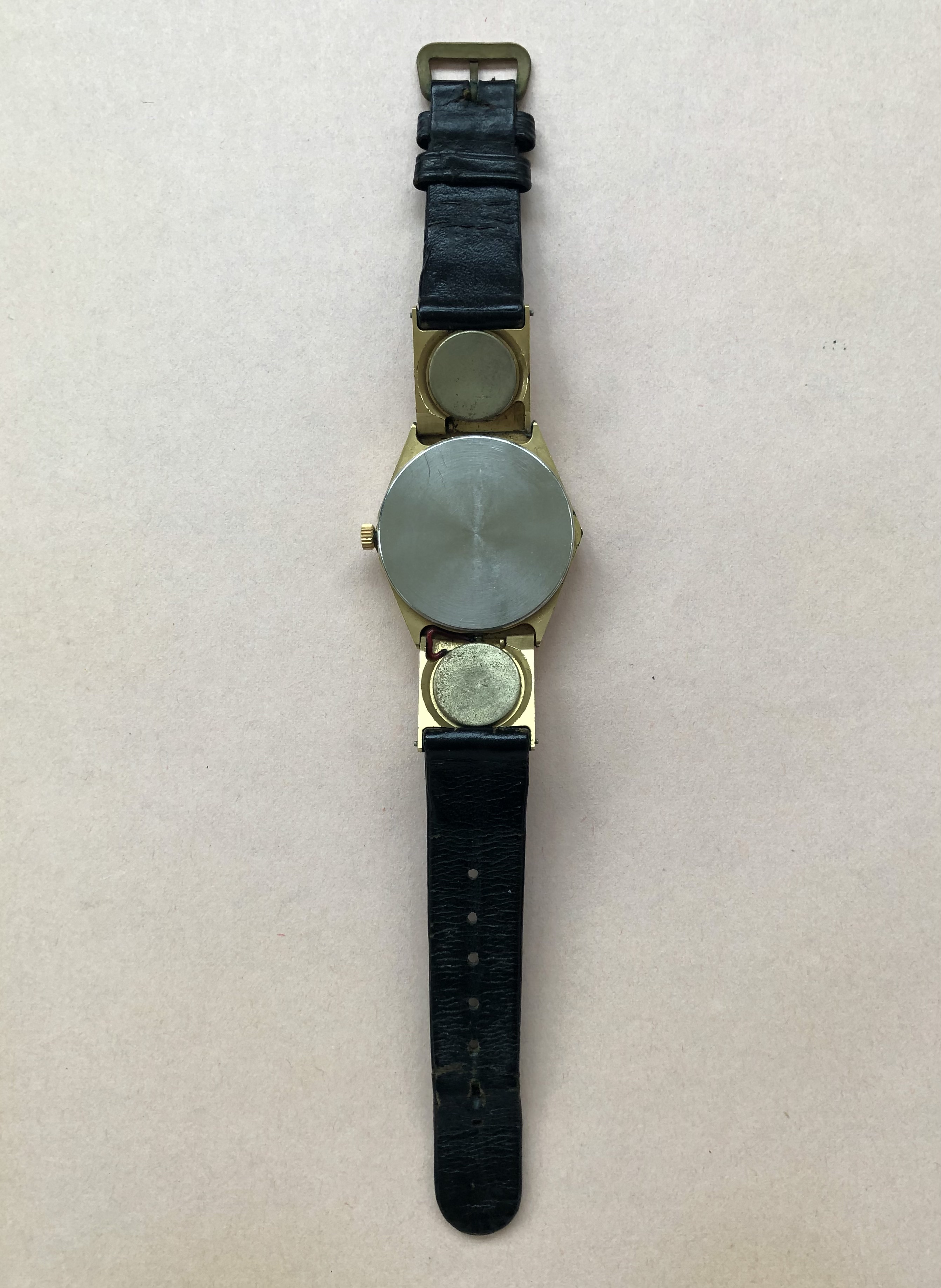
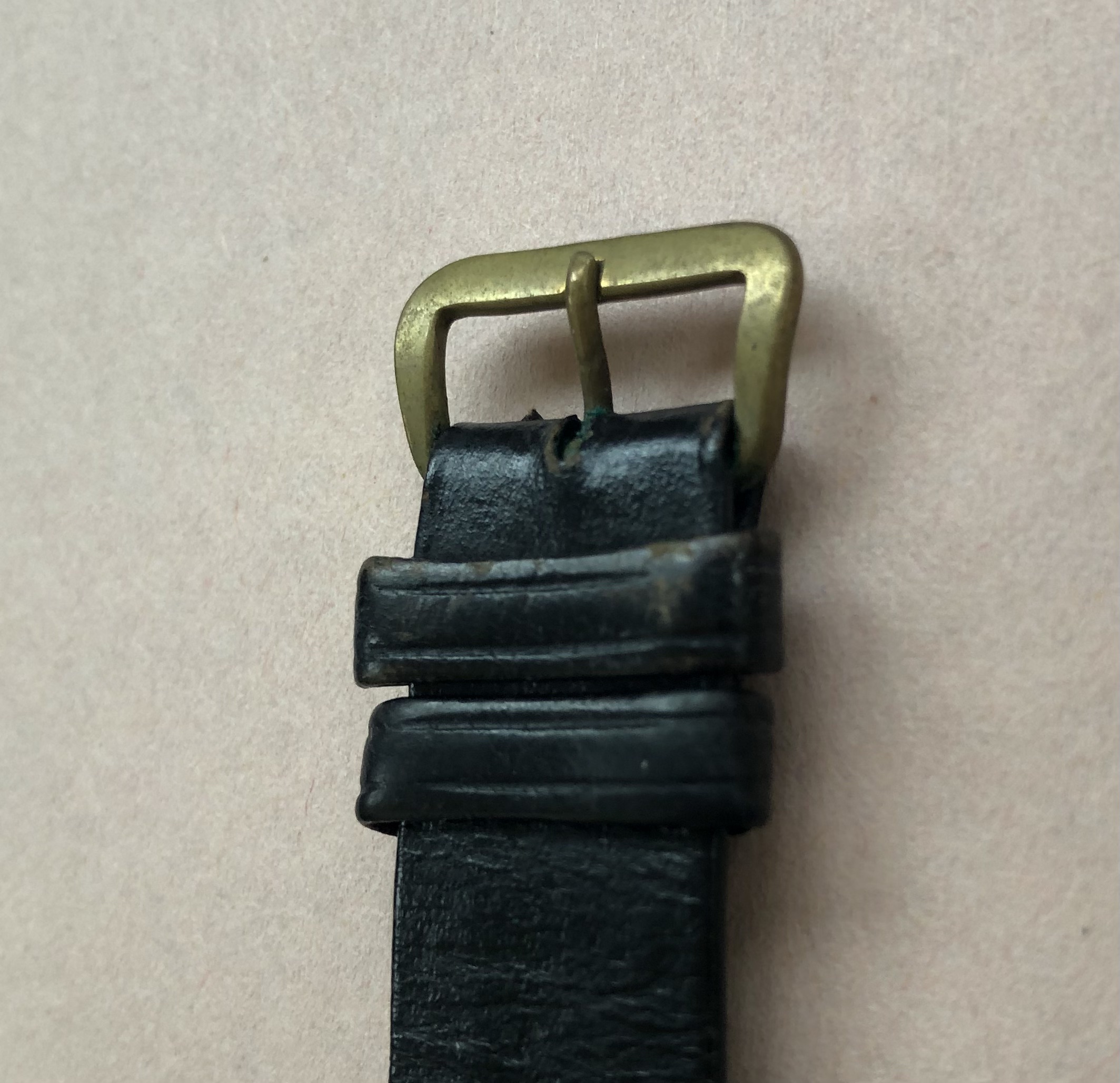
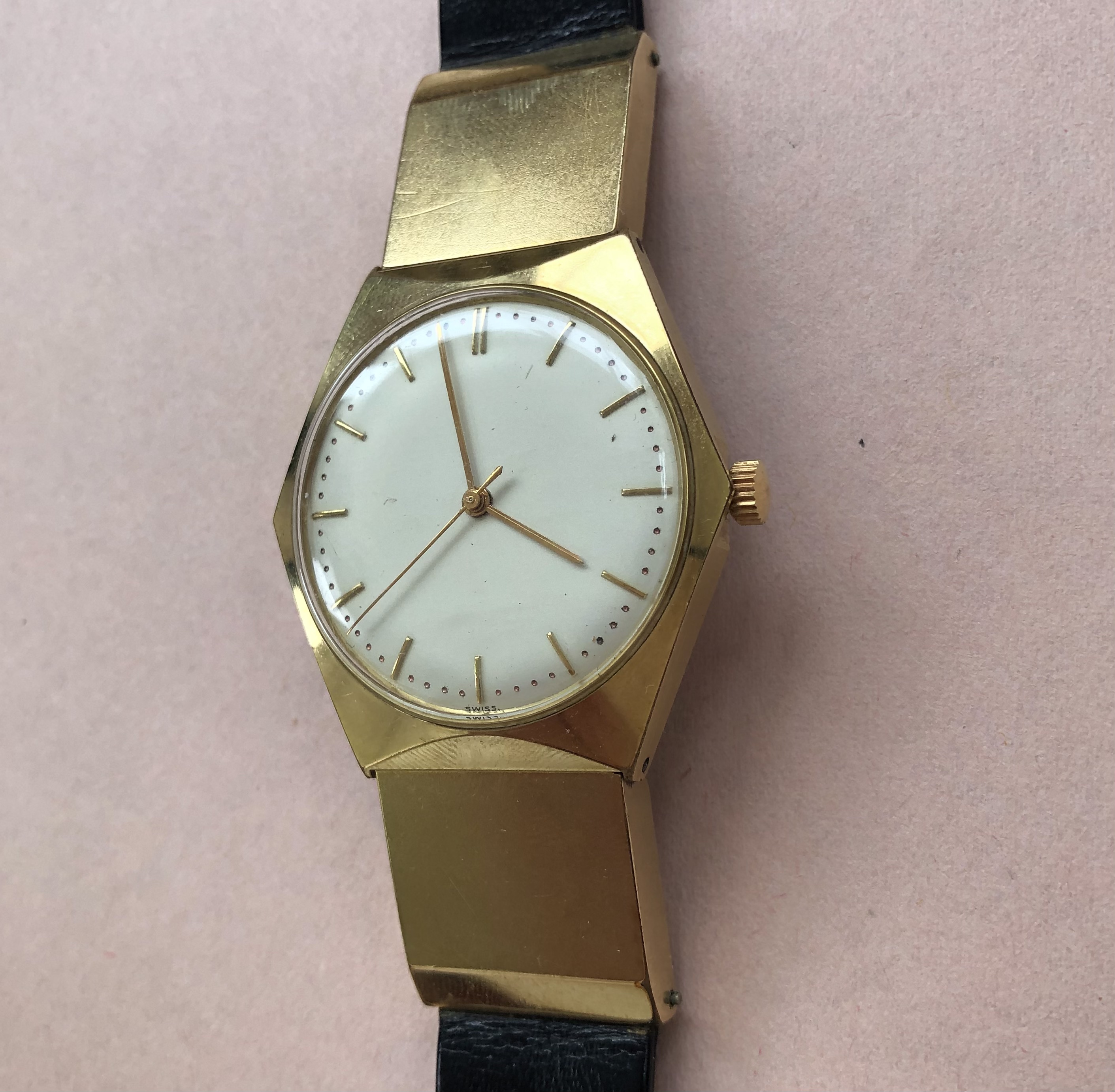
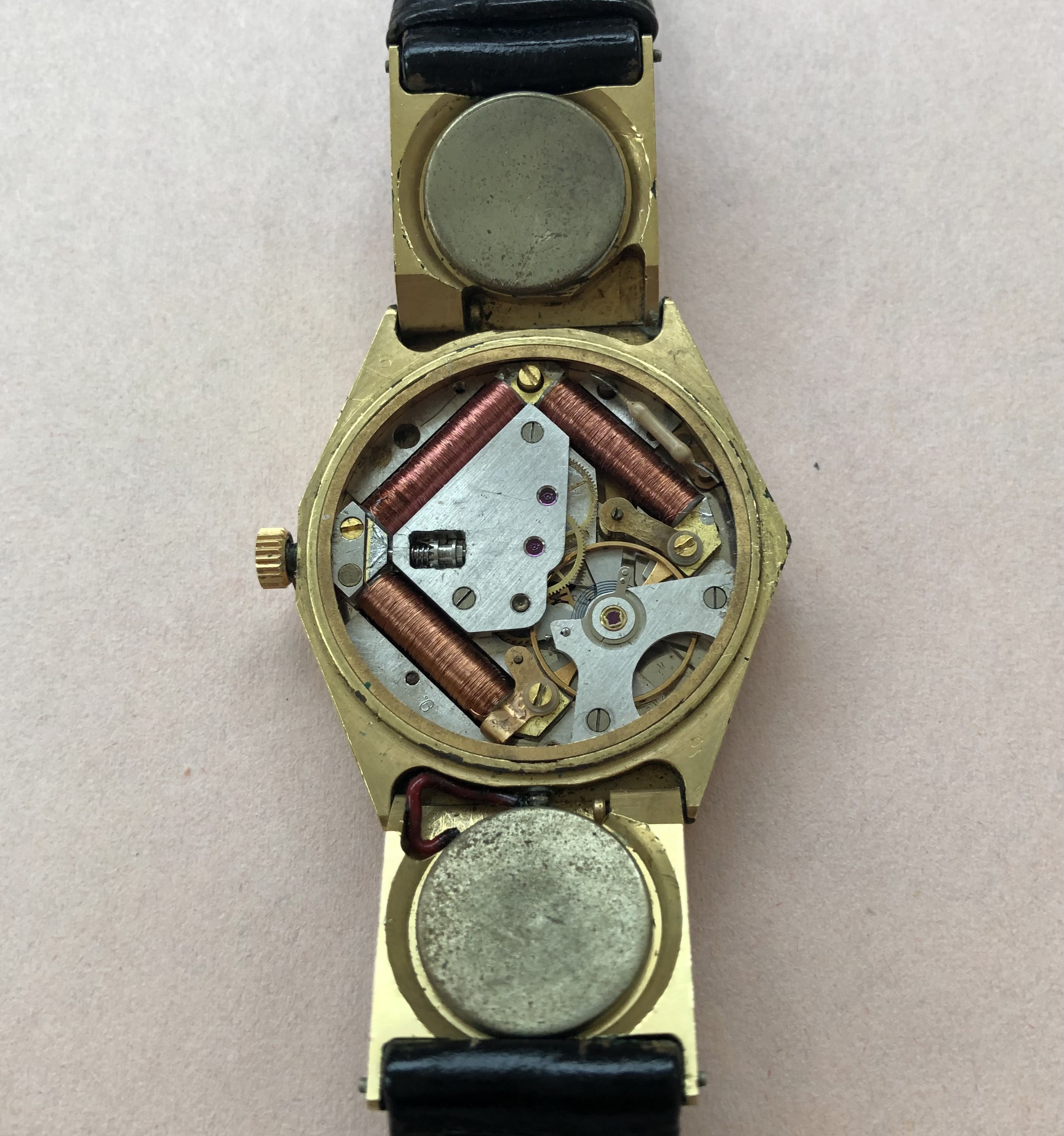
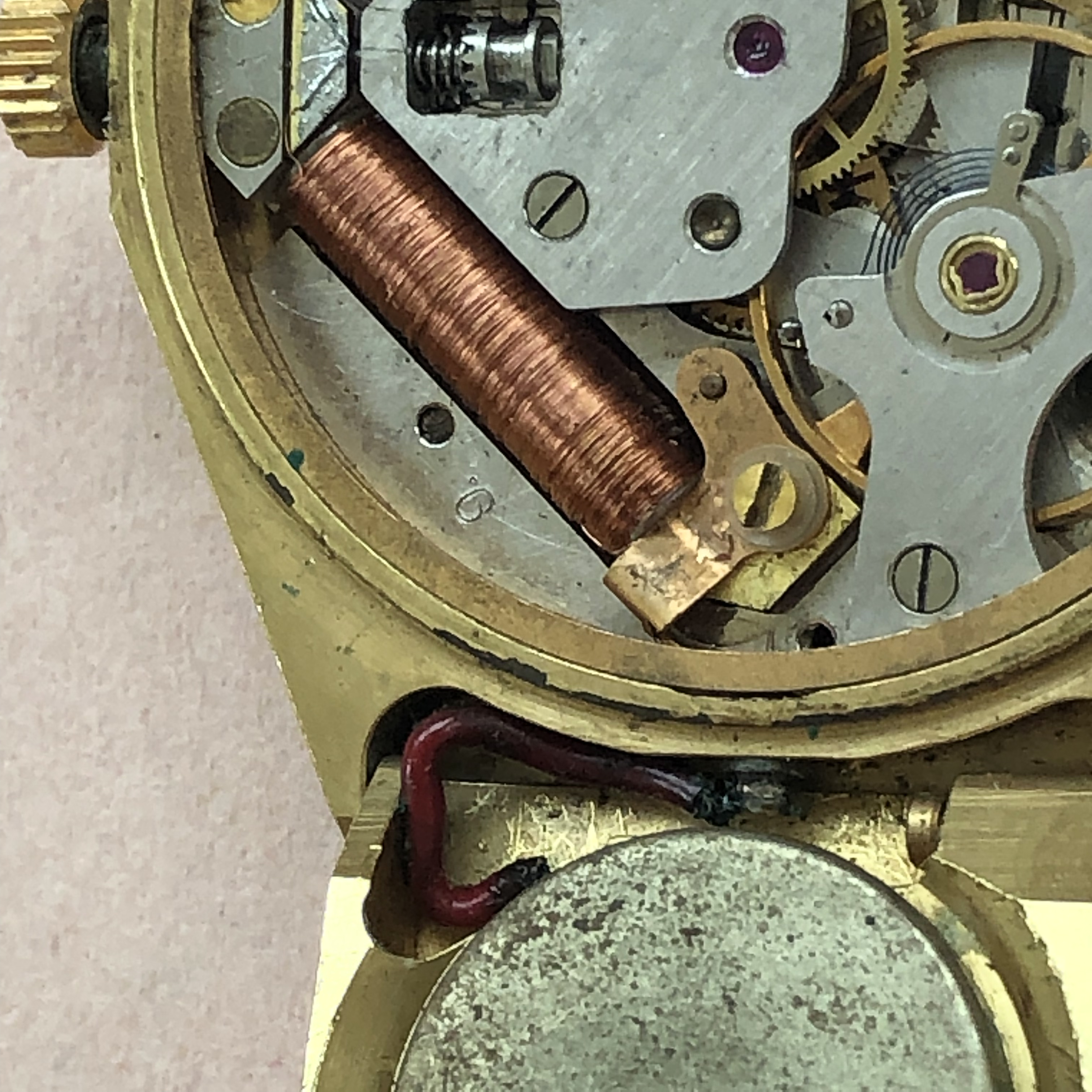
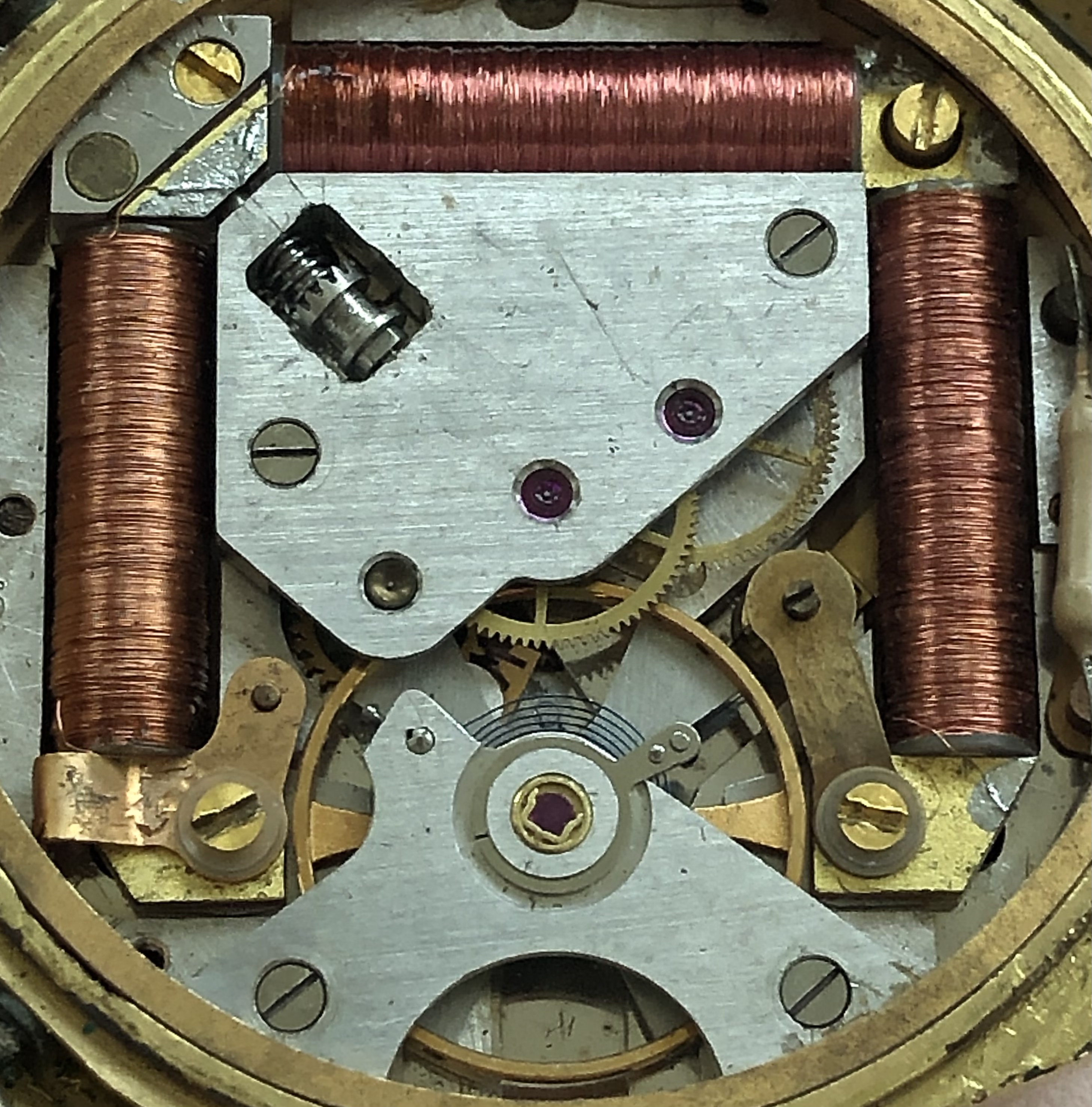
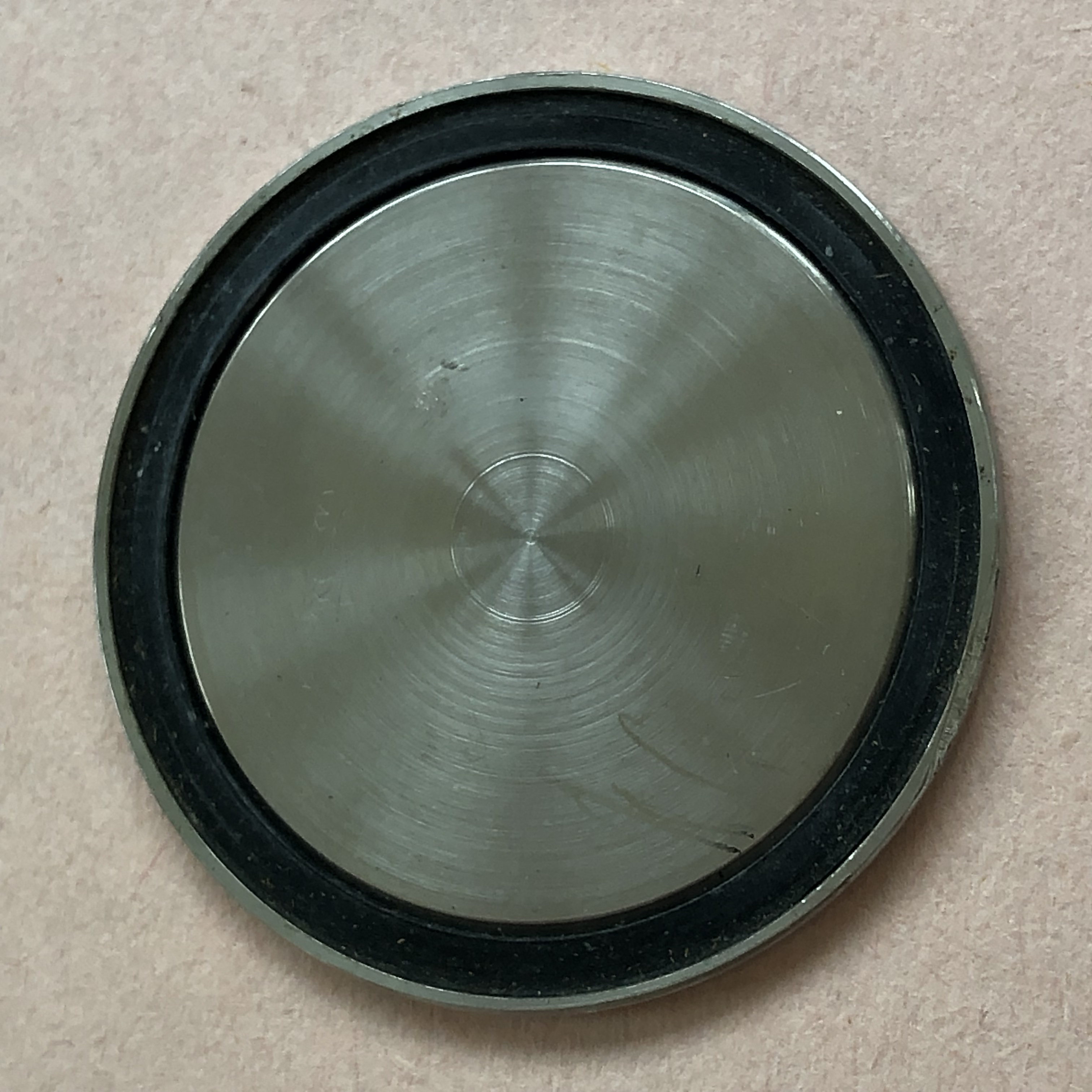
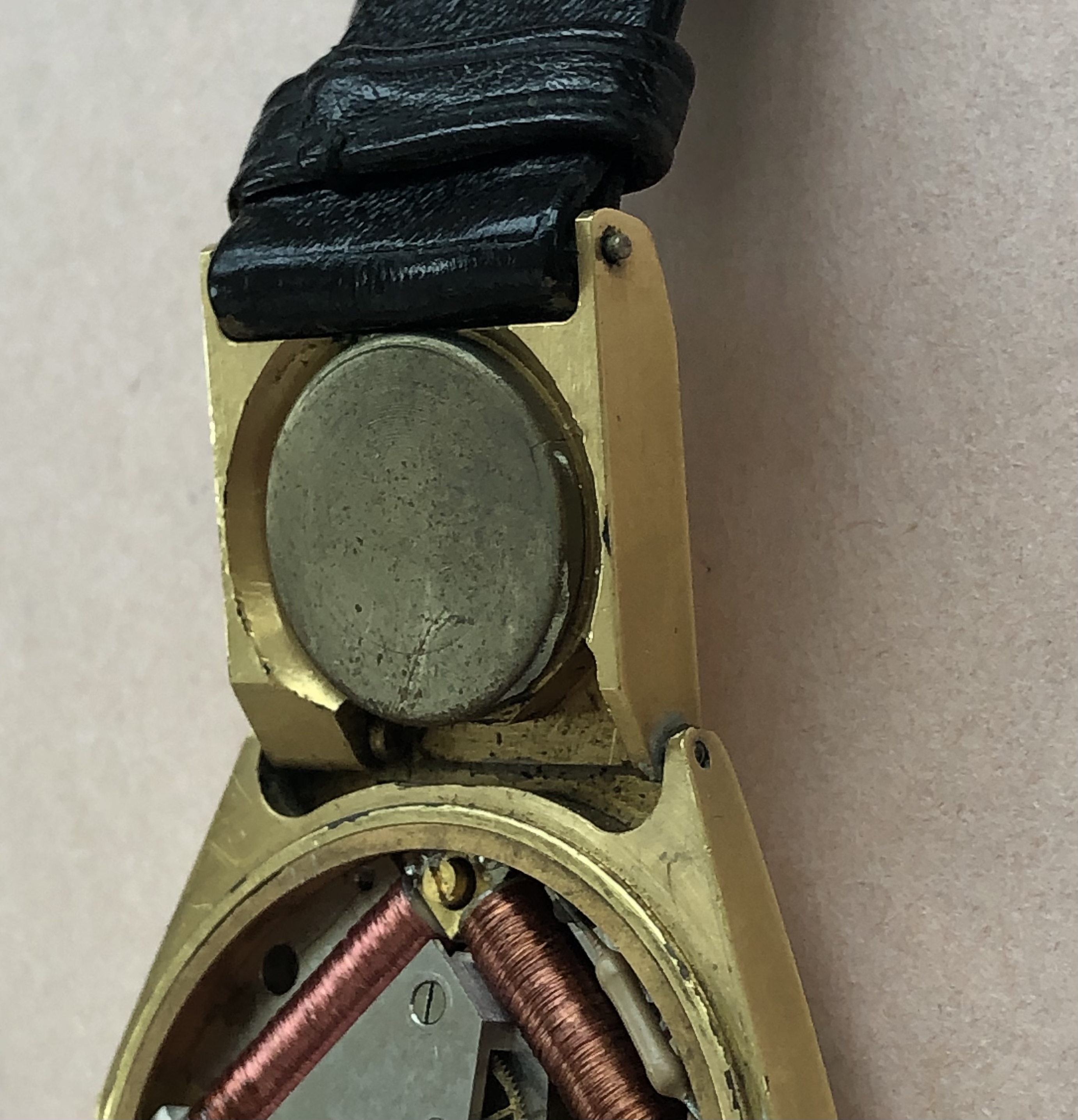
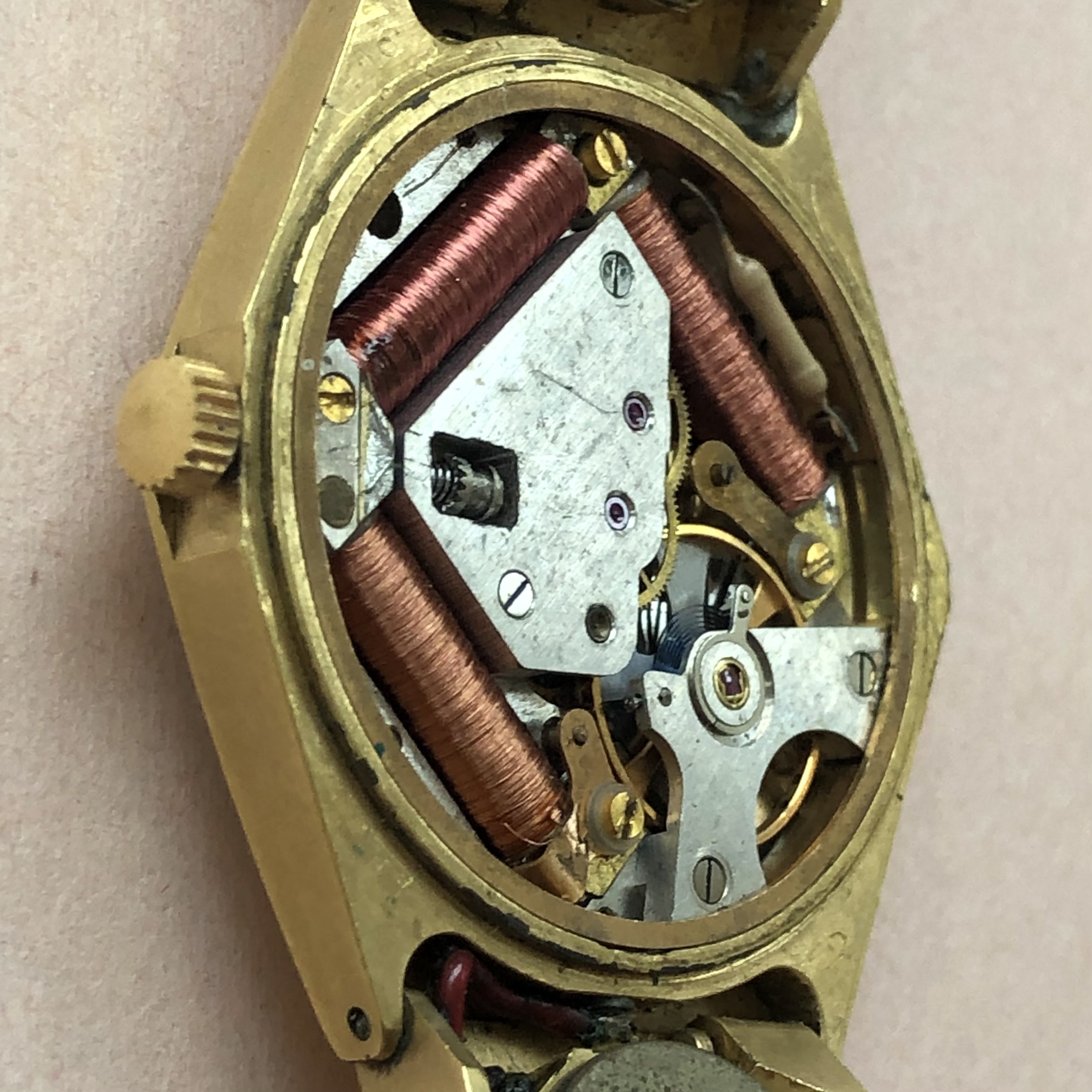
Description: Octagonal, gilt, brass cased prototype with polished surfaces (EPSA, E. Piquerez SA). Stainless steel snap case back with no engraving. Press fitted, brass movement holder, movement press fitted into the brass holder. Stainless steel snap back with original rubber seal. White dial with raised, gilt 5min baton indexes, black printed ‘Swiss’ at ‘6’. Gilt hands and original acrylic crystal. Gilt, base metal crown. Adjacent large gilt brass and hollowed bracelet links both containing one battery recess each. Each battery recess is covered with a white metal lid. One battery is for alimentation and connected to the movement through a red insulated wire, the other battery is for replacement. Original leather strap with original gilt brass buckle.
Dimensions: 37mm (without crown), lug – lug (without metal battery links): 38mm, lug – lug (with metal battery links): 75mm, lug width for leather strap: 18mm
Movement: Pre – 475 P1 Prototype movement #9
Additional info: This piece represents one of the two versions of the earliest known Swiss made battery driven wrist watch. The caliber identification was not yet defined, but as the next generation of prototypes is named 475, it seems appropriate to call it ‘Pre-475’. This appears to be the second variant (V2) of this caliber, being alimented by one battery located at the beginning of the strap, housed inside a broad metal link. The inside of the snap back is hand scratched ‘B’. As for all electric and electronic watch developments, battery life was crucial for a marketable watch, as it could not be envisioned that customers would need to replace the battery often.
As mentioned in the parent section, one other version of the same caliber would be alimented by a rechargeable battery (Accumulator) located in the case back (P1-V1), that would be Version ‘A’.
Laco (Lacher / Durowe) in Germany will develop a system a few years later, towards 1956, where the movement will include germanium and silicium transistors and the same solution of placing the batteries inside adjacent links. This German development will be patented in Germany in 1958 and in Switzerland in 1960 (CH – 348661) (1, 2).
Provenance: Ex. Hans Baumann collection
Published: Bramaz H.-R., Baumann H.; Die Elektrische Armbanduhr, Band 1, Verlag Stutz Druck AG, Wädenswil, 2013, page 44, picture 1
Ref.:
- Theo: @electric_timepieces
- Bramaz H.-R., Baumann H.; Die Elektrische Armbanduhr, Band 1, Verlag Stutz Druck AG, Wädenswil, 2013
 Electric Watch Prototypes