
Ebauches SA, MOSABA P2 – Prototype #13, 1966/67




Prototype category: functional prototype
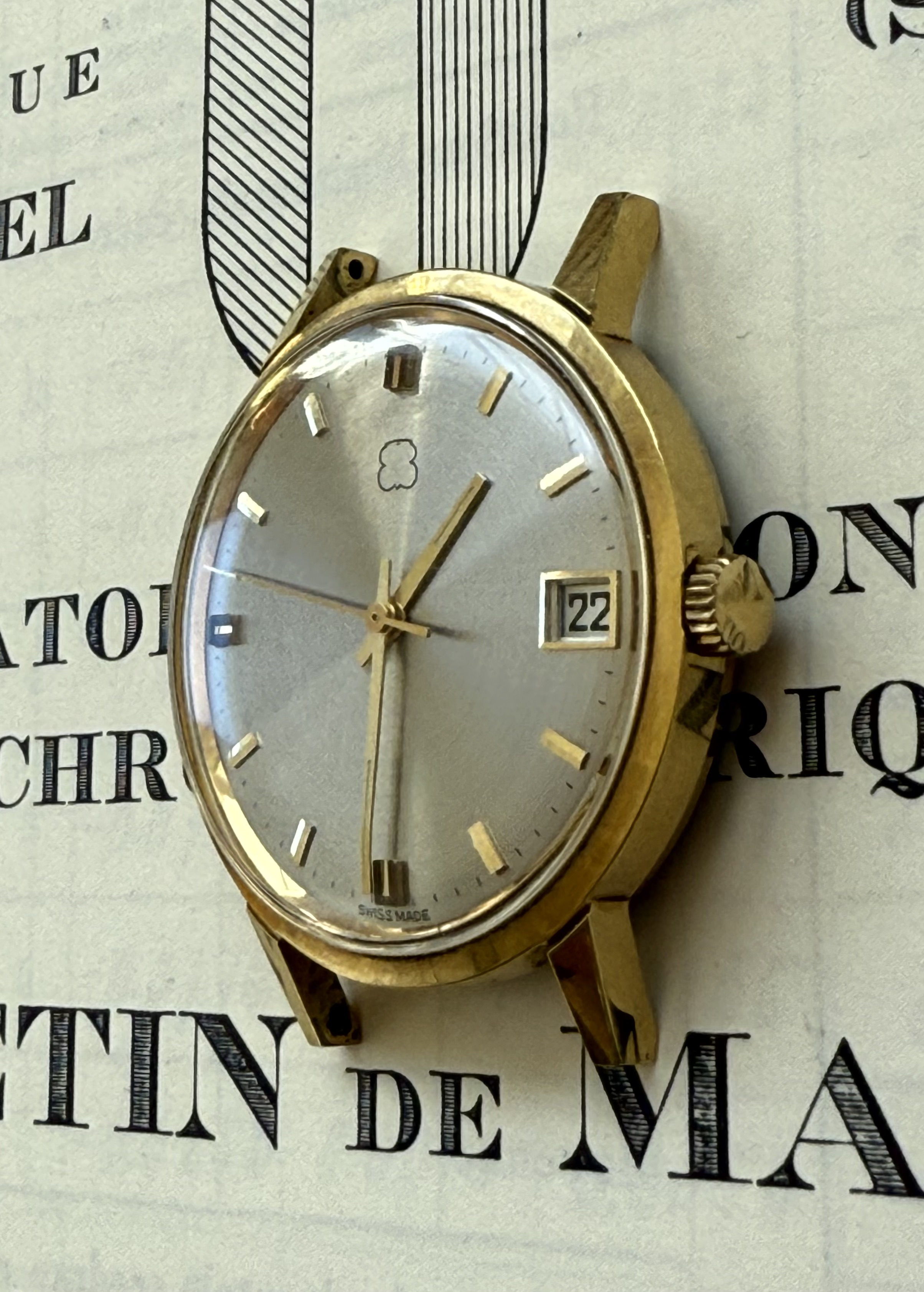
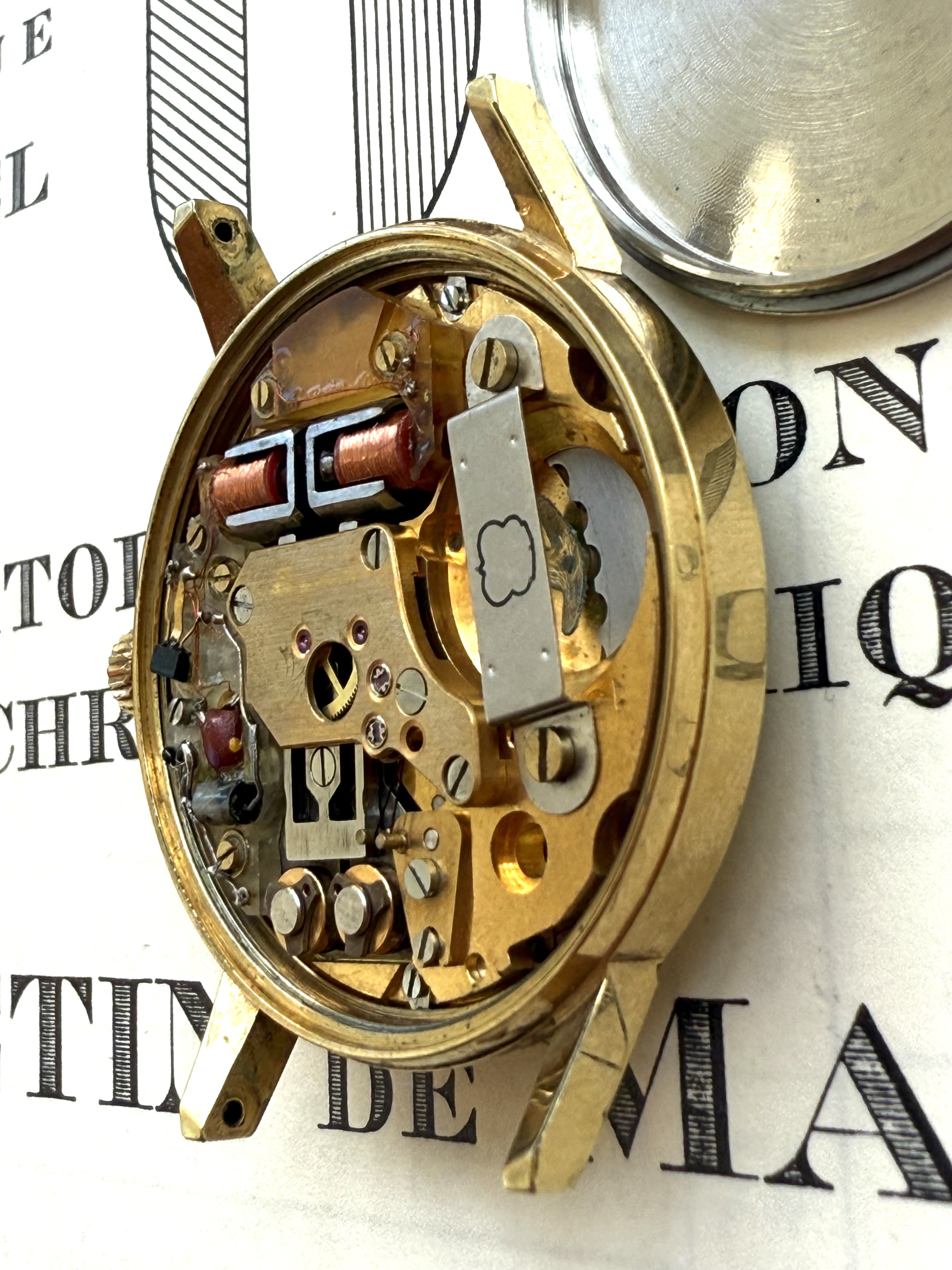
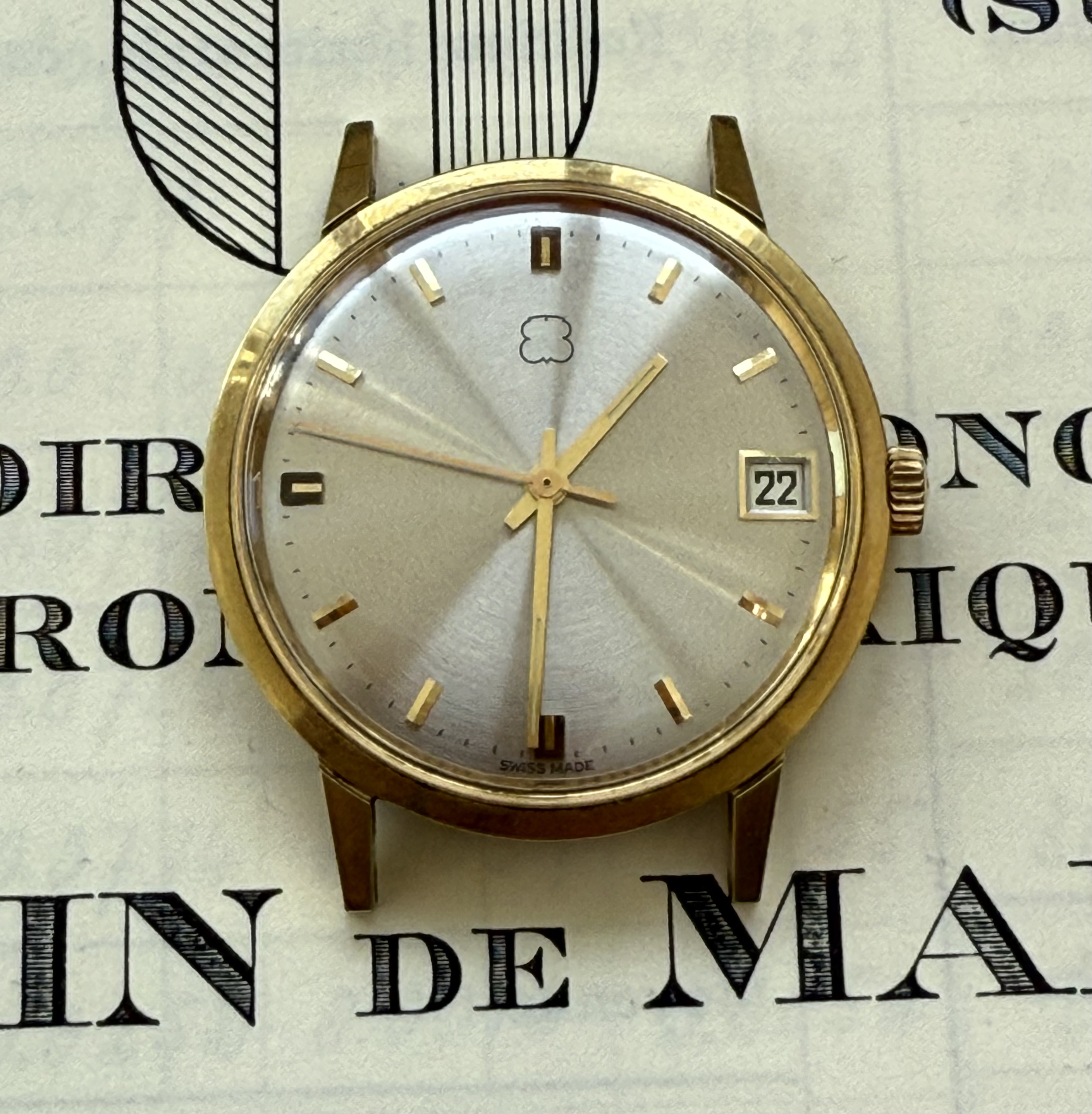
Description: Gilt brass cased prototype MOSABA caliber in experimental, transitional layout. Plain stainless steel screw down case back, the back hand scratched ‘No.13’. Silvered dial with gilt, raised indexes, ‘Ebauches SA’ logo under ’12’, ‘Swiss Made’ below ‘6’. Date window at ‘3’. Movement with partially plain brass bridges and ’13’ stamped on the main plate. Black printed ‘Ebauches SA’ logo on the stainless steel battery holder. No movement identification stamps. Gilt original hands. Original gilt crown. Original acrylic crystal.
Dimensions: Diameter: 34mm
Movement: MOSABA, prototype #13
Additional Info: This prototype shows important differences compared to the marketed version. The large back plate, where in the production version the recess for the ID – plaque is situated, is missing. The smaller bridge covering the wheel work of the caliber permits access to the electronic parts, which are hand assembled and hand soldered. The tuning fork is made of blued steel, a feature which influence on the precision performance of the caliber still needs to be determined. The weight attached to the tuning fork is made of polished steel and is hand scratched ’26’. The stem release is a small screw, whereas in the production version it consists of a push-button. The battery holder is made of steel with, attached to the main plate by two screws.

This movement participated to the 1966 chronometer competition held at the Observatory in Neuchâtel. It reached the 7th place in the category of ‘electronic chronometers’. Other versions of this caliber had beaten Max Hetzel’s ‘Swissonic’, which motivated Hetzel to increase the frequency to 720Hz, which was still not enough to concurrence the Ebauches SA’s MOSABA in 1967.
Bulova, in midst fierce licence negotiations with Ebauches SA, strongly contested that ESA submitted MOSABA movements to the observatory competition of 1966 while still negotiating over the licence. In late 1967 a licence agreement was found, hence the later updated versions show the licensing and patent declaration on the caliber starting from then.
This movement #13 is not cased in chronometer competition configuration any longer. After attending the competition of 1966 it was re-cased to be presented in a wearable wrist watch configuration at the Basle Fair 1967. Later it was tested on the wrist by André Beyner himself.
By 1968 the definitive MOSABA version was presented at the Basle Fair, with most technical aspects being finalised. Orders by the main watch manufacturers followed and the respective calibers entered production in 1968/69. The first models were available in late 1969.
This is one of 4 known, surviving, intermediate MOSABA prototypes, one other (#9) in the same wrist watch configuration, but its whereabouts are unknown. 2 other versions (#4, #5) still remain in chronometer competition configuration.
Provenance: Ex Estate of André Beyner
 Electric Watch Prototypes