
Ebauches SA, MOSABA P2 – Prototype #4, 1966/67
Prototype category: experimental prototype
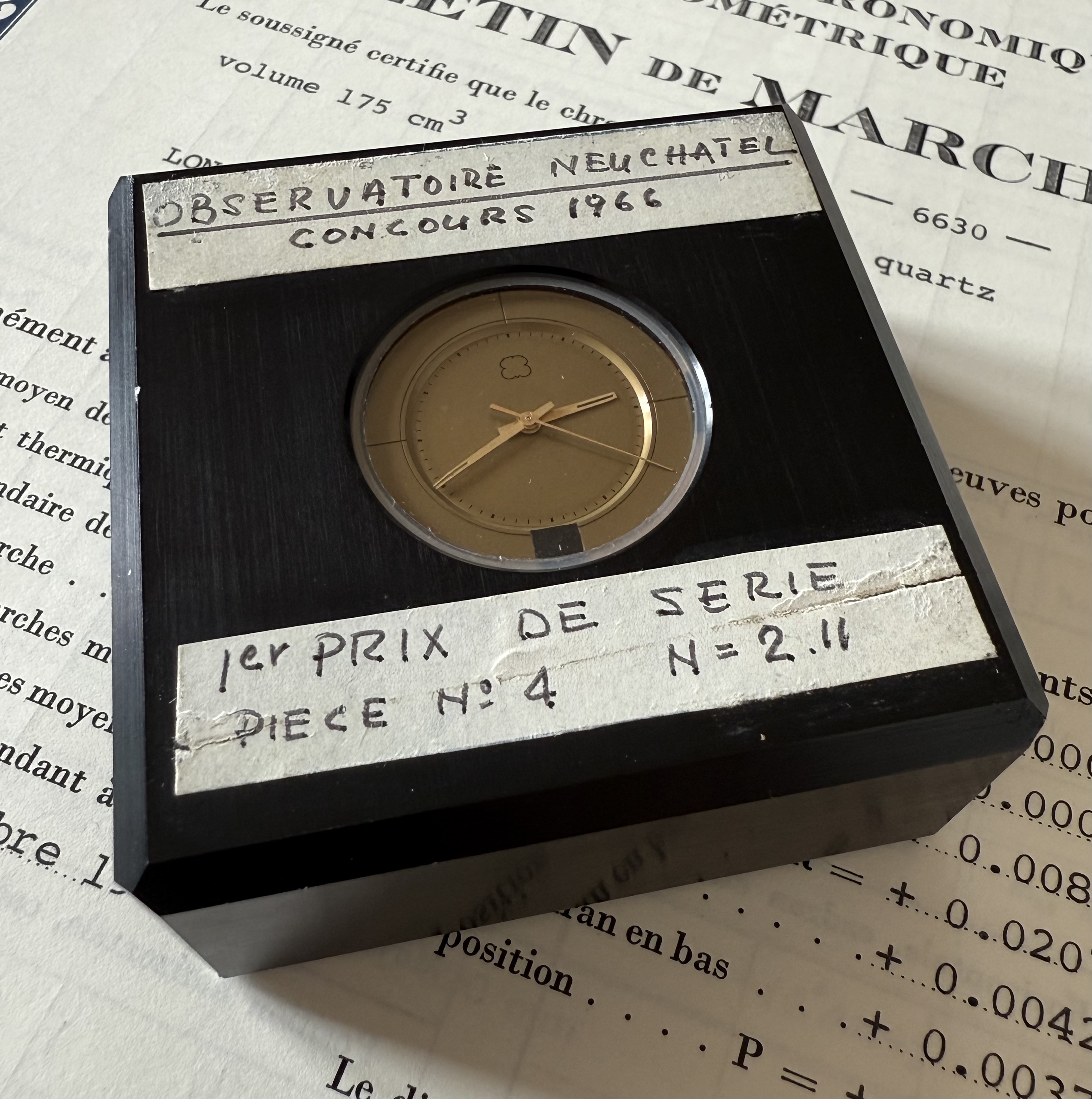
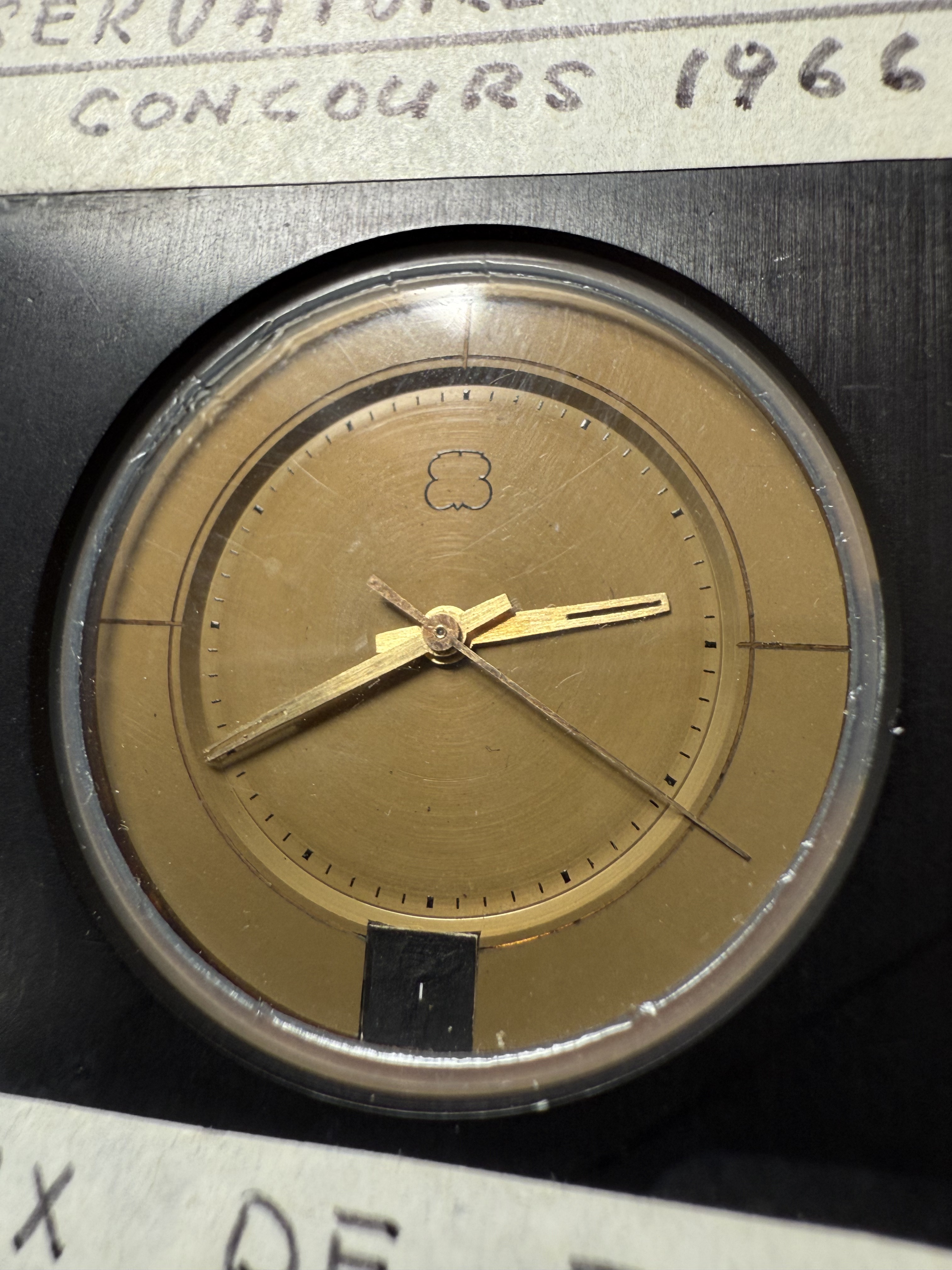
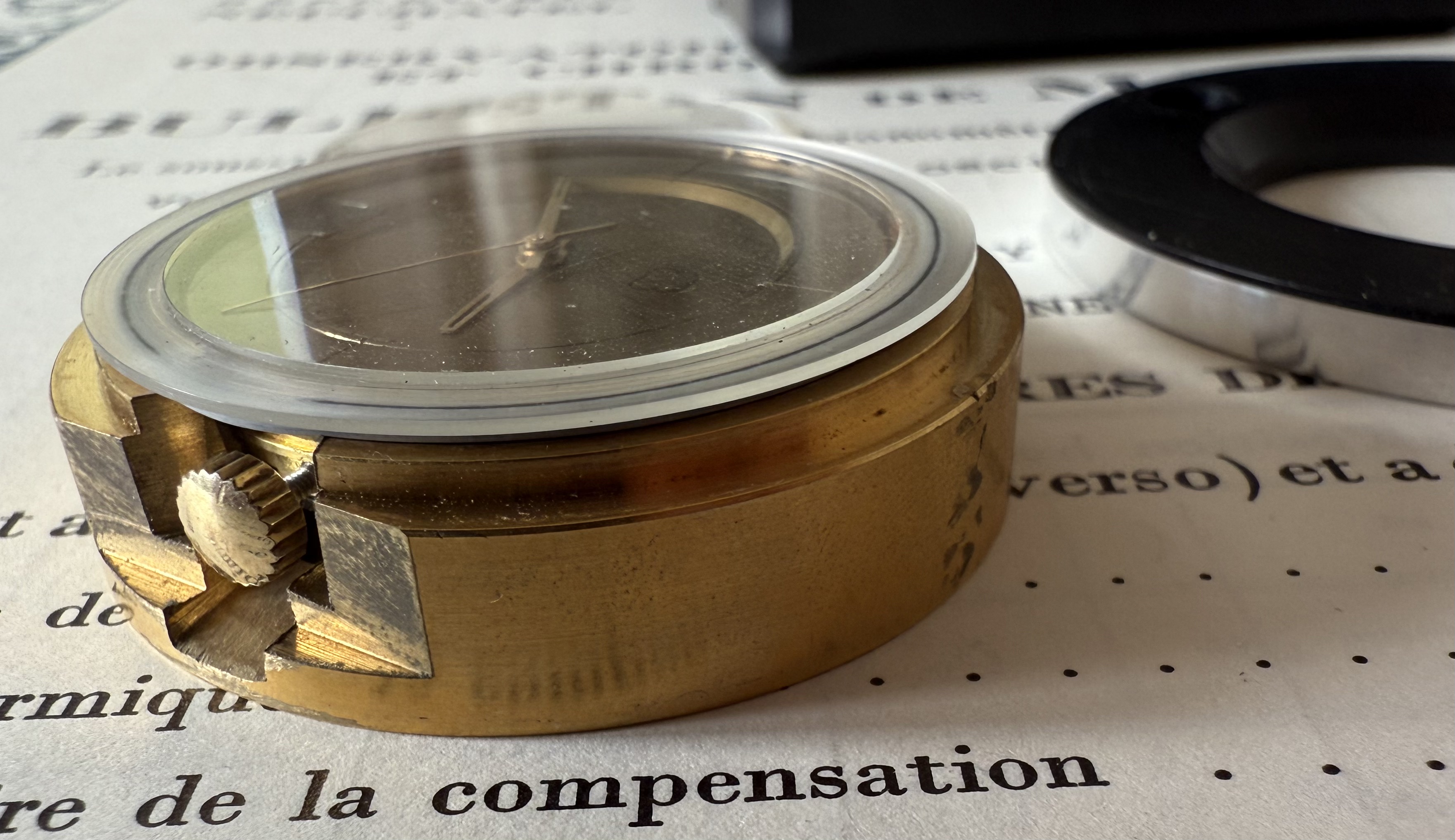
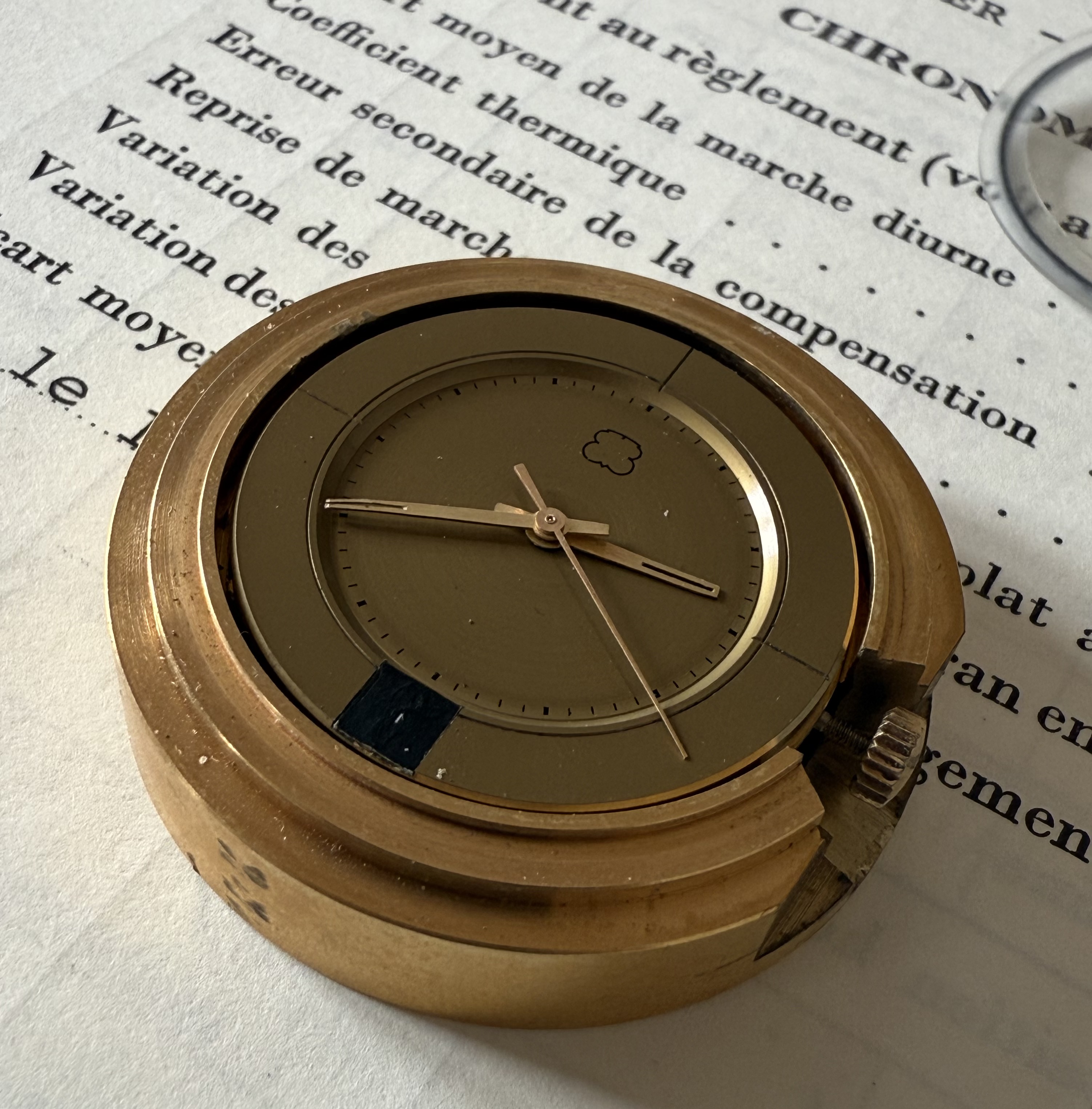
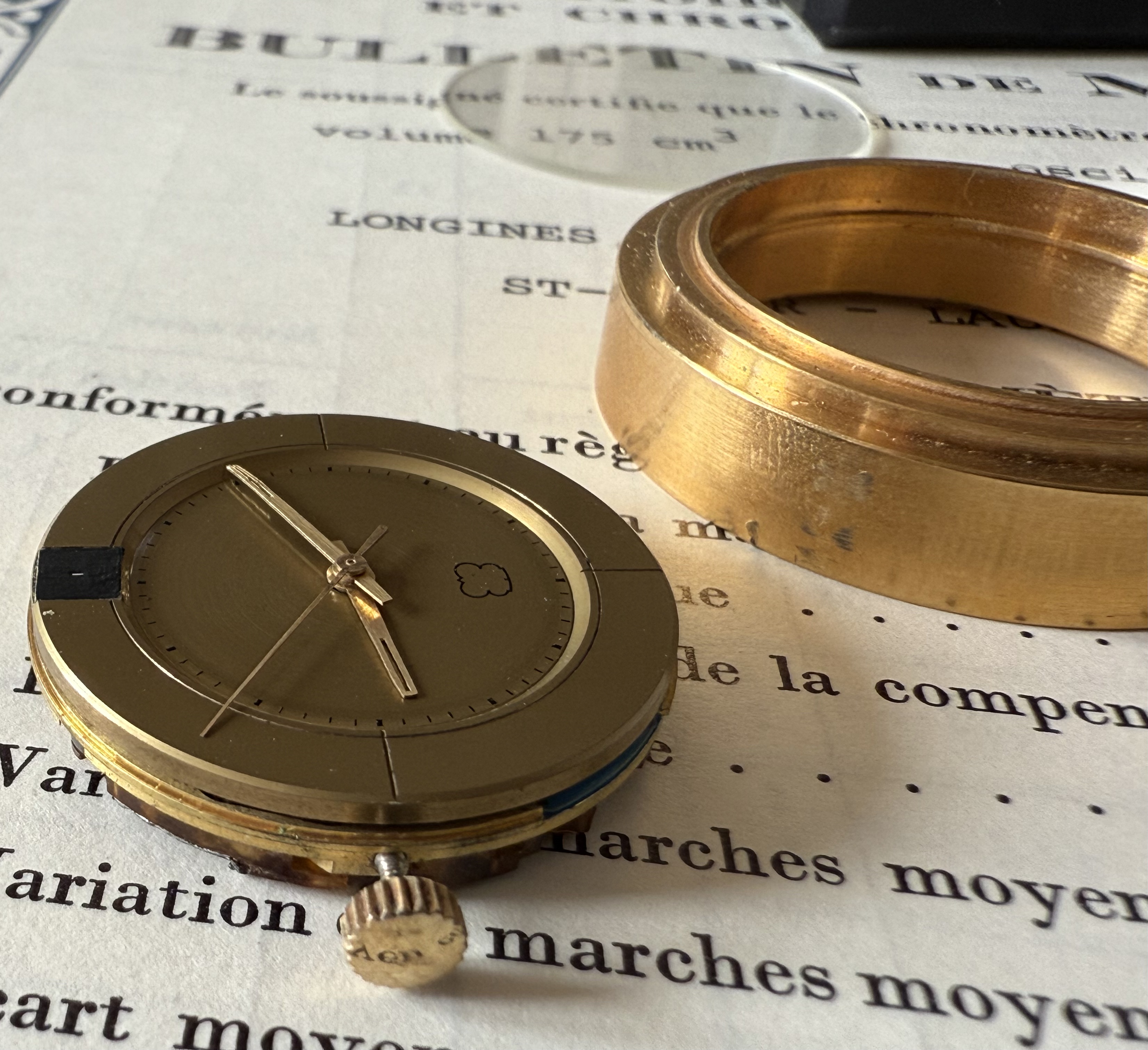
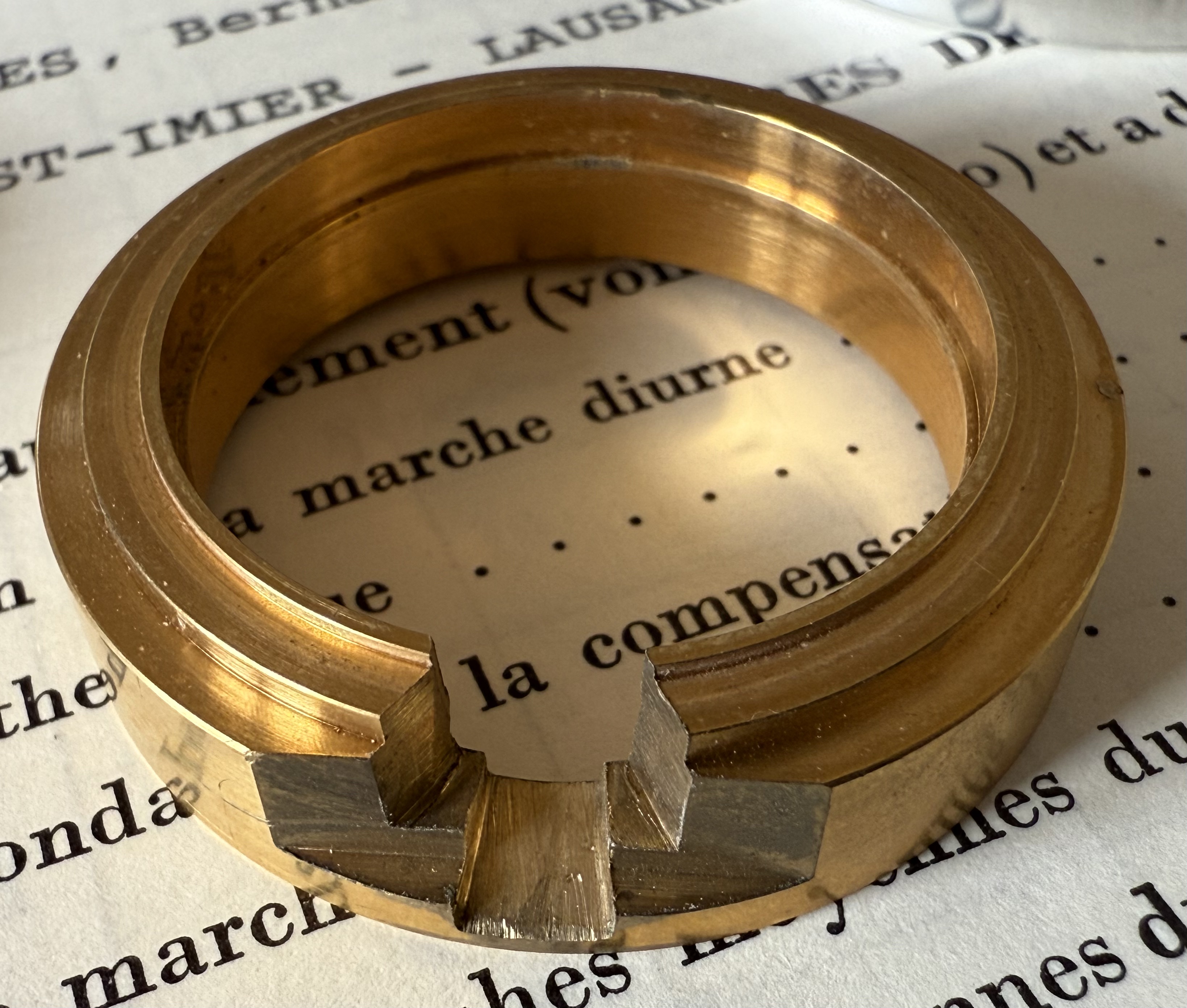
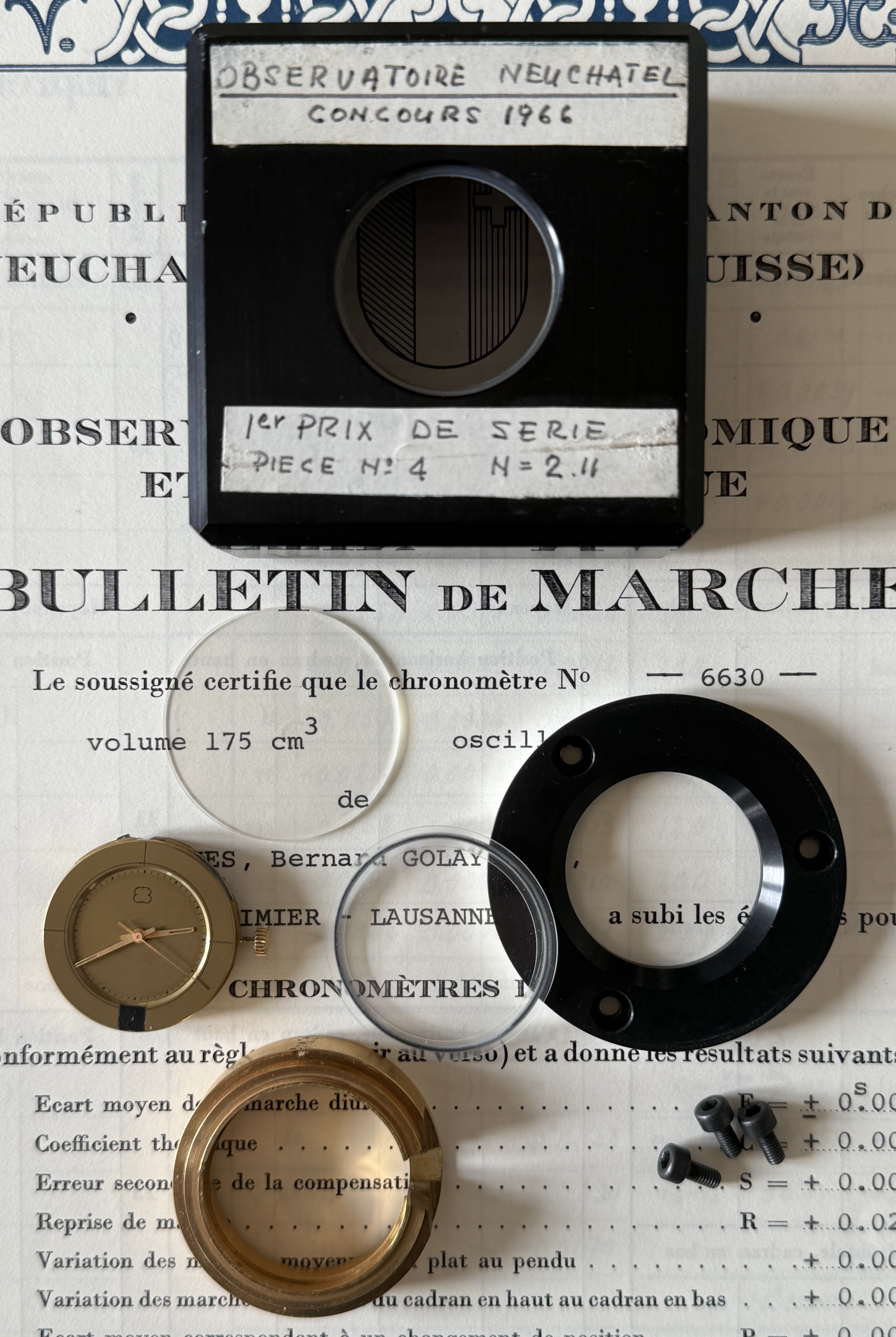
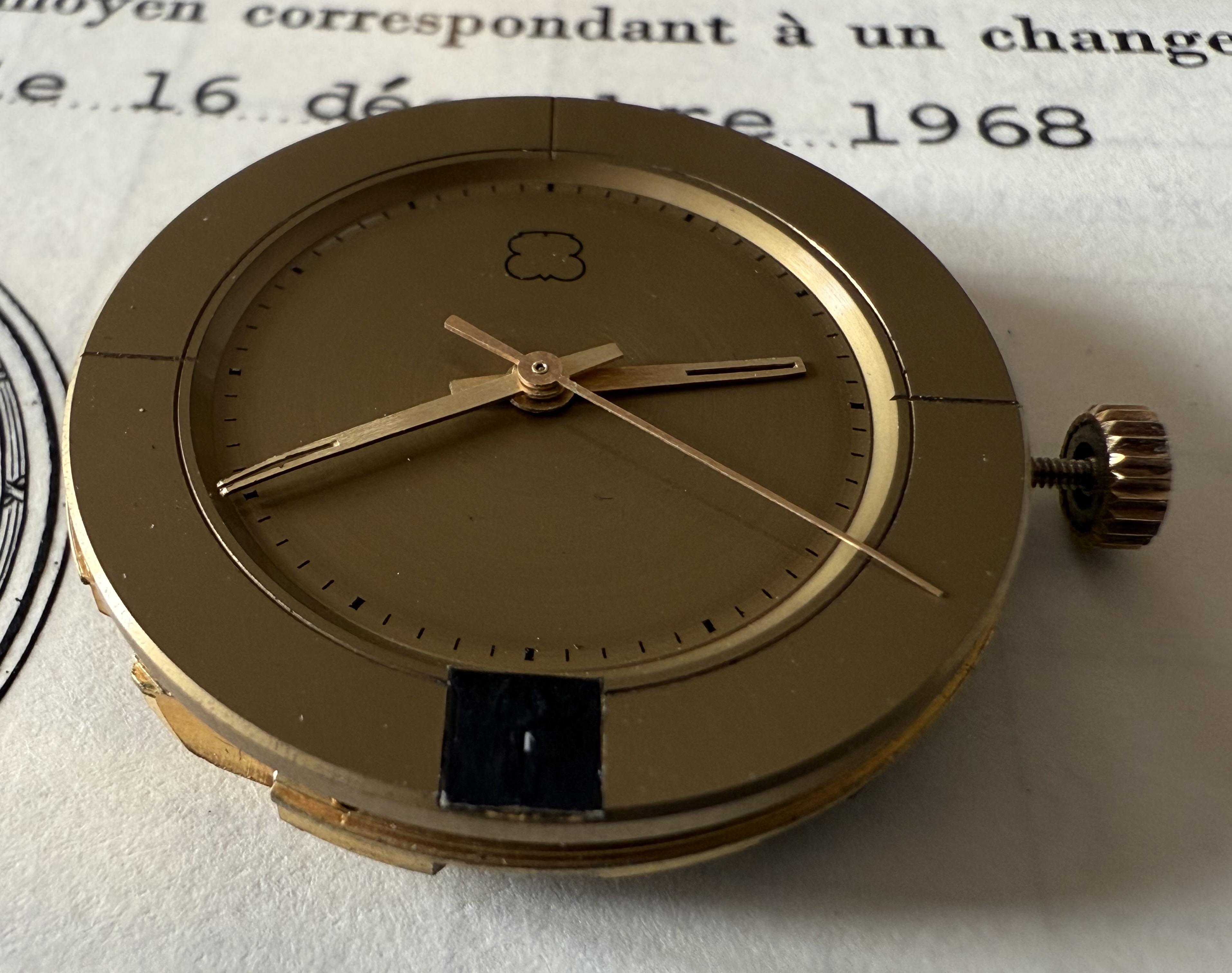
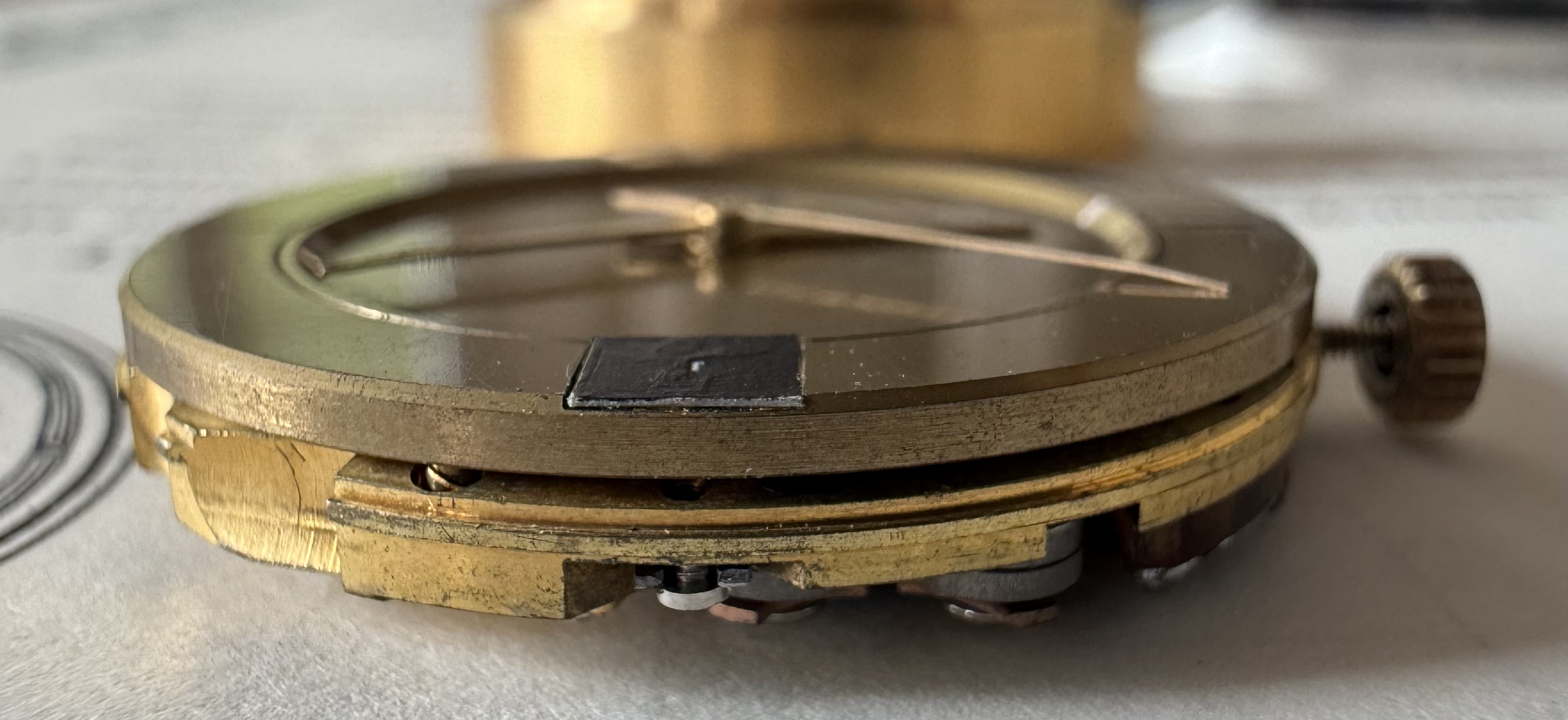
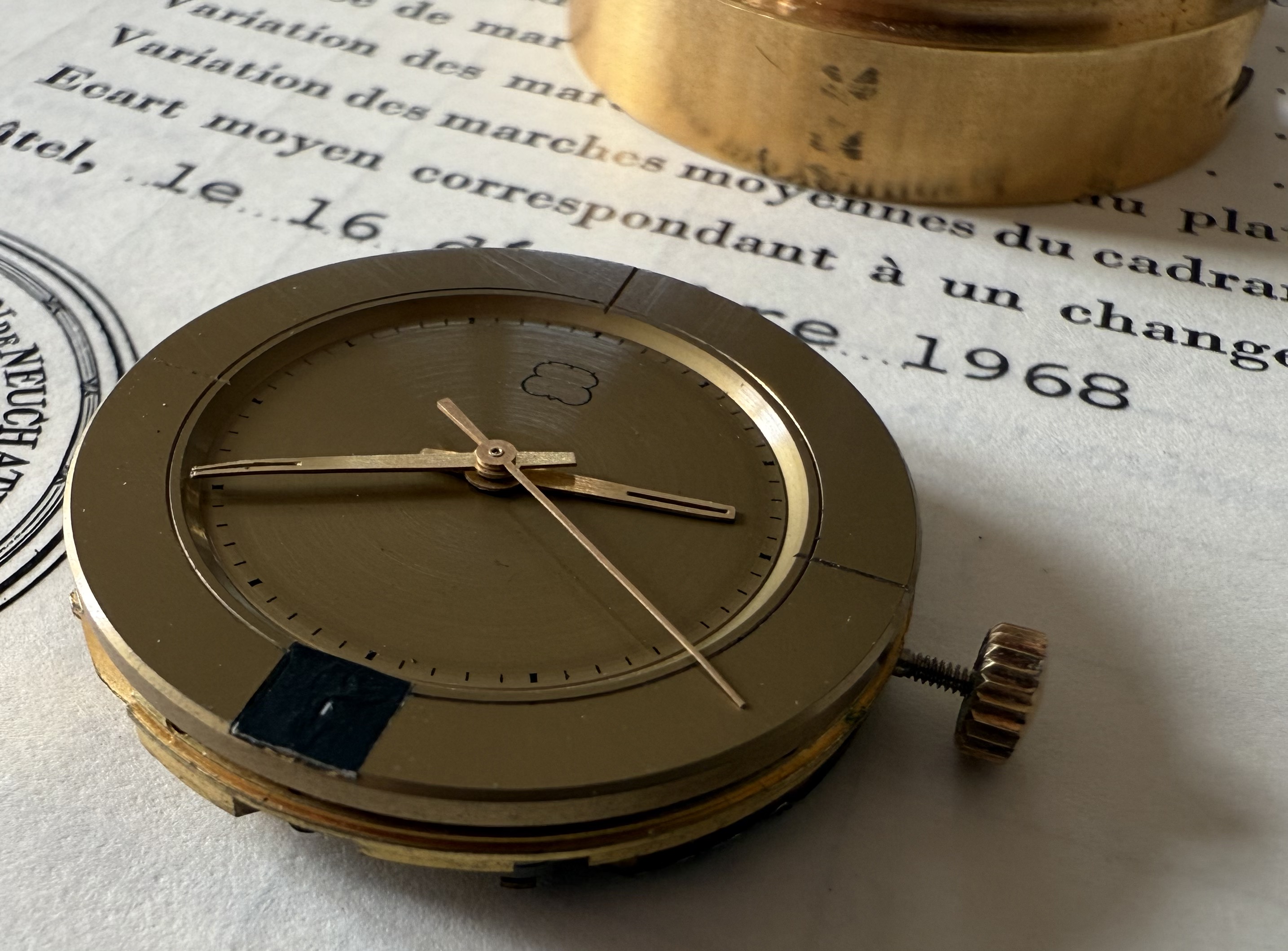
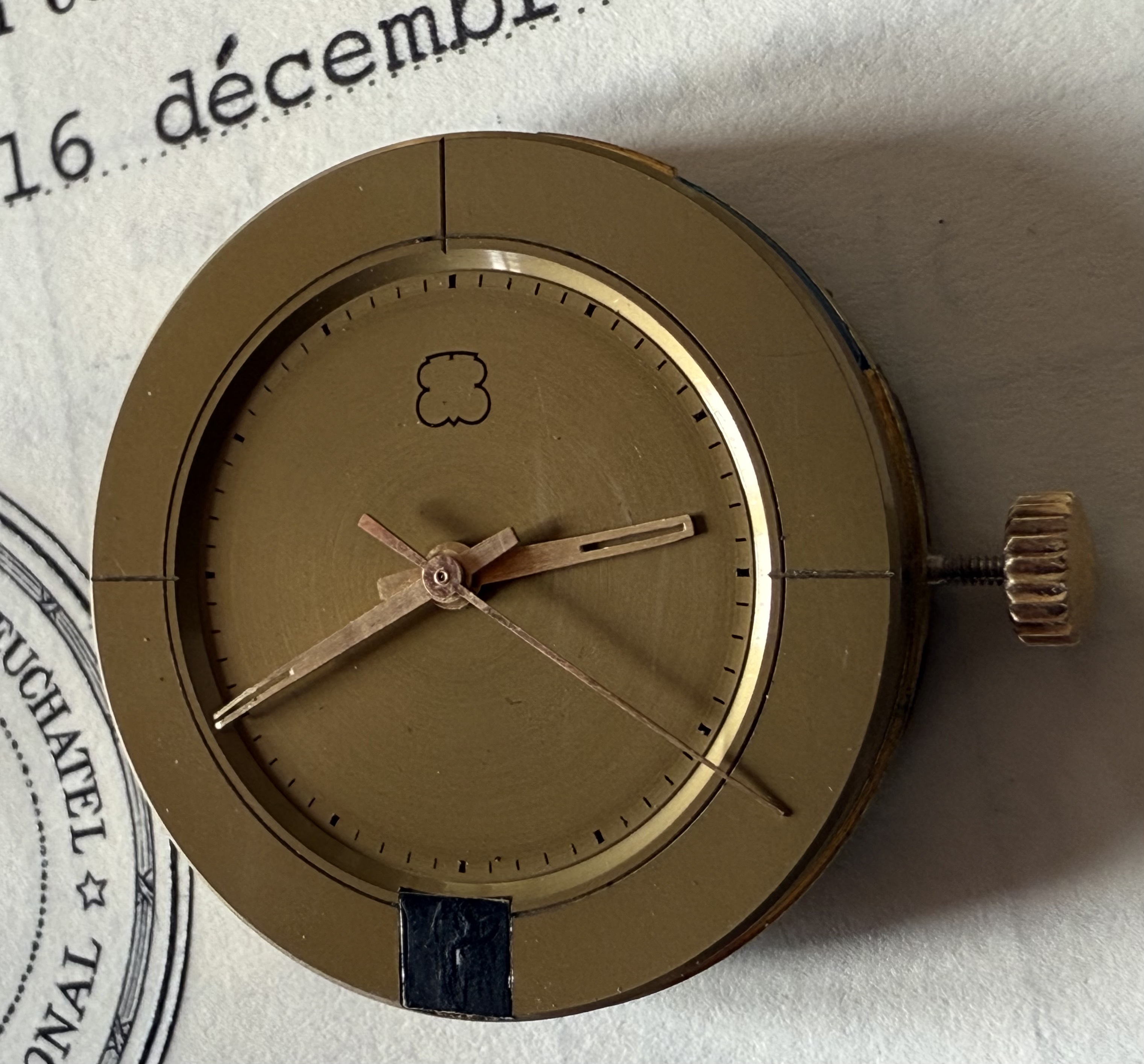
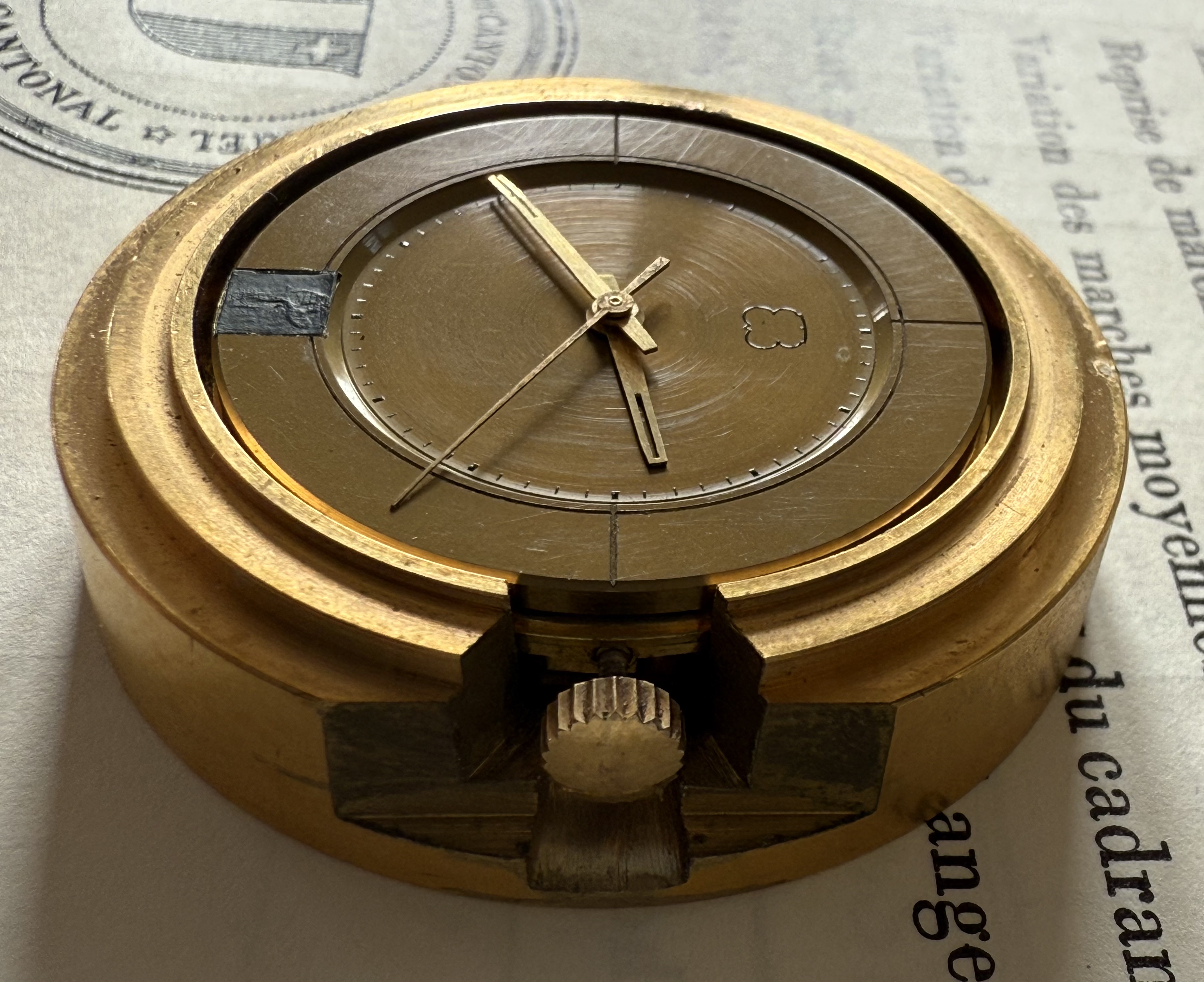
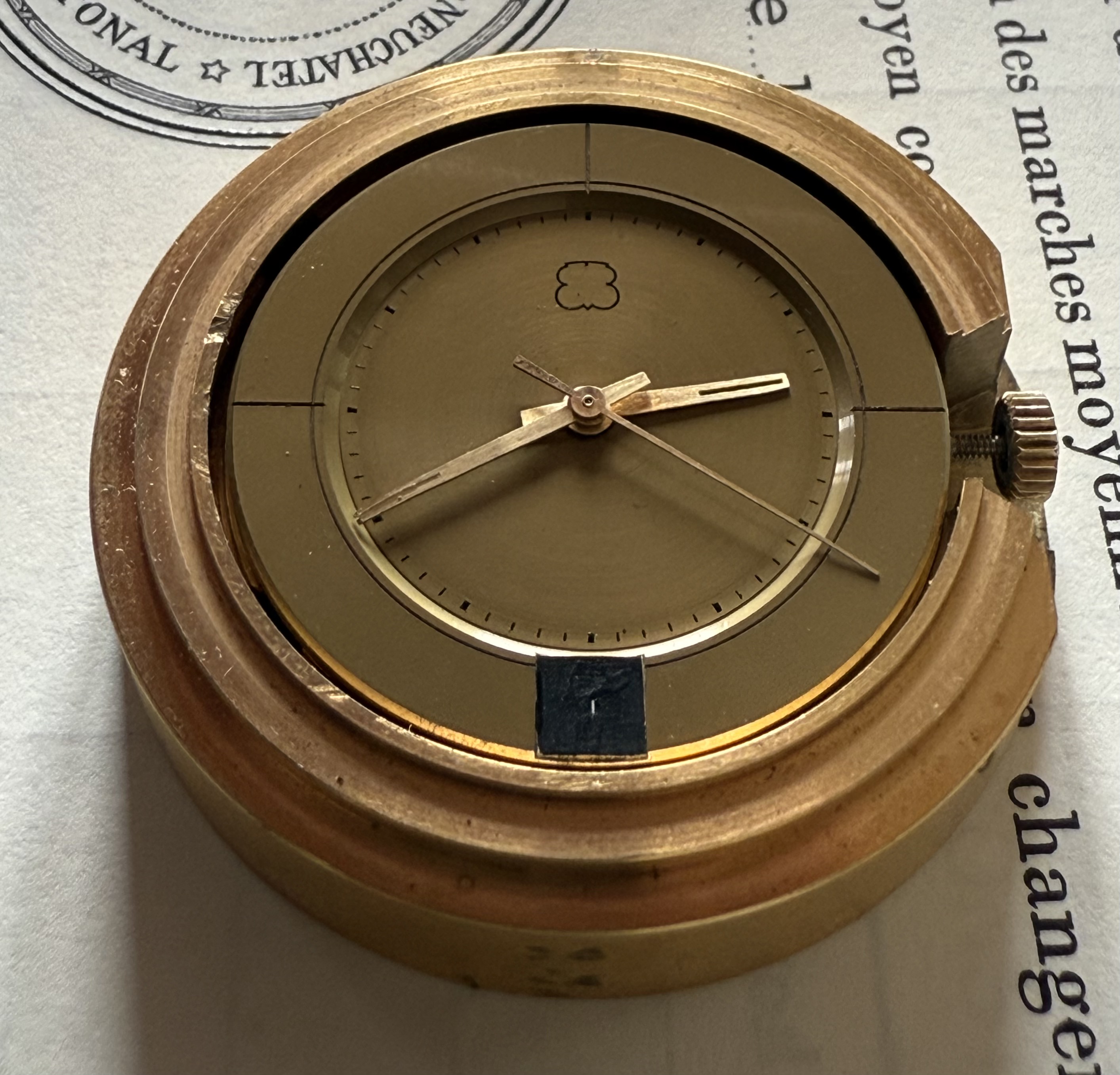
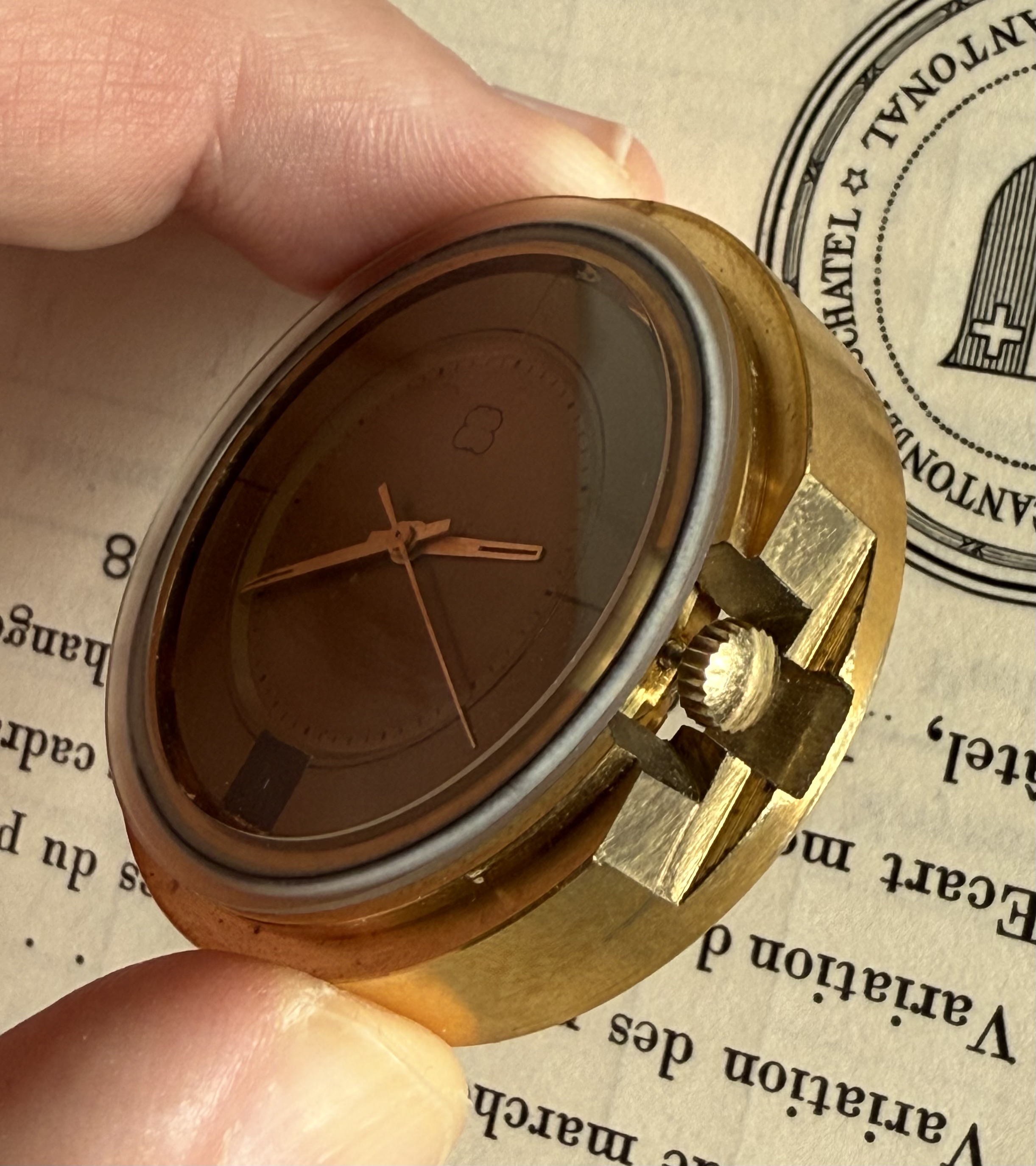
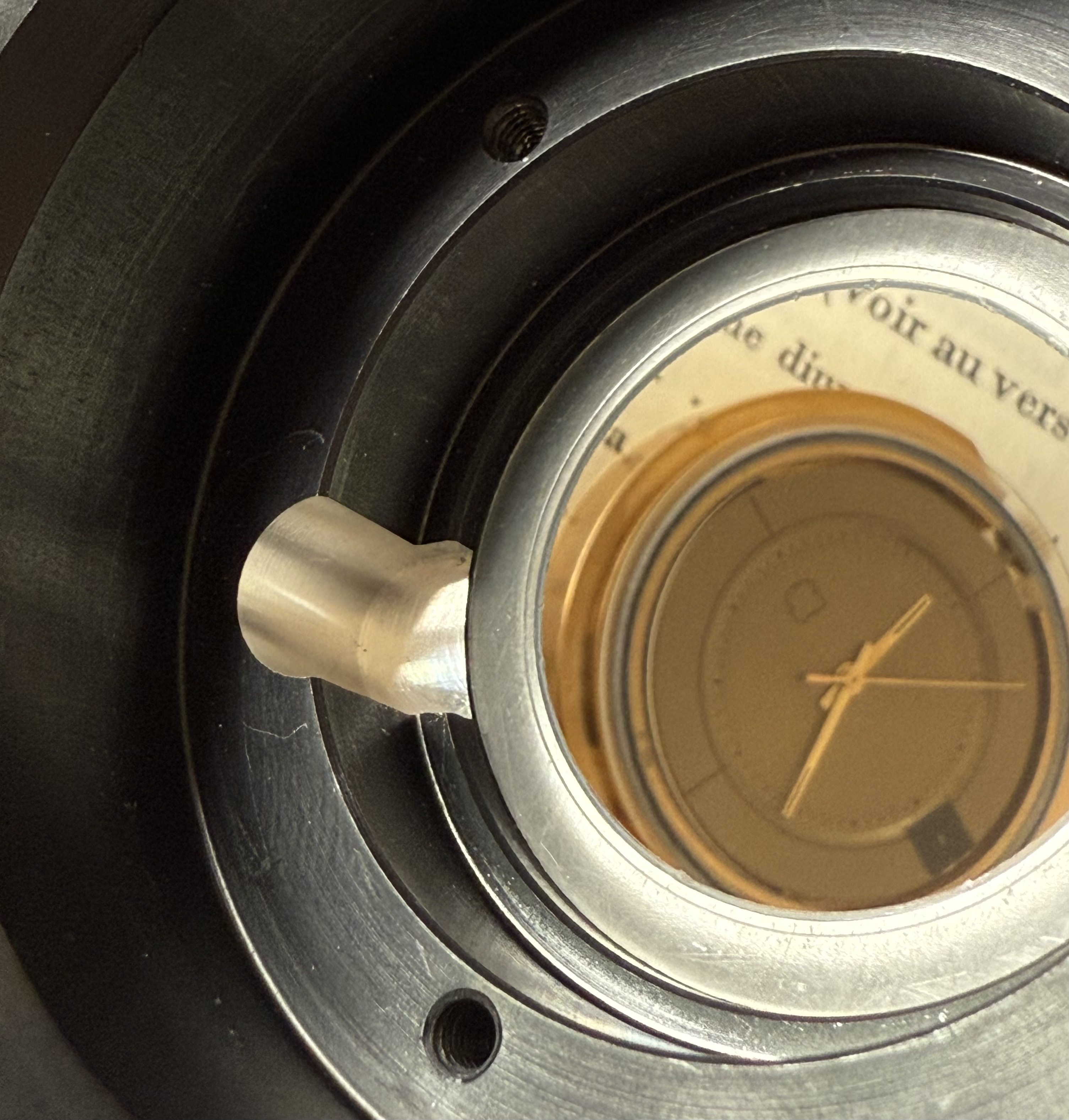
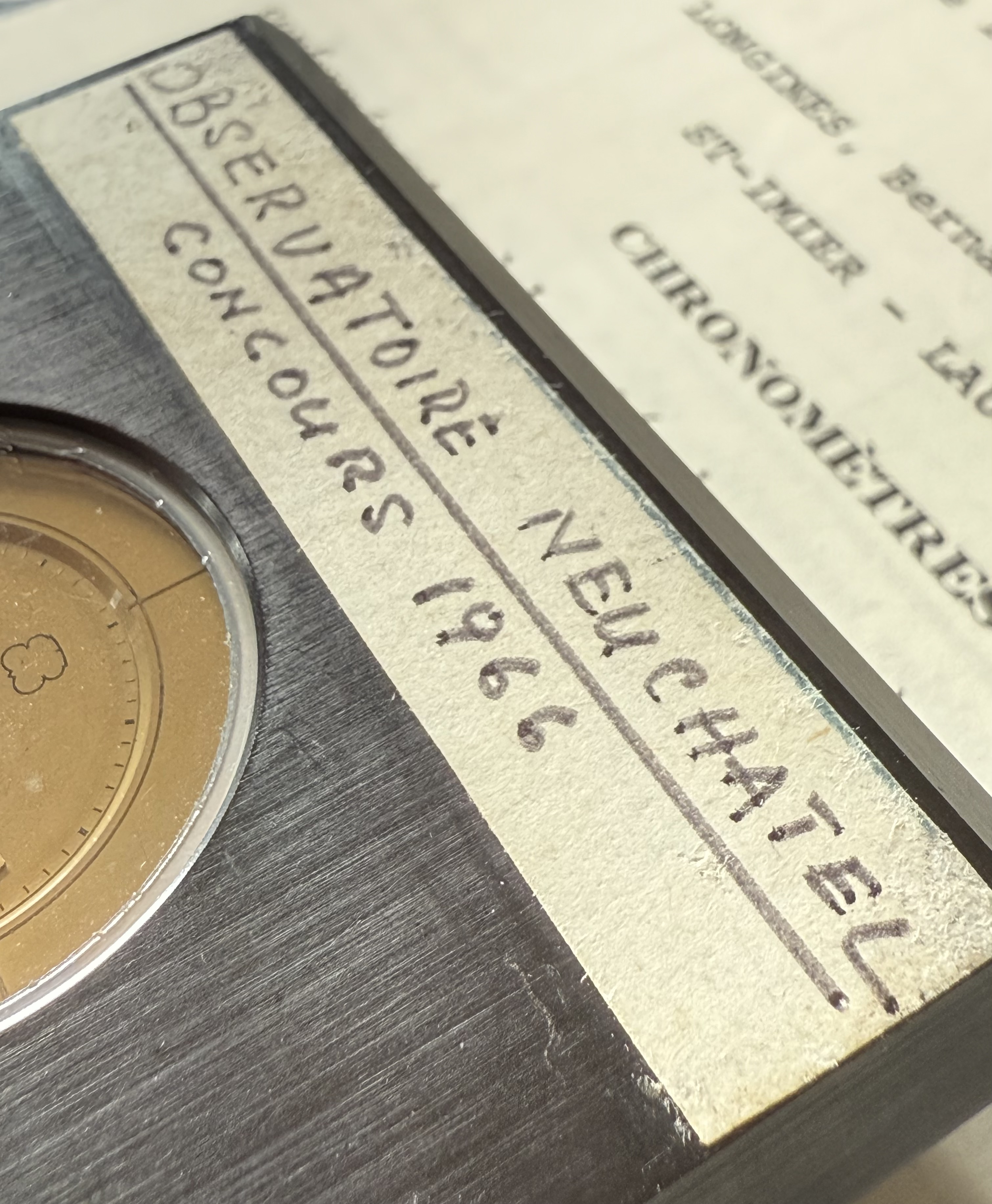
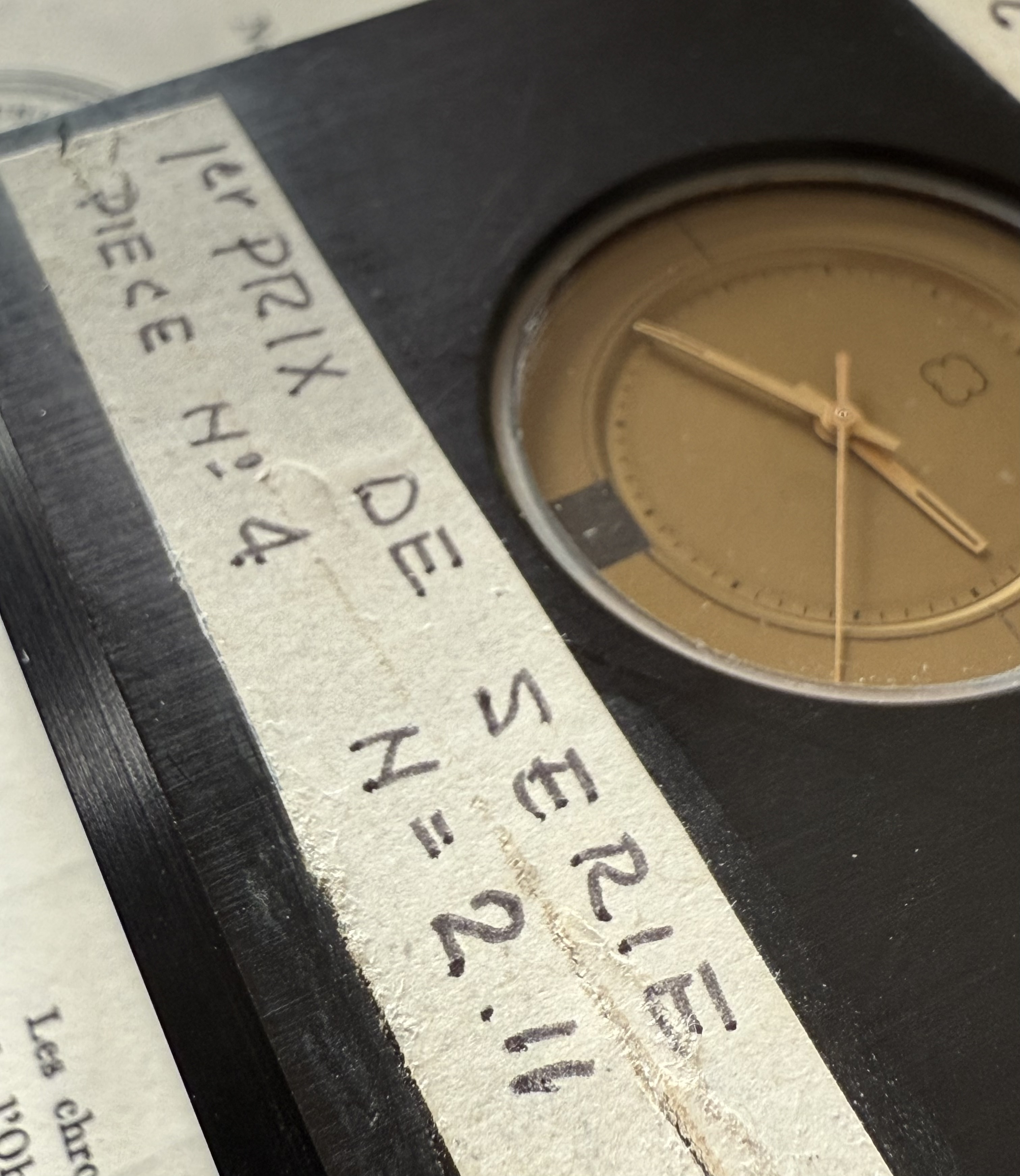
Description: Observatory chronometer competition cased, MOSABA caliber prototype. Two part case made of black anodised aluminium and acrylic. Complex, brass movement holder with bilateral acrylic crystals and rubber gaskets. Movement is partially gilt, some elements remain plain brass. Brass dial with central recess, ‘Ebauches SA’ logo printed in black under ’12’. Incised ’12, 3, 9′ markers. Rectangular recess at ‘6’ to accept large, uncut precision detection sticker. Black printed minute track. Gilt hands.
Dimensions: Caliber diameter: 29mm, Case size: 70 x 70mm
Movement: Ebauches SA, MOSABA P2 prototype #4
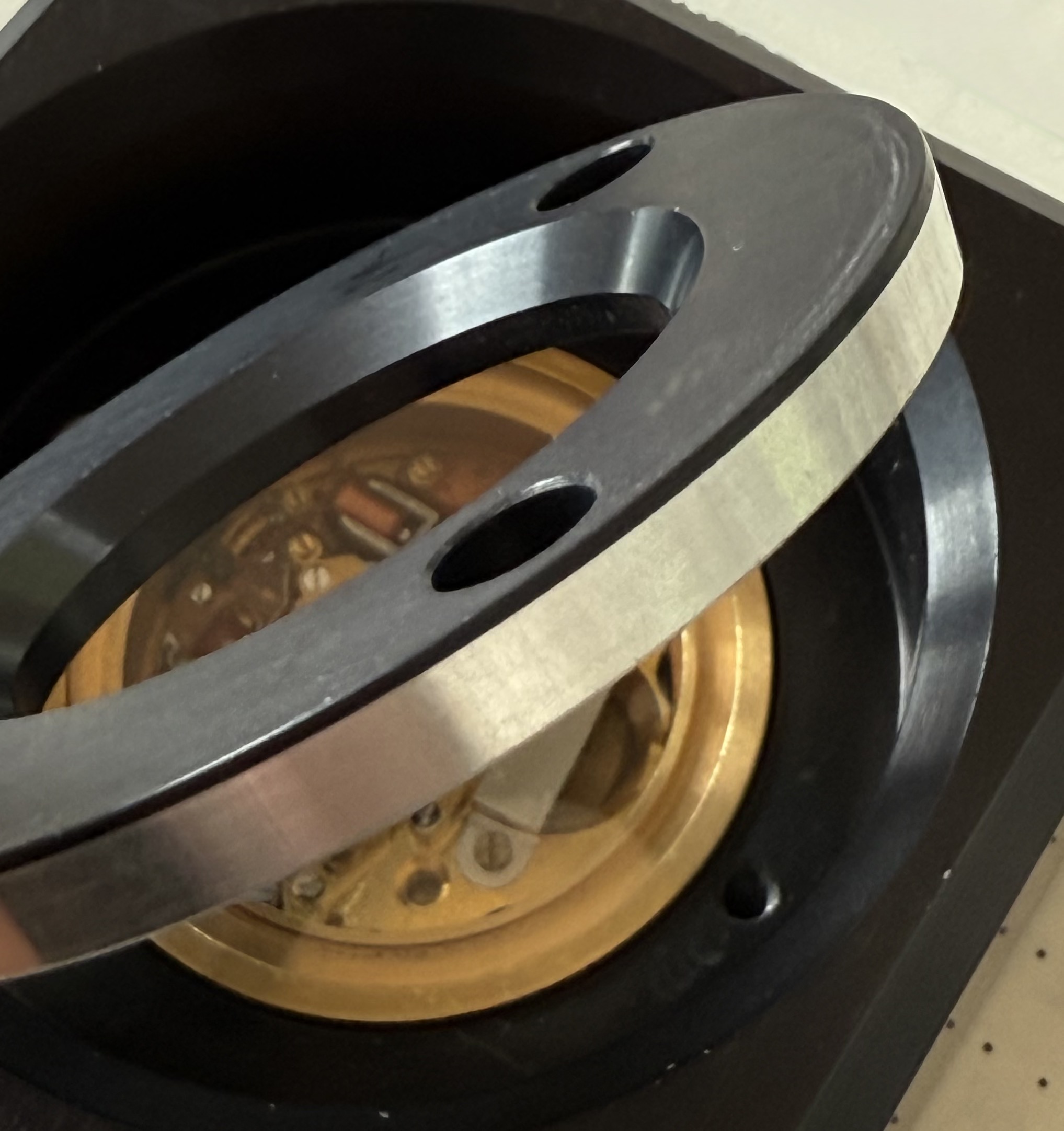
Additional Info: The most striking feature of this prototype setting is the black chronometer competition case. What at first seems to be an aesthetic choice, reveals itself as a highly specific technological feature for ensuring optimal conditions to perform absolute precision. The aluminium casing is completely covered in hard and thick black anodisation to render the aluminium less conductive and thus protect the electro-magnetic caliber from surrounding currents. The technology for black anodisation was know for a while and the Swiss company ‘Alusuisse’ was a global leader in these processes. André Beyner, lead engineer of the MOSABA project at Ebauches SA worked for ‘Alusuisse’, before being employed at Ebauches SA. Thus Beyner new and understood the material properties of aluminium, which lead to the presumption that at least the case treatment was made in collaboration with ‘Alusuisse’.
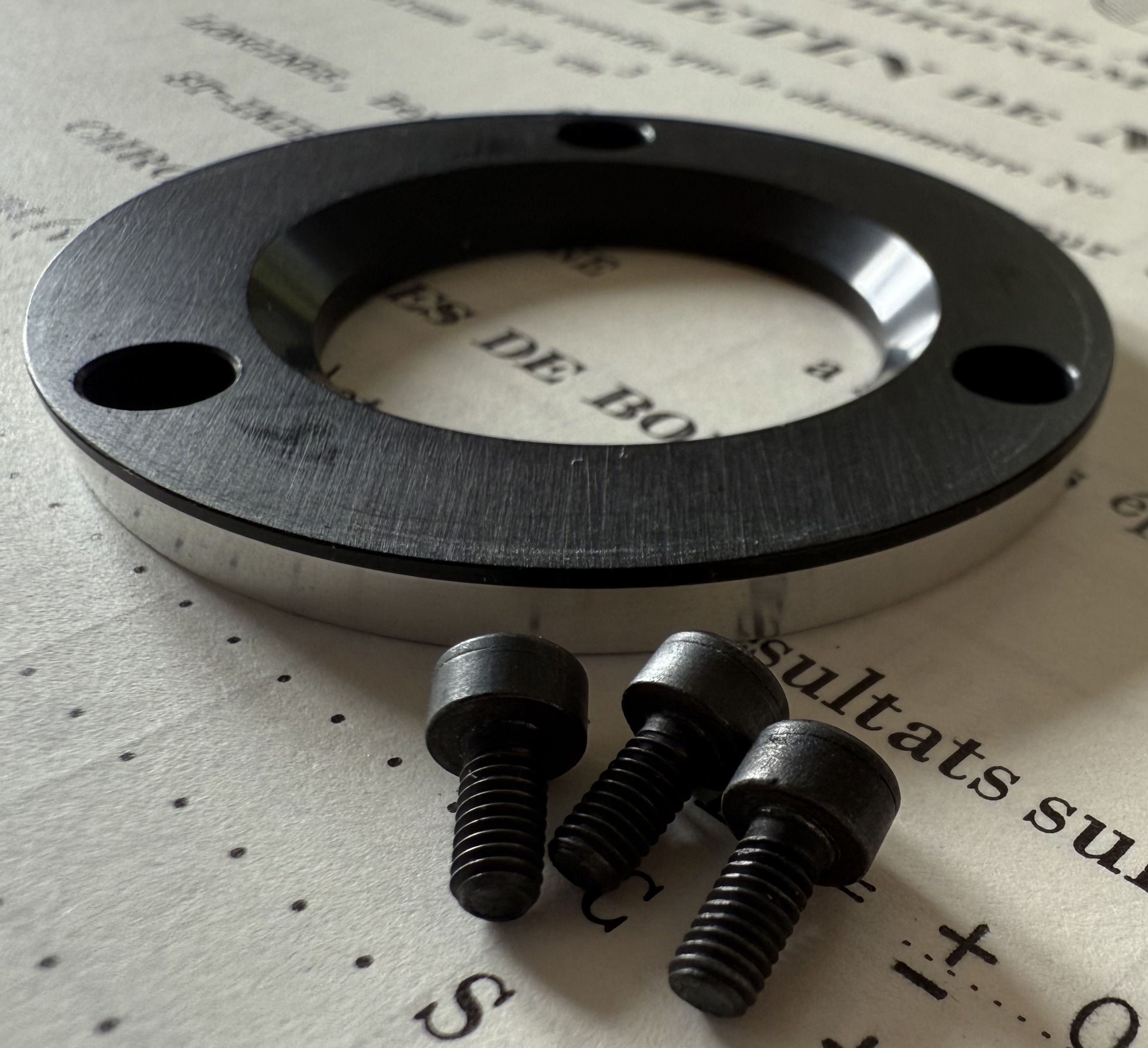
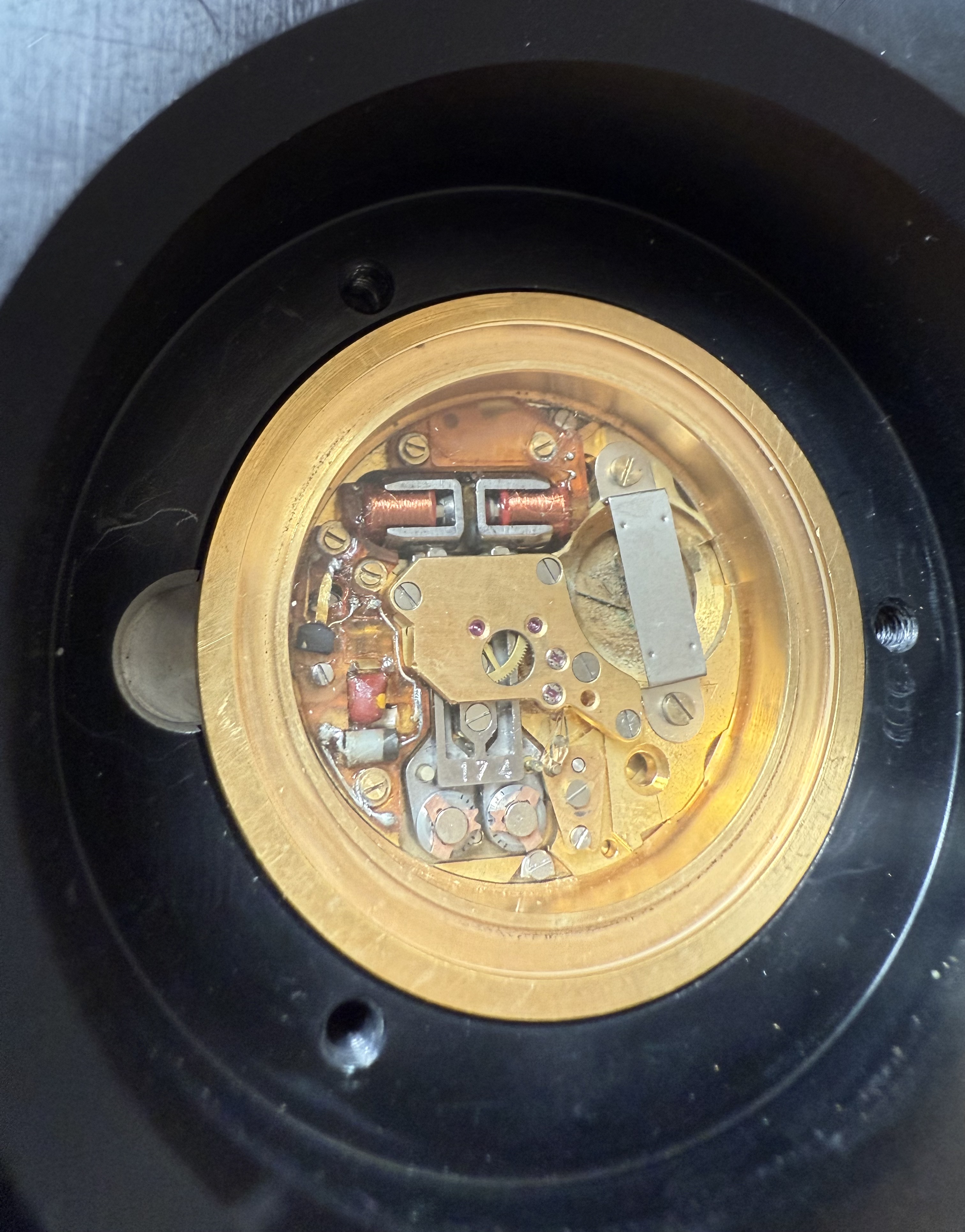
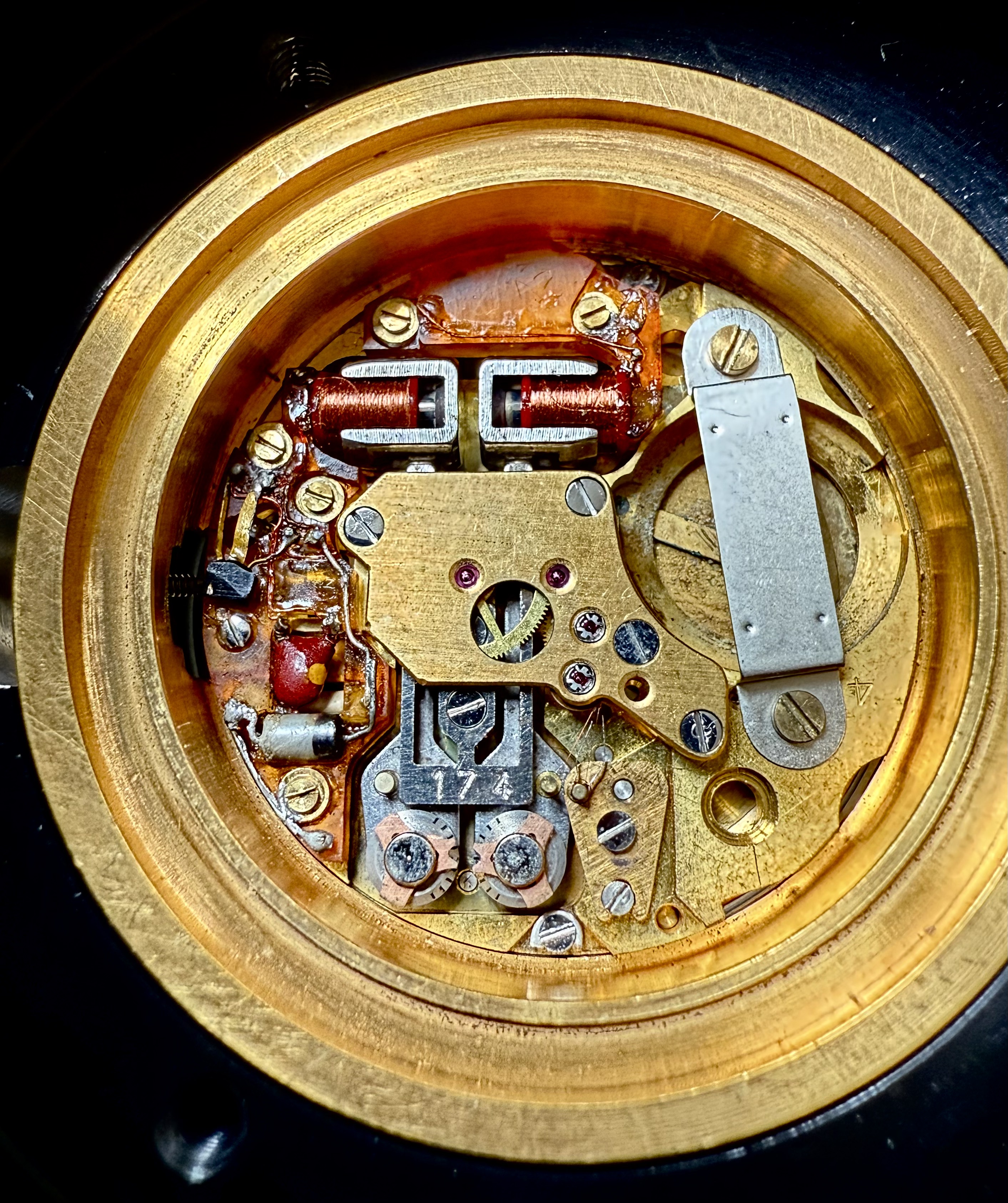
The caliber itself is mounted with two screws to a custom made brass movement holder and retains a stem and gilt, brass crown, which are hidden underneath the aluminium and acrylic covers. Caliber and movement holder are press fitted inside the case by means of a glazed (acrylic) black anodised aluminium cover fixed with 3 screws.
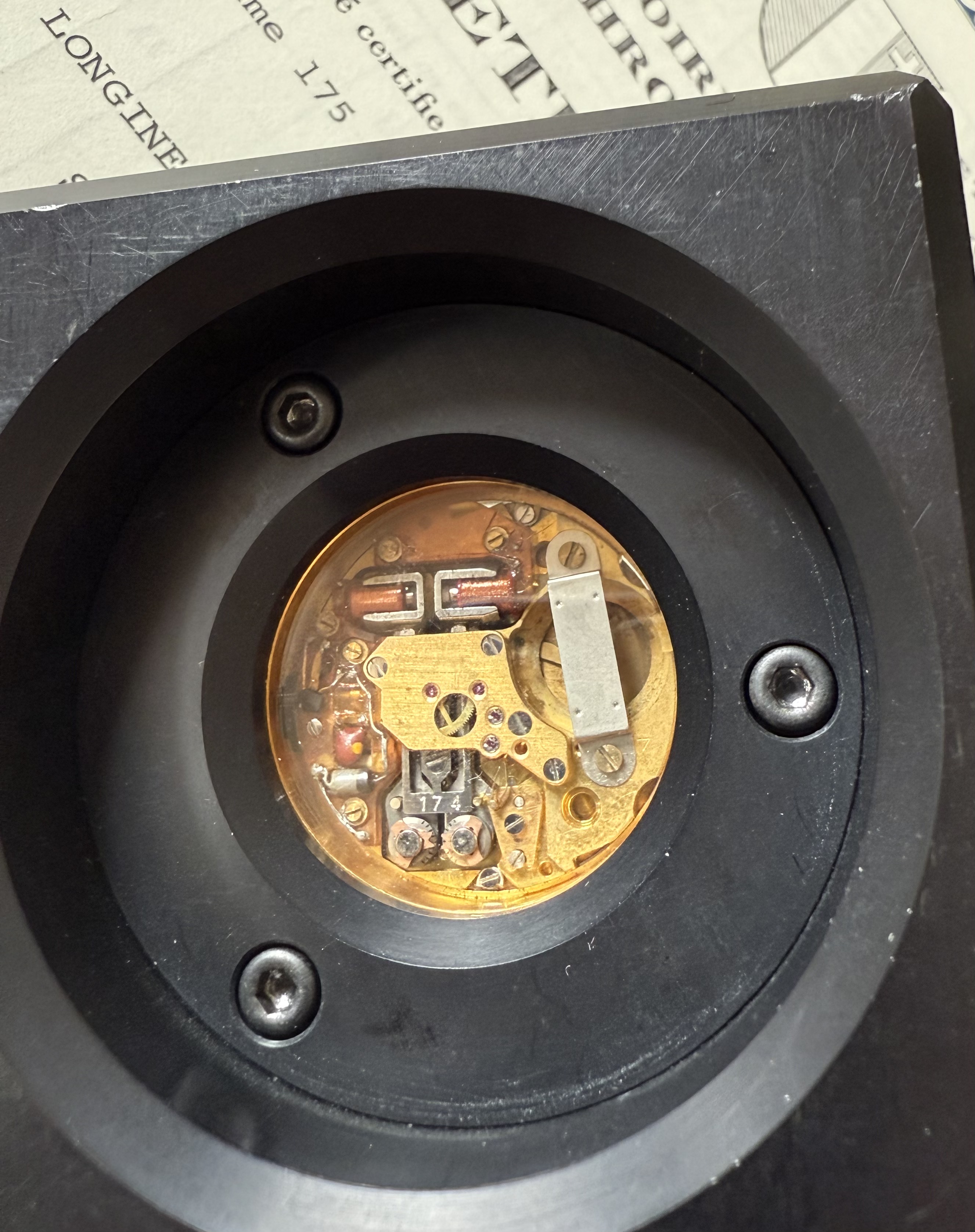
Apart of the prototype number ‘4’ stamped on the main plate, there is no other information on the caliber itself. This caliber was made before the licence agreement with Bulova was finalised (end 1967), so there is no mentioning of the ‘Bulova patent’ neither on the caliber, nor on the chronometer competition case.
The layout of the caliber corresponds mostly to the definitive version, but the large back plate, which later covers most of the metal tuning fork is much smaller. The indexes are not at the their definitive position. The electronics is assembled and soldered by hand, there are also some hints pointing towards hand modification of the wheel work. The weight, which is applied on top of the metal tuning fork is stamped with ‘174’. The index fingers are flanked by small, metal sheets which seem to act as adjustment guides.
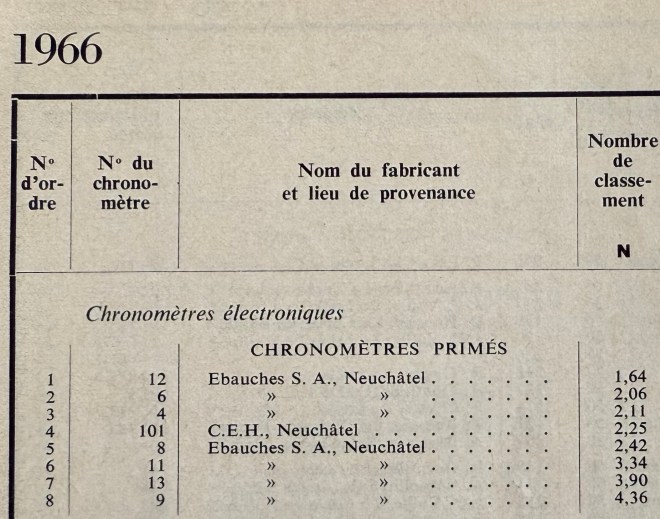
This prototype #4 participated to the chronometer competition of the observatory in Neuchâtel in 1966 in the category of ‘electric chronometers’ and reached 3rd place. The achievements of the caliber are noted in André Beyner’s handwriting on two white stickers on the front of the piece.
Provenance: Ex Estate of André Beyner, former technical director of Ebauches SA
 Electric Watch Prototypes