
As stated by Ebauches SA in one of their ads of the period, it took almost 10 years to develop a saleable electro-mechanic caliber. But the movement is not the only piece of a watch which needs to be developed. Especially for the introduction of a new system on the market, it is crucial to adapt the design of the watch to the fashion of the day.
It has been tried to integrate the slowly evolving space-age designs into the very first prototype of 1954, which shows an octagonal case shape, not seen in a Swiss wrist watch since the Art Deco period. The designs for the future Swiss electro-mechanic watch were also dependent on the possibility to house the battery.
The layouts (not the finishing) of the electro – mechanic movement in the watch shown below correspond already to the marketable version, but even then, it was not yet clear how to functionally and aesthetically place the batteries.
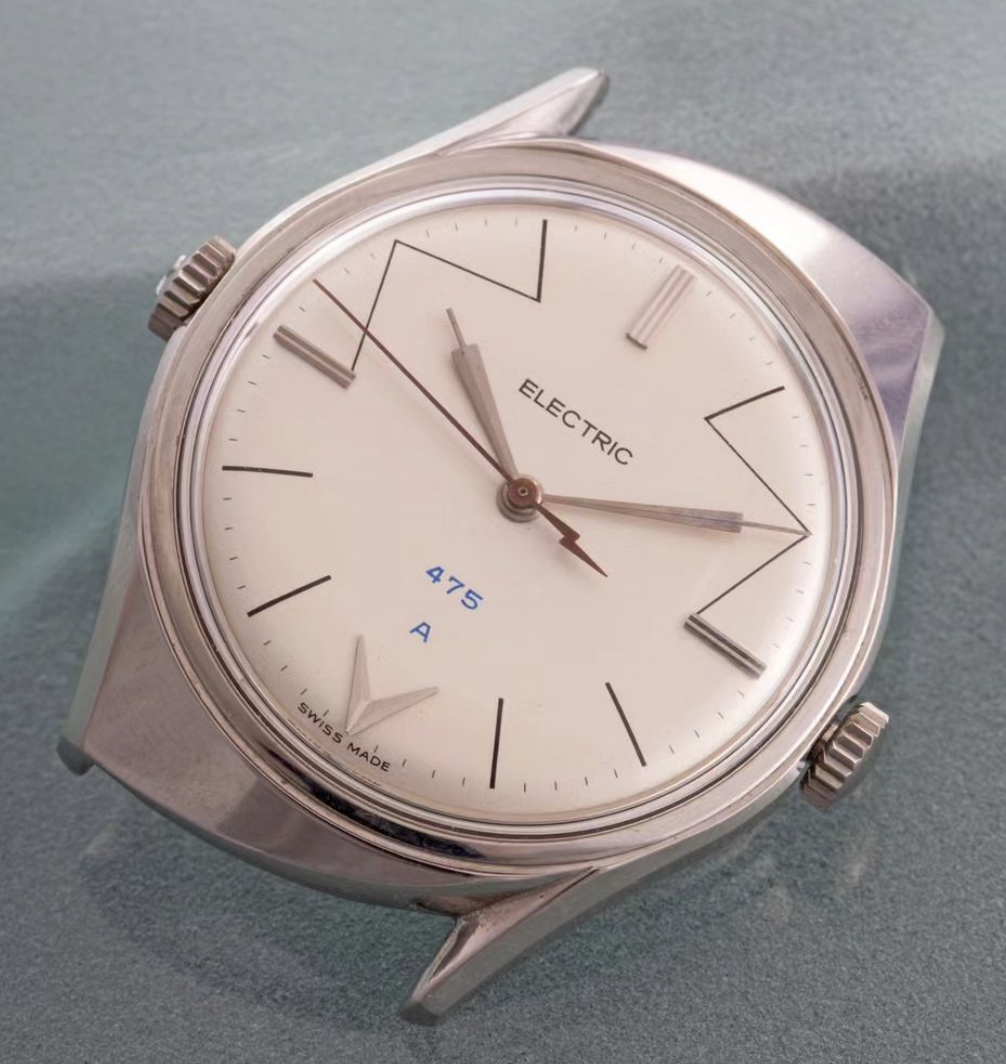
The addition of an ‘A’ to the preliminary caliber attribution number ‘475’ shows the variant with use of a rechargeable battery, there is also a version ‘B’ running with one conventional battery. The designs used in this phase of development are clearly inspired by the design language of Richard Arbib for the electric Hamilton watches marketed in 1958.
–
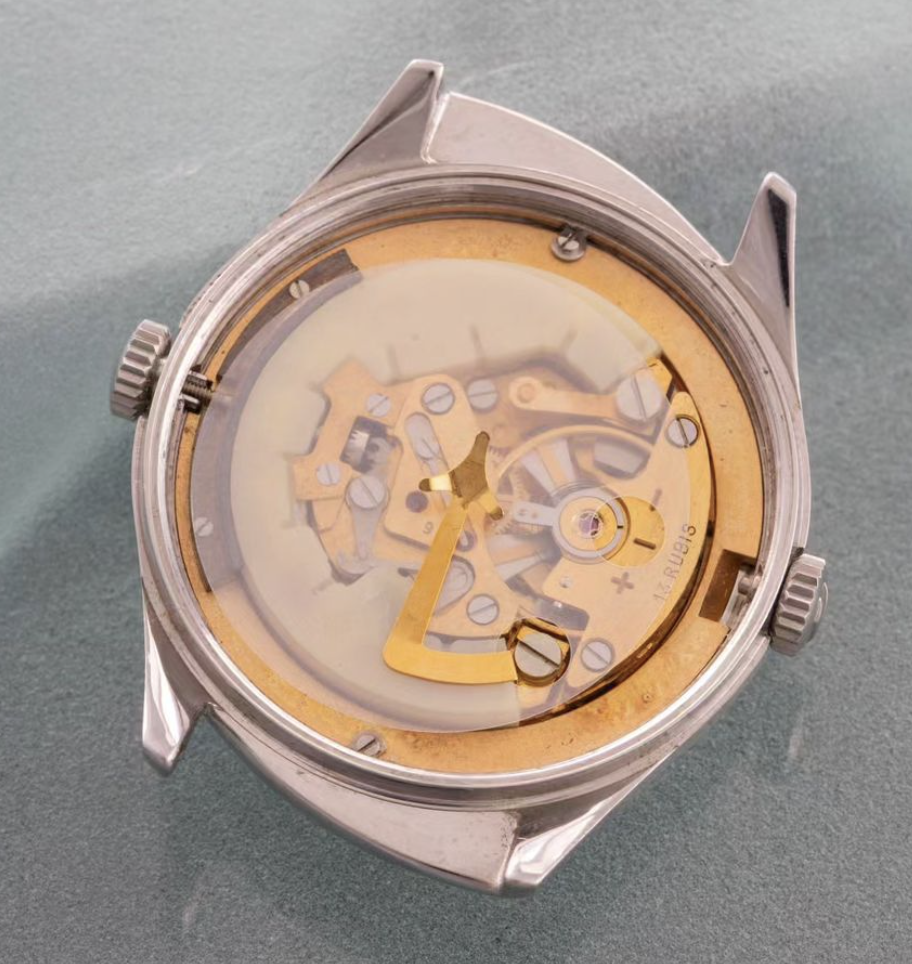
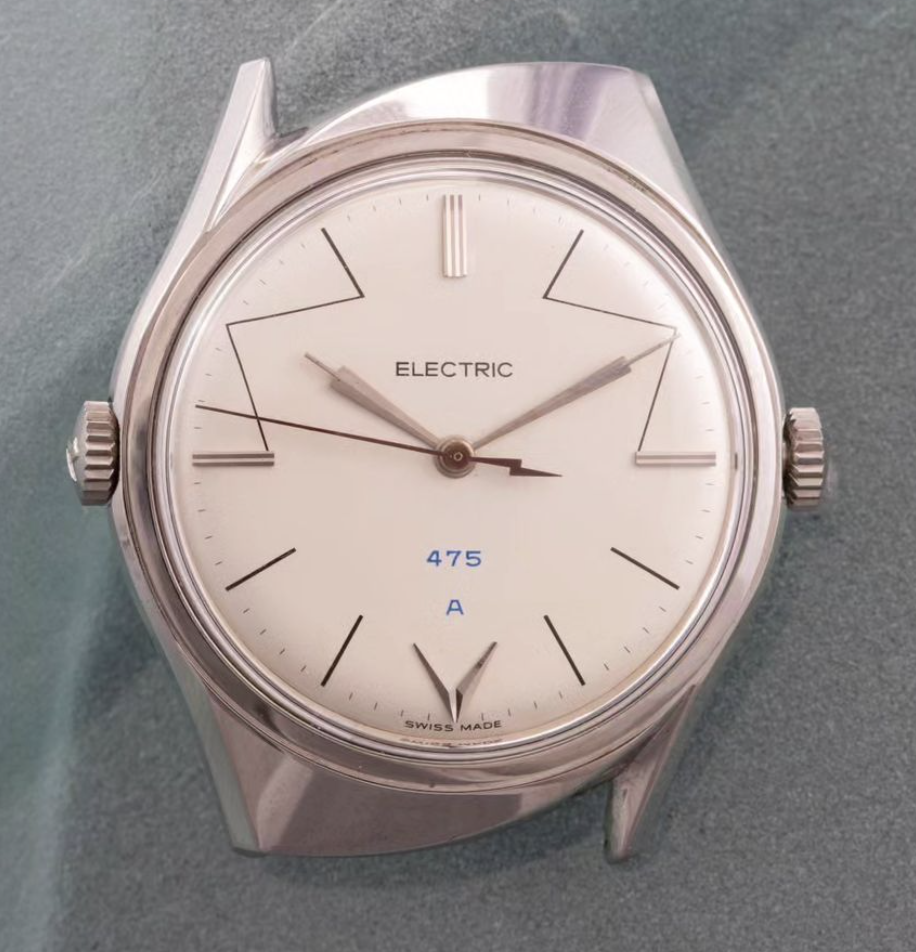
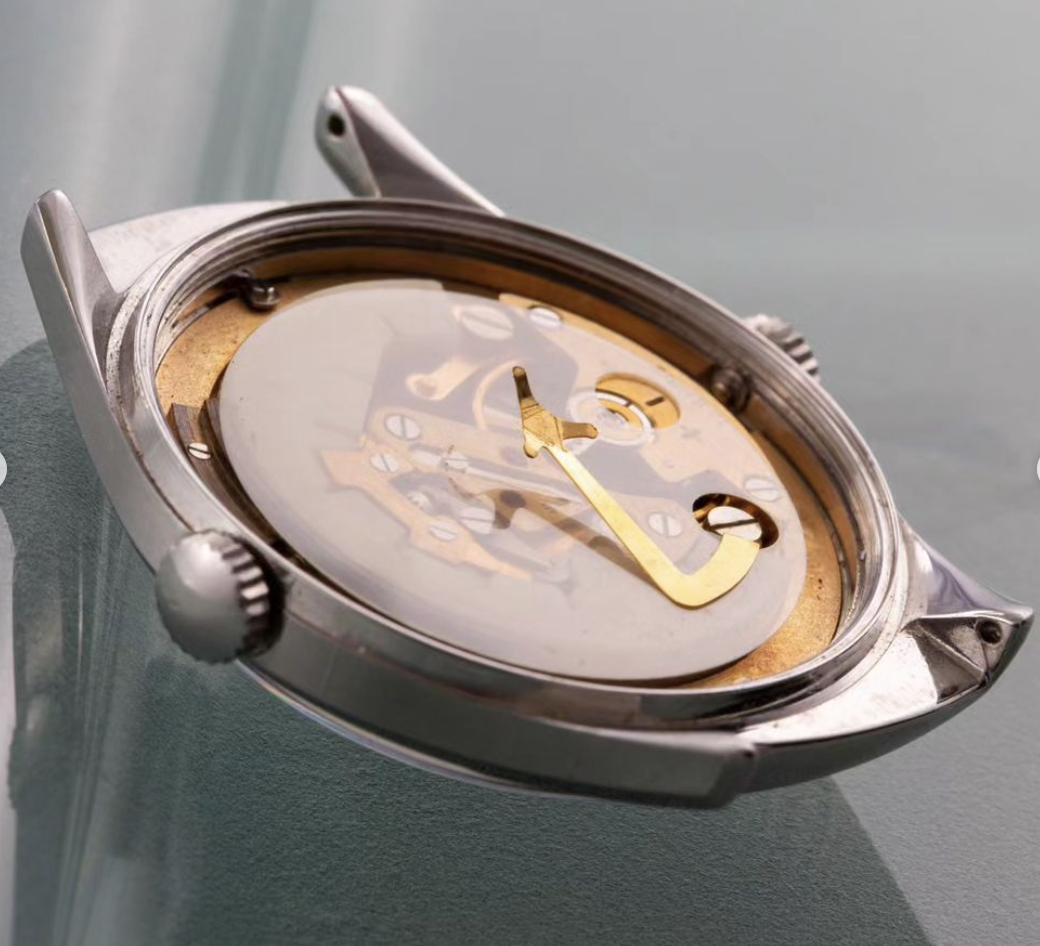
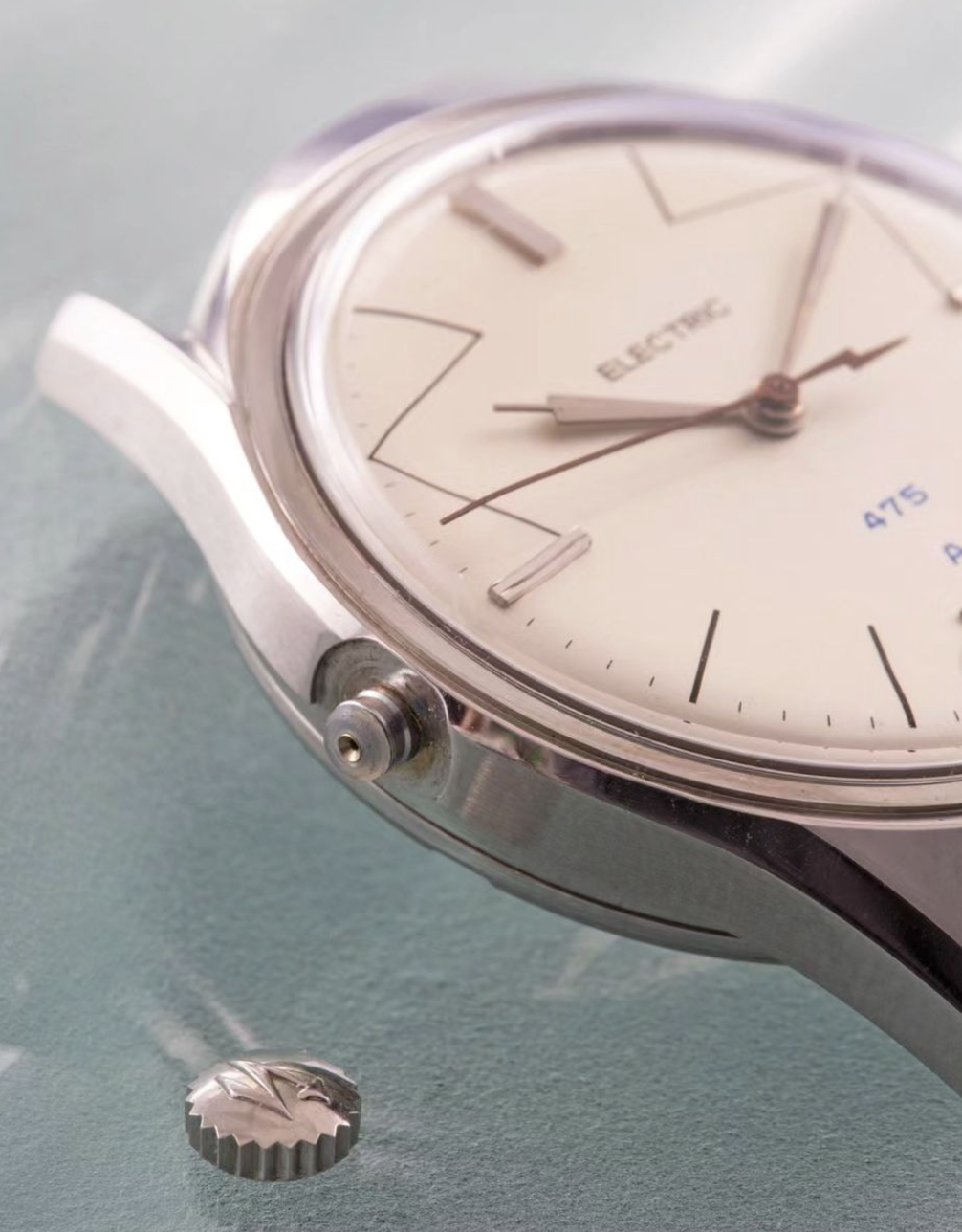
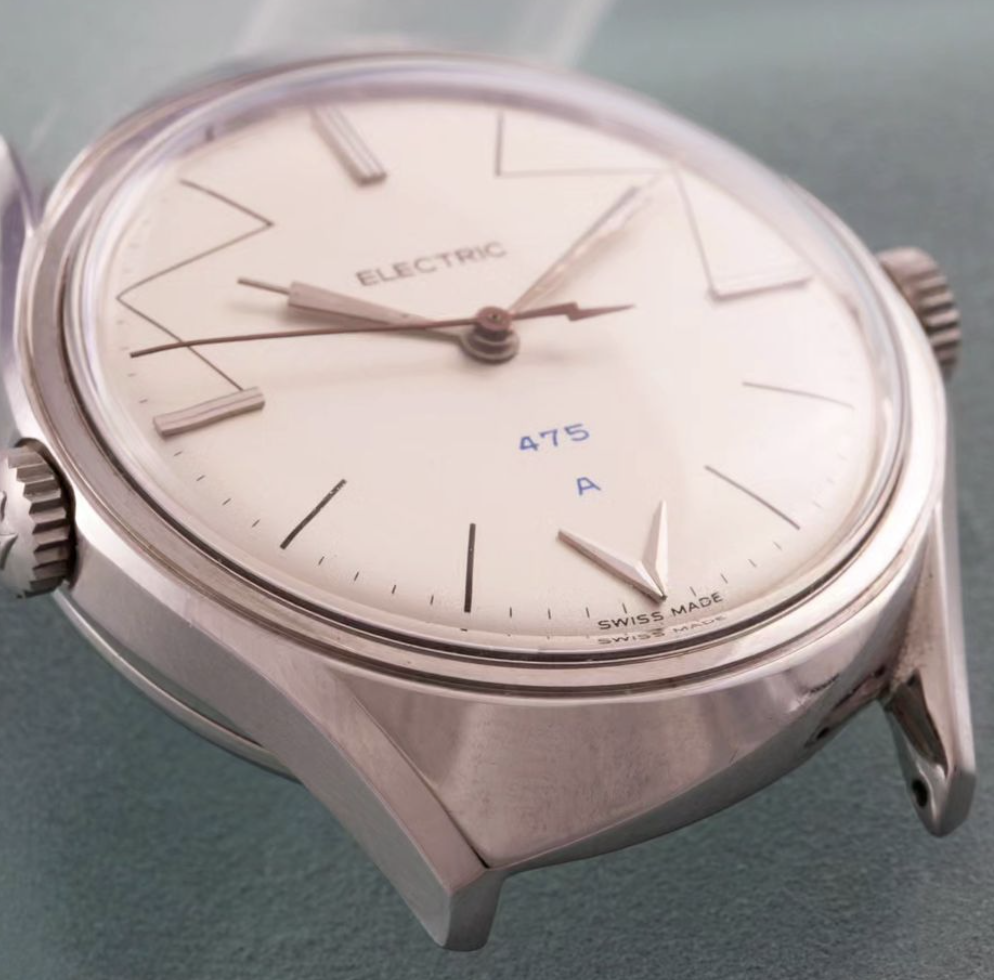
Ebauches SA, L475 A P2-V1 Prototype, 1959
Category: aesthetic prototype
Description: Asymmetric nickel plated brass cased prototype with polished surfaces (EPSA, E. Piquerez SA). Stainless steel snap case back with no engraving. White dial with silver coloured raised, 15min baton indexes, black line decorations. ‘ELECTRIC’ in black underneath 12, ‘475 A’ in blue above ‘6’. Silver coloured hands and original acrylic crystal. Nickel plated, base metal crowns, the left crown decorated with a lightning bolt in relief.
Dimensions: 36mm (without crowns), lug – lug: 42.5mm, lug width: 18mm
Movement: L475 Prototype movement, unmarked, unnumbered
Additional info: The left crown with the lightning bolt decoration hides a contact to attach the device to recharge the big Leclanché’ rechargeable battery underneath the back cover.
There is also an even rarer version of this case which houses a conventional battery and thus has no second crown hiding the charging nut.
Provenance: Ex. Hans Baumann collection
Published: Bramaz H.-R., Baumann H.; Die Elektrische Armbanduhr, Band 1, Verlag Stutz Druck AG, Wädenswil, 2013, page 45 picture 5
 Electric Watch Prototypes