
8min read
1965 marked an important year for the CEH. Some progress was expected by the shareholders of the electric watch development conglomerate, as soon as marine chronometer sized electronic clocks appeared during the observatory competitions of 1964. Whereas Longines and Golay SA were concentrated to miniaturise their successful cal.: L800 and Omega tried to solve the developmental problems of their electronic calibers with the Battelle institute in Geneva, the CEH engineers were tackling other issues while dividing their efforts between the three tuning fork related main projects (Alpha, Beta, Swissonic) mentioned in the parent section. The Beta resonator project was split into eight different approaches and all of them included the application of an electronic frequency division or other important electronic parts (9).
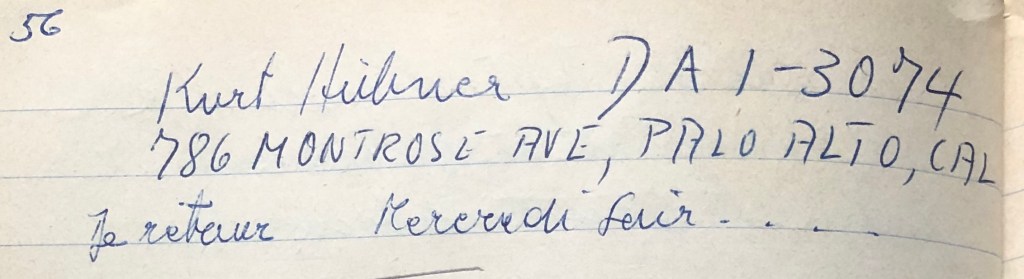
One of the prerequisites in developing a watch with advanced electronic compounds as researched within the Beta resonator project and as envisioned already by an early report written by CEH director Roger Wellinger the 25.09.1963, was the founding of an integrated circuits laboratory within the CEH. This was accomplished by Wellinger in recruiting the very promising engineer Kurt Hübner (8, 9).
The Semiconductor Lab
The creation of the semiconductor lab at the CEH was dependent upon US clearance to use their revolutionary technology. Of course at that time of cold war, one of the major fears of the Americans was, that their technology would be leaking towards communist countries. Hence, one important factor facilitating the American clearance was, that Roger Wellinger, director of the CEH, was American citizen.
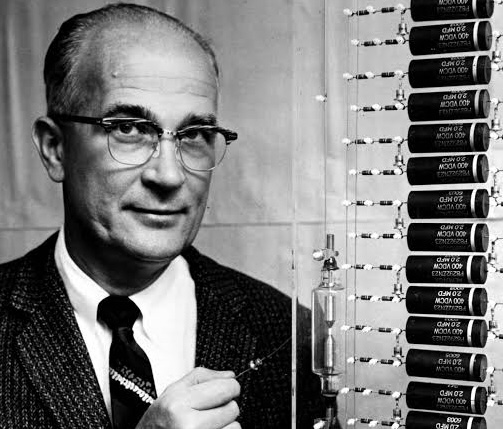
Appointed as head of the semiconductor laboratory, Kurt Hübner’s task since the creation of the CEH was to use the experience he had gained in the USA working for and learning from Nobel prize winner William Shockley, himself a pioneer in semiconductor research and co-inventor of the transistor, to develop the integrated circuitry for the new, electronic CEH calibers. At the same time as Kurt Hübner also Fritz Leuenberger joined the new team at the CEH. The creation of this silicon processing division was facilitated by the nearby presence of two germanium transistor manufacturers, Ebauches SA (since 1958) and the telecom group Hasler AG (later FAVAG Microelectronics) (8, 9).
The Wafer Fab
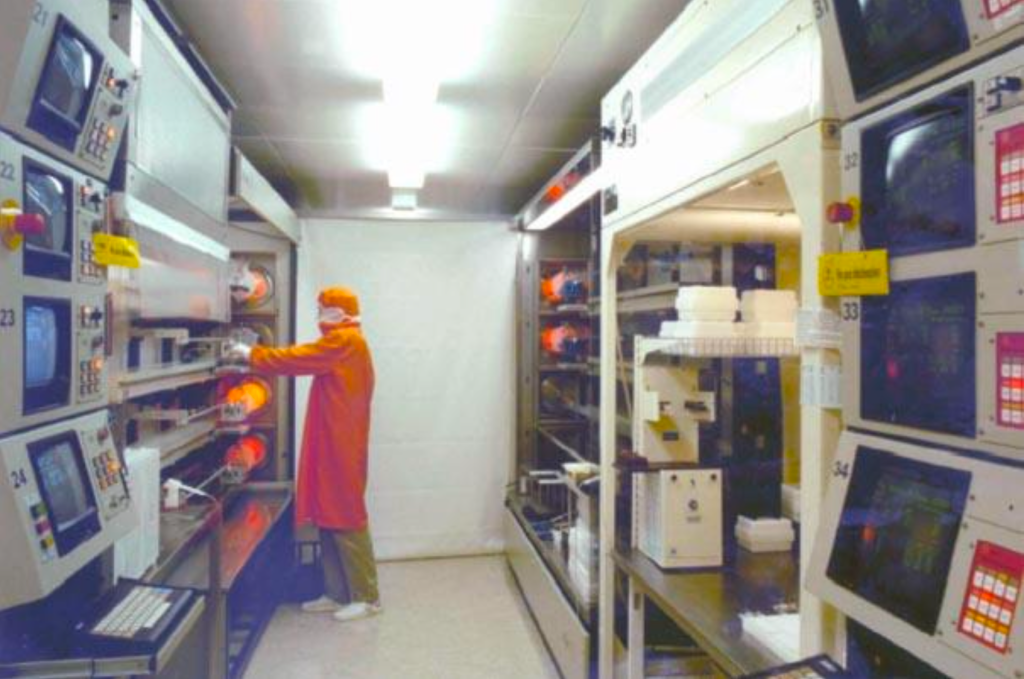
The wafer fab, the semiconductor processing facility which turns wafers into integrated circuits within the semiconductor lab was operational in 1964 upon recruiting of collaborators Raymond Guye and Jean-Daniel Chauvy. Latter was recruited personally by Hübner in the USA to return to Switzerland and join the CEH in 1964. Chauvy would collaborate with Rolf Lochinger who was responsible for the conceptualisation of the frequency dividers and the drawing of the plans for the frequency division circuitry, Chauvy would then construct the elements following Lochinger’s plans. Chauvy later would take over the development of the frequency dividers from Rolf Lochinger who left the CEH in late 1966. After Lochinger leaving, the whole responsibility for the further development of the frequency division circuitry went to Chauvy. Raymond Guye will initially work on the quartz control circuitry and later create the ‘wafer-fab’ to develop and construct the industrial grade ODC-4 monolithic IC for Beta 21, see below (1, 8).
Hübner’s first assignment was to develop a frequency divider for the Beta resonator project, which counted, as mentioned above, eight different approaches, each requiring an electronic frequency division. While working for the Beta resonator project, Hübner’s laboratory had developed the first bipolar IC with four miniaturised transistors already in 1964, only four years after Robert Noyce invented the system in Mountain View California, which will become Silicon Valley afterwards. This first, primitive, bipolar IC was presented during the Swiss national Exhibition (EXPO) in 1964, where the CEH was celebrated as the main national scientific hub for microelectronic development.
Upon officially switching the ‘Beta tuning fork resonator project’ to a ‘Beta quartz resonator project’ in early 1966, the requirements for the integrated circuitry changed to a higher and more complex division rate and the progress on the adaptations of this module advanced too slowly at the CEH, despite Rolf Lochinger and Jean-Daniel Chauvy intensively working on the binary frequency division modules (8).
To speed up the developmental process of the integrated circuitry and prospectively integrate aspects of future mass production, the task was forwarded to a new collaborating CEH spin-off firm named ‘Faselec’, which main shareholders Philips and ASEA Brown Boveri (ABB) should ensure a timely development and a subsequent production on industrial scale (8).
Fasec (Faselec)
The 12.7.1966 FASEC SA (FAbrique de SEmiConducteurs) which upon creation was renamed FASELEC (FAbrique de Systèmes ELECtroniques) was created on paper in Neuchâtel, with their laboratories located in Zurich. The contract with the CEH comprised the complete outsourcing under license of the integrated circuit development and specifically the later industrial production of the IC’s for the CEH (8).
Engineer Heinz Rüegg supervised the development at Faselec in their own wafer fab. The bipolar IC’s were named ODC already while in development at the CEH, which is an abbreviation of ‘Oscillateur, Diviseur, Commande’, which resumes in order of action, the function of this revolutionary bipolar, monolithic IC. The ‘Oscillateur’ part would control and entertain the quartz vibrations, the ‘Diviseur’ part divides the frequency (8192Hz) coming from the quartz circuitry to fit the motor resonance frequency and the ‘Commande’ part transmits the divided frequency signal to the motor.
The firm produced several generations of ODC’s, each comprising further miniaturisation. No info could be found about ODC generations 1 and 2 other than a primitive predecessor of ODC-01 integrated into a pendulette in late 1966. Then further research produced ODC-03, which was first presented to the CEH the 19.1.1967 and mounted into the Beta 2 prototypes submitted for the observatory competition of 1967.
A primitive form of the even more compact ODC-04 was first presented the 16.2.1968, two days after the official announcement of the observatory competition winners of 1967 (8).
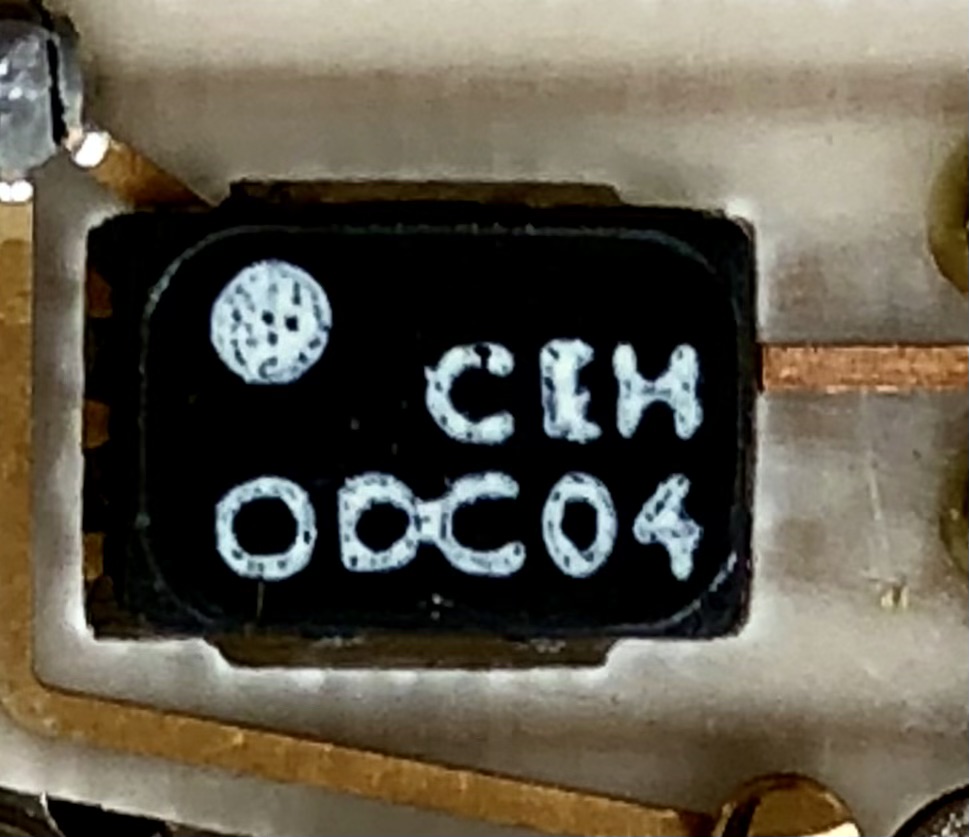
Despite the efforts, the engineers at Faselec were not able to get the hand made, primitive ODC-04 chips reliable enough for industrial production, so 1968 the manufacture of the bipolar integrated circuits returned completely to the CEH where Raymond Guye and Fritz Leuenberger managed to get it reliably manufactured in the ‘wafer-fab’. By the end of 1968, the CEH ‘wafer fab’ managed to optimise the primitive ODC-04 IC’s and create the first monolithic, bipolar, integrated circuit in Europe containing 30 – 40 transistors (integrating 5 frequency division steps) as well as an optimised oscillator circuit for the quartz (8).
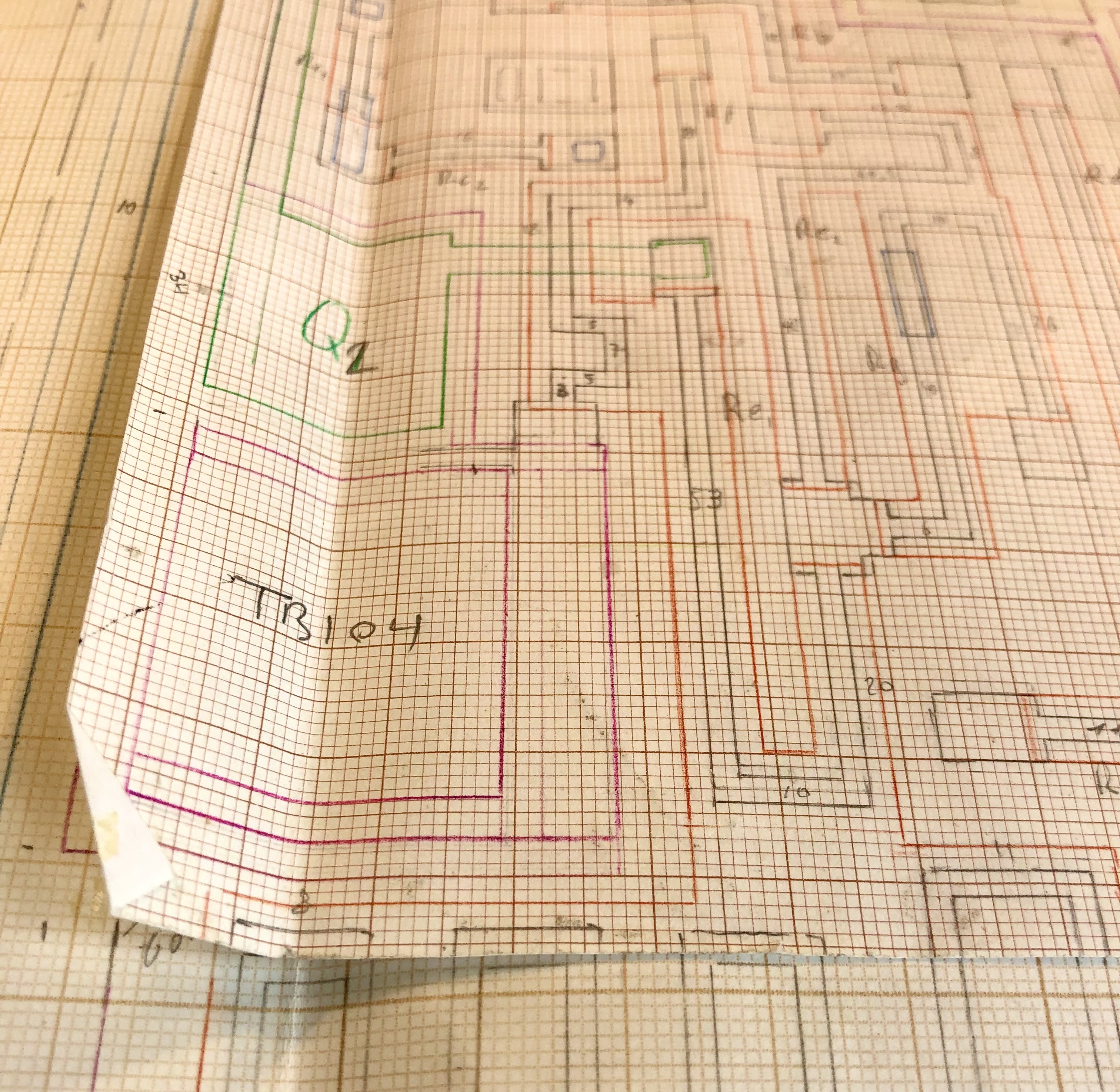
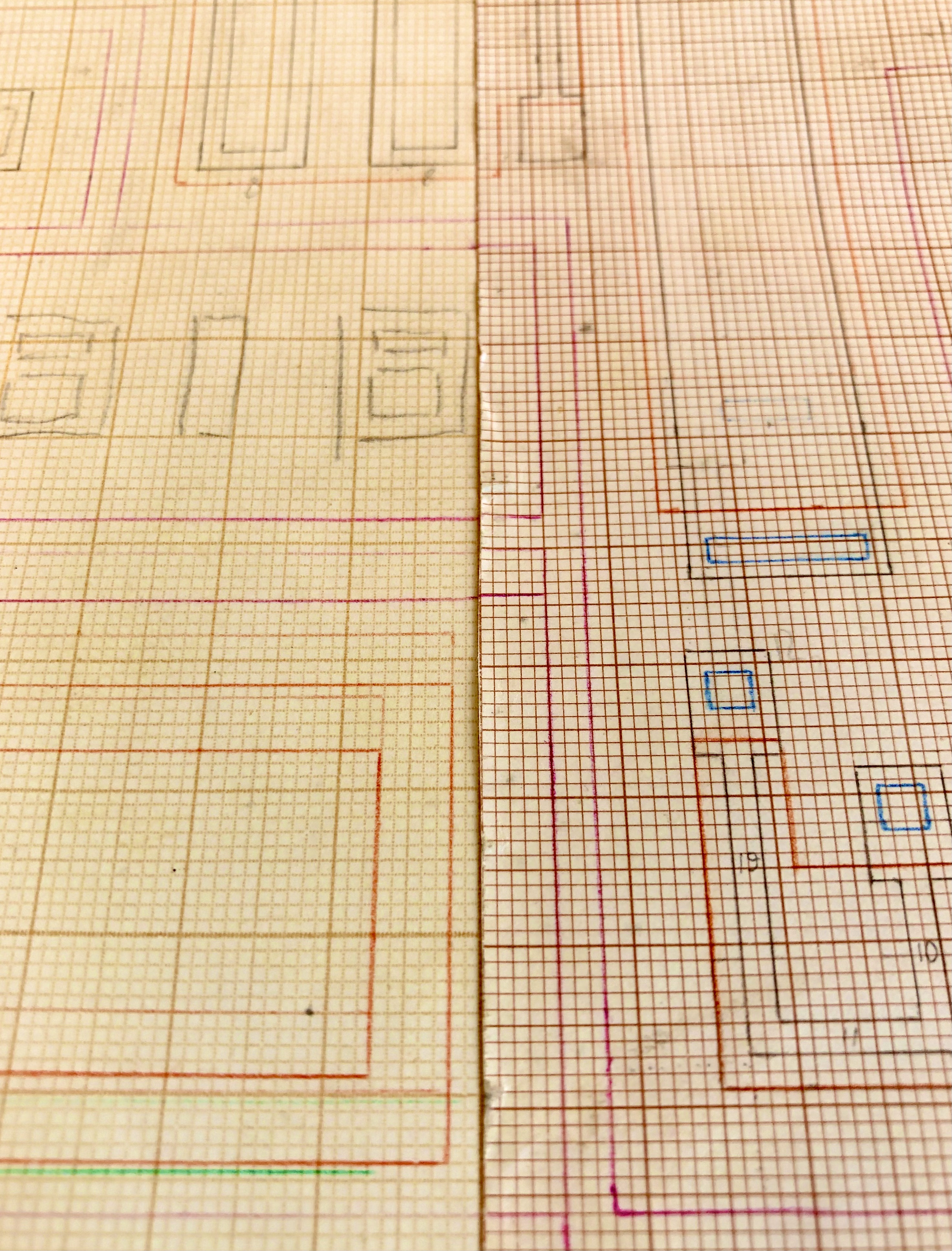
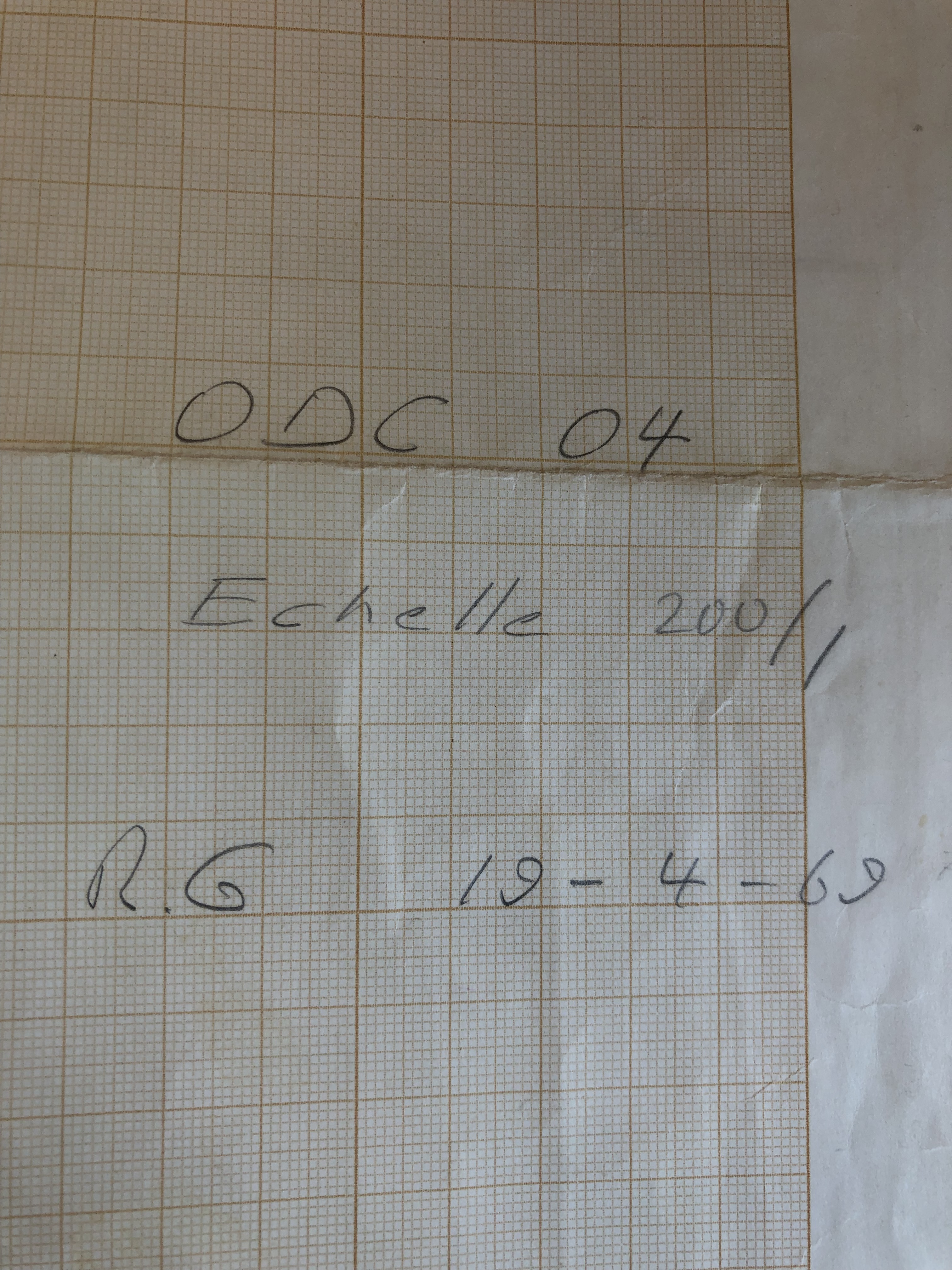
Thus, all ODC-04 bipolar chips used for the industrialised Beta 21 movement, were made in-house at the CEH. The technical drawing of ODC-04 (see above) was made by Raymond Guye the 19.4.1969, just a 3 months before the first Beta 21 movements were assembled at the CEH for the first series of 10 in-house prototypes. These bipolar integrated circuits of the Beta 21 were the first to combine all elements into one chip, all former versions had several integrated circuits in parallel (5, 6).
ODC-05, now with revolutionary, low consumption CMOS will be mounted in official replacement modules for Beta 21 and Beta 22 movements starting from 1975 (2).
CMOS Technology
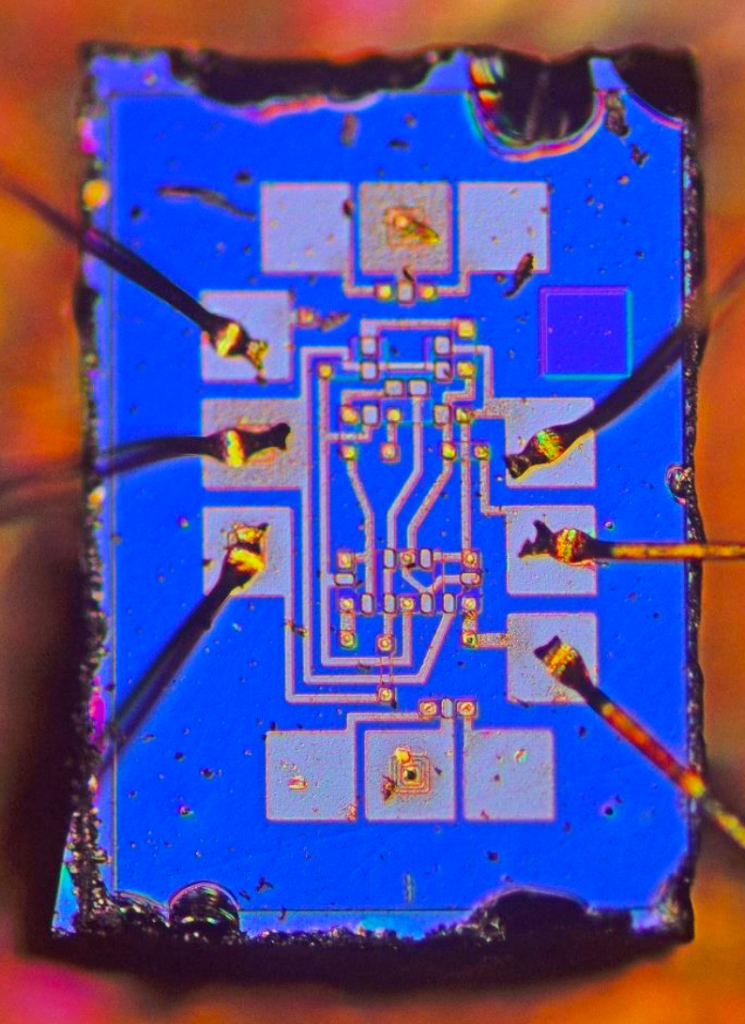
1968 – First low voltage CMOS chip of the CEH. Picture credit (7)
The CEH ‘wafer fab’ was the first specialised facility for manufacturing integrated circuits in continental Europe. Motorola even approached the CEH to form a joint venture in 1965, but the CEH refused and formed FASEC in 1966 instead, as described above. The focus at the CEH was to develop bipolar technology for binary frequency dividers within the Beta tuning fork resonator project until 1966. However, in 1964 Fritz Leuenberger and R. Taubenest started the research into low power CMOS technology patented in 1963 (and 1967) by RCA in the USA, which was delivering CMOS chips to the US defence industry.
The CEH did not have access to the ‘ion implanting technology’ at that time and in 1968 they produced a binary divider chip with 8 pairs of CMOS transistors coupled with sequential logic circuitry designed by Eric Vittoz. These experimental CMOS IC’s were made using etching and metallisation systems and were not suited for mass production until in 1972 the CEH was equipped with an ion implanting facility and was able to produce CMOS chips for Omega’s caliber 1510 (8).
Ref.:
- Quartzwristwatch, Courtesy of Dr. Armin H. Frei Heritage Estate
- Bramaz H.-R., Baumann H.; Die Elektrische Armbanduhr, Band 1, Verlag Stutz Druck AG, Wädenswil, 2013
- Forrer M., LeCoultre R., Beyner A., Oguey H.; L’aventure de la montre à quartz, Centredoc, 2002
- CEH-Bulletin No. 8; October 1966
- CEH Technical Report No. 96; 16.2.1968
- CEH Technical Report No. 82; 19.1.1967
- Vittoz E. A.; The Electronic Watch and Low-Power circuits; IEEE Solid-State Circuits Newsletter, February 2008
- Personal communication with a former Executive Vice-President of Ebauches SA, in charge of Research & Engineering
- Roger Wellinger Archive
- Engelsbergideas
 Electric Watch Prototypes